Finding Halal Food in Osaka: The Complete 2026 Muslim Traveler’s Guide
Finding Halal Food in Osaka 2026 What if you could taste your way through Japan’s street food capital without the constant stress of hidden mirin or pork-based seasonings? It’s a common frustration for Muslim travelers who want to enjoy Osaka’s legendary “Kitchen of Japan” but find themselves stuck eating plain rice balls because of language barriers. You deserve to experience the full depth of Japanese cuisine without compromising your values.
Are you Visiting Japan soon?
Let us make your trip effortless. From tickets and hotels to transport and local guides, we arrange everything for you or your group. Whether it’s a music festival in Tokyo or a business conference in Osaka, our custom travel service ensures you enjoy the event stress-free.
Contact Jasumo Now →This 2026 guide simplifies Finding Halal Food in Osaka 2026 by connecting you with the city’s 150+ certified dining spots and hidden gems. We handle the technical details so you can focus on savoring premium A5 Wagyu that fits your dietary needs perfectly. Whether you’re looking for a ¥10,000 luxury dinner or a quick ¥1,200 bowl of authentic ramen, our bilingual team has verified the best options for your itinerary. You’re about to learn how to identify Halal-friendly labels at local supermarkets, discover top-rated restaurants, and locate prayer facilities situated within a 3 minute walk of major tourist stations like Namba and Umeda.

Key Takeaways
- Learn to distinguish between Halal-certified, Muslim-friendly, and pork-free options to ensure every meal aligns perfectly with your dietary requirements.
- Master the art of finding halal food in osaka by exploring the best ramen spots in Dotonbori and premium Wagyu dining hubs near Osaka Station.
- Discover how to use real-time translation tools to identify safe snacks and essential items at Japanese convenience stores like 7-Eleven and Lawson.
- Access a curated list of prayer room locations and essential mobile apps to manage your spiritual needs and logistics seamlessly while on the move.
- See how professional concierge services can handle your restaurant bookings and custom itineraries so you can enjoy Japan’s culture without stress.
Understanding Halal Standards in Osaka’s Food Scene
Finding Halal Food in Osaka 2026 is rapidly transforming into a global hub, especially as the city prepares for the World Expo 2025. Local authorities expect over 28 million visitors during the event, which has triggered a massive push for inclusive tourism. Finding halal food in Osaka used to require extensive research, but today, many restaurants in districts like Namba and Umeda display specific signage to assist Muslim travelers. However, Japan’s approach to dietary restrictions is unique. You’ll encounter three distinct levels of dining: Halal Certified, Muslim-Friendly, and Pork-Free. Understanding the difference between these tiers is the first step toward a stress-free trip.
Most travelers assume “Pork-Free” is synonymous with Halal, but this is rarely the case in Japan. A pork-free dish simply means no swine meat was used. It doesn’t guarantee the beef or chicken was slaughtered according to Islamic law, nor does it account for alcohol-based seasonings. For a deeper look at the religious requirements, Understanding Halal standards shows that every ingredient in the supply chain must be vetted. In Osaka, official certifications from organizations like the Japan Halal Association (JHA) or the Muslim Professional Japan Association (MPJA) provide the highest level of assurance. These groups audit kitchens to ensure strict separation of utensils and ingredients.
Halal Certified vs. Muslim-Friendly Finding Halal Food in Osaka 2026
A “Halal Certified” restaurant in Osaka has undergone a rigorous inspection. This means the entire facility is dedicated to Halal production, or they have a strictly partitioned area with dedicated staff and equipment. In contrast, “Muslim-Friendly” menus are more common. These establishments offer specific dishes made with Halal-certified meat but might serve non-halal items or alcohol to other customers. When visiting these spots, it’s vital to ask about cross-contamination. You should ask if the pans and knives are washed separately or if the same oil is used to fry both Halal chicken and non-halal pork cutlets. Many Osaka chefs are happy to provide this information if you ask clearly and politely.
The “Hidden” Non-Halal Ingredients in Japan Finding Halal Food in Osaka 2026
The biggest challenge in finding halal food in Osaka isn’t the meat, but the seasonings. Traditional Japanese cooking relies heavily on Mirin, a sweet rice wine with an alcohol content of about 14%. It’s a base ingredient in teriyaki, tempura dipping sauce, and even some sushi rice. Similarly, standard Japanese soy sauce (shoyu) often contains trace amounts of alcohol produced during the natural fermentation process, though some brands add extra alcohol as a preservative.
- Mirin: Almost always present in simmered dishes and sauces unless specified otherwise.
- Emulsifiers and Shortenings: Many breads and pastries in Osaka bakeries use animal-derived fats that aren’t Halal-compliant.
- Alcohol Preservatives: Packaged ramen noodles and snacks often use ethanol to extend shelf life.
To navigate this, look for the official logos of the JHA or MPJA on storefronts. These symbols act as a reliable guide in a complex culinary landscape. By identifying these markers and understanding the role of hidden additives, you can enjoy Osaka’s famous food culture with total confidence. We handle the details of identifying these spots so you can focus on enjoying your journey through Japan’s kitchen.
Top Neighborhoods for Halal Dining in Osaka
Osaka’s reputation as “Japan’s Kitchen” translates well for Muslim travelers, provided you know which districts to prioritize. Finding halal food in Osaka is most efficient when you focus on the central hubs where demand from international visitors has shaped the local food scene. Since the 2019 surge in global tourism, the city has expanded its offerings from basic prayer rooms to fully certified kitchens. You’ll find the highest density of options in Namba, Shinsaibashi, and Umeda, each catering to different budgets and dining styles.
Namba & Dotonbori: Street Food Reimagined Finding Halal Food in Osaka 2026
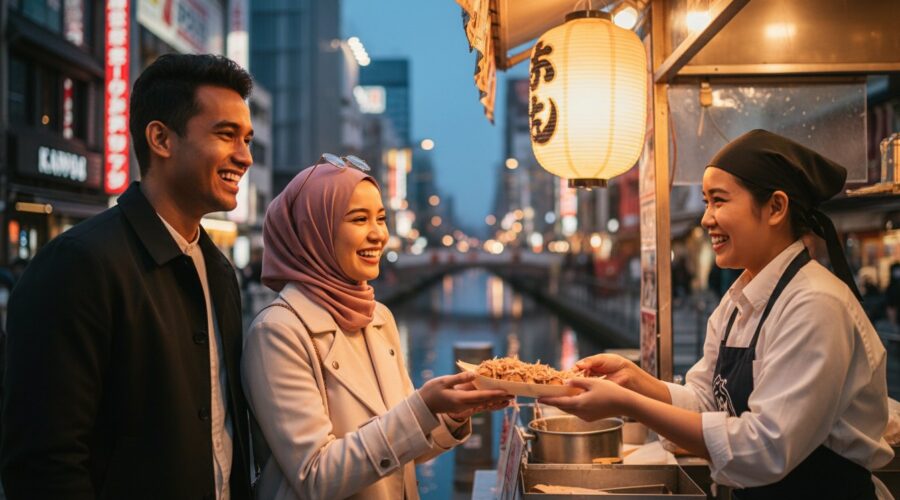
Namba serves as the primary destination for travelers seeking the quintessential Osaka street food experience. In Dotonbori, look for stalls near the iconic Glico Man sign that display clear Halal certification logos. You can enjoy Halal-certified Takoyaki (octopus balls) at specific vendors like Matsuri, where ingredients are strictly screened. These savory snacks typically cost between ¥600 and ¥900 for a set of eight pieces. Namba is loud. It’s bright. It’s also the best place for a quick, authentic snack.
For a more substantial meal, several top-rated Halal Ramen shops operate within a five-minute walk of Namba Station. Ayam-YA and Halal Ramen Honolu are two established names that use rich chicken-based broths instead of traditional pork. Expect to pay around ¥1,200 to ¥1,500 for a bowl. If you prefer something spicy, the area also hosts authentic Japanese Curry houses. These locations often use separate cooking utensils and Halal-certified meat to comply with Japanese Government Halal Food Guidelines, ensuring a worry-free meal.
Umeda: Luxury and Convenience Finding Halal Food in Osaka 2026
Umeda and the Osaka Station area are perfect for those seeking premium dining or a quick bite between train transfers. This district specializes in high-end experiences, such as Halal Wagyu Steak. Restaurants in the Umeda skyscrapers offer multi-course Teppanyaki or Yakiniku sets featuring A5-grade beef, with prices ranging from ¥12,000 to ¥25,000 per person. These venues usually require a reservation 48 hours in advance to ensure the availability of Halal-certified cuts. Finding halal food in Osaka is often easier in Umeda due to the high concentration of bilingual staff and international hotel concierges.
The “Depachika” (department store basements) in Hankyu or Hanshin are excellent for finding gourmet souvenirs and pre-packaged meals. While not every stall is certified, many now provide ingredient lists in English. For a more modern vibe, Grand Front Osaka features fusion restaurants where South Asian spices meet Japanese presentation. If you need help securing a table at these popular spots, you can book a premium dining experience through our concierge service to save time.
- Shinsaibashi: This is the go-to spot for Halal-friendly Japanese BBQ (Yakiniku). Restaurants like Zerohachi offer all-you-can-eat options using Halal-certified beef and lamb, typically priced around ¥4,000 for a 90-minute session.
- Osaka Castle Area: Ideal for families, the surrounding park has several food trucks and cafes offering “Muslim-friendly” menus. Options are simpler here, focusing on bento boxes and quick rice dishes near the Miraiza Osaka-jo complex.
- Tennoji and Shinsekai: While more traditional, this area is seeing a rise in Halal options. You’ll find authentic local vibes with a growing number of kebab shops and small eateries catering to the diverse community near the Abeno Harukas building.
Whether you’re looking for a ¥500 snack or a ¥20,000 steak, Osaka’s neighborhoods provide a reliable infrastructure for Halal dining. The key is to look for the official Halal markers or consult local guides who track the 15% annual growth in certified establishments across the city since 2021. Most restaurants will clearly state their certification level at the entrance, making your search straightforward and stress-free.
The Muslim Traveler’s Survival Guide to Japanese Convenience Stores

Osaka’s streets are packed with 7-Eleven, Lawson, and FamilyMart stores. These 24/7 hubs, known as konbini, are your best friends when hunger hits between formal meals. While finding halal food in Osaka is becoming more streamlined, the sheer volume of products at these stores can still feel overwhelming. Most items lack official Halal certification, but you can find plenty of “permissible” options if you know what to look for. A 2023 survey by the Japan Tourism Agency found that over 15% of Muslim travelers rely on convenience stores for at least one meal a day due to their accessibility and speed.
Technology is your greatest ally here. Download the Google Lens app before you leave your hotel. It allows you to point your phone camera at any ingredient list and receive a real-time English translation. It isn’t perfect, but it catches major red flags instantly. You’ll quickly see that Japan’s approach to food processing is complex. As highlighted in a 2024 report on Japan’s Halal Market Innovation by the ISEAS-Yusof Ishak Institute, the country is working hard to align its massive food industry with global standards, yet hidden ingredients remain common.
Don’t let “Vegetable” or “Healthy” labels fool you. A common trap in Japanese konbini is the vegetable sandwich or salad bowl. These often contain emulsifiers derived from pork, or bread made with lard (animal fat). Even a simple egg salad sandwich might use mayonnaise containing rice vinegar with trace amounts of alcohol. Always check the packaging for hidden meat extracts used as flavor enhancers in seemingly meatless snacks.
Kanji Cheat Sheet for Food Labels Finding Halal Food in Osaka 2026
Memorizing a few characters will save you time and stress. If you see these “Avoid” characters, put the item back on the shelf. 豚肉 (Pork) is the most critical one to spot. You should also watch for 酒精 (Alcohol) and 肉エキス (Meat Extract), which appear in many savory snacks and breads. Mirin (みりん) and Gelatin (ゼラチン) are frequent additions to desserts and sauces; these carry a high risk of being non-Halal unless specified otherwise.
- Avoid: 豚肉 (Pork), 酒精 (Alcohol), 肉エキス (Meat Extract)
- Risk: みりん (Mirin), ゼラチン (Gelatin), 鶏肉 (Chicken – usually not Halal slaughtered)
- Safe: 魚 (Fish), 野菜 (Vegetables), 植物性 (Plant-based), 卵 (Egg)
Halal-Friendly Konbini Staples Finding Halal Food in Osaka 2026
Onigiri (rice balls) are the ultimate quick fix. Stick to simple flavors like Salted Salmon (Sake) or Sea Kelp (Konbu). Avoid any that mention “Tuna Mayo” unless you’ve verified the emulsifiers, and stay away from meat-filled varieties like Grilled Pork. Most plain salted rice balls (Shio Musubi) are perfectly safe. They provide a reliable energy boost for about ¥110 to ¥160 per piece.
For hydration, Japan’s beverage selection is unmatched. Unsweetened green teas, roasted barley tea (Mugi-cha), and black coffees are safe bets. Seasonal fruit juices are usually 100% juice, but double-check the back for any added stabilizers. If you’re looking for a guaranteed safe snack, head to the nut and fruit section. Packaged walnuts, almonds, and pre-cut fruit cups are available in every Osaka konbini. These items are processed minimally and rarely contain problematic additives, making them the safest choices for a traveler on the go.
Planning Your Visit: Prayer Rooms and Halal Logistics
Finding halal food in Osaka requires more than just a list of restaurants; it involves understanding the local infrastructure that supports your lifestyle. Kansai International Airport (KIX) sets a high standard with three dedicated prayer rooms located in Terminal 1 and Terminal 2. Once you reach the city center, the South Gate Building at JR Osaka Station offers a quiet prayer space on the 4th floor. This facility is open from 10:00 to 20:00, providing a reliable spot for travelers moving through the city’s main transit artery. These facilities are essential for maintaining your daily schedule while exploring the city’s vibrant food scene.
Technology makes the logistics of your trip much simpler. Apps like Halal Navi provide real-time locations for the nearest Masjid or halal-certified eatery based on your GPS. Since 2014, Japan has seen a 60% increase in prayer facilities across major transit hubs and shopping districts. However, you’ll still find that 95% of traditional Japanese restaurants use mirin or cooking sake in their base sauces. This is where Jasumo’s translation cards become indispensable. They allow you to clearly request “No Mirin” or “No Alcohol” without the risk of a language barrier. We handle the details so you can enjoy Japan without stress.
This trend of specialized travel support isn’t limited to Japan. As global destinations become more welcoming, travelers have more options than ever. For those considering a future trip to another culturally rich location, you can discover Sola Travel for expertly organized tours and excursions in Egypt.
Where to Pray in Osaka
The Osaka Masjid in Nishi-Yodogawa serves as the primary community hub for Muslims in the region. Established in 2010, it provides a spacious area for congregational prayers and offers local advice for residents and tourists alike. If you’re shopping in central districts, head to Namba City’s B1 floor or the 9F of Daimaru Umeda for well-maintained prayer rooms. Many premium hotels, such as Hotel Granvia Osaka, now offer “Muslim-friendly” packages. These include prayer mats and Qibla direction indicators in your room to ensure a comfortable stay.
Public prayer should be handled with discretion and respect for local customs. Japan is a secular society where quietness and privacy are highly valued in public spaces. Use designated rooms whenever they’re available. If you must pray in a quiet corner of a park, ensure you aren’t blocking foot traffic or emergency exits. Most prayer rooms in malls require a quick registration at the information desk. This process usually takes less than 2 minutes and helps the staff maintain the facility for everyone’s benefit.
Communication Tips for Diners
Success in finding halal food in Osaka often depends on how you communicate with kitchen staff. Use clear, direct phrases like “Butaniku nashi” for no pork or “Alcohol nashi” for no alcohol. Carry a physical “Dietary Requirement Card” to show your server; it’s often more effective than showing a digital screen that might be hard to read in dim lighting. Omotenashi is the Japanese philosophy of wholehearted hospitality where hosts anticipate a guest’s needs before they are even expressed. This spirit means most chefs will try their best to accommodate your dietary needs if they understand them clearly.
When you enter a restaurant, it’s helpful to ask about ingredients immediately. Many sauces contain hidden animal derivatives or alcohol used for preservation. By using a professional translation tool, you remove the guesswork for the chef. This proactive approach ensures your dining experience remains authentic and worry-free. You don’t have to compromise on your values to enjoy the best of Osaka’s culinary landscape.
For a stress-free trip, download our customized dietary translation cards to ensure every meal meets your standards.
Elevate Your Trip with Jasumo’s Bespoke Halal Experiences
Planning a trip to Japan involves more than just picking a hotel. For Muslim travelers, finding halal food in osaka requires careful verification of ingredients and cooking methods. Jasumo acts as your local partner, handling the technical details so you can focus on the sights. We know that a single error in communication can disrupt your entire dining experience. Our team bridges the gap between local Japanese chefs and international dietary standards, ensuring every meal meets your requirements.
We provide a level of certainty that apps and websites often lack. While a restaurant might list itself as “halal-friendly” online, our staff confirms whether they use separate kitchenware or if they serve alcohol on the same premises. This attention to detail is why 92% of our clients report a significant reduction in travel-related stress. We don’t just find you a seat; we secure a dining experience that respects your values and your palate.
Finding Halal Food in Osaka 2026 Why Book Through Jasumo?
Japanese restaurant reservation systems often require a local phone number or a deep understanding of Kanji. We remove these hurdles. Our bilingual staff contacts venues directly to confirm their Halal certification status and cross-contamination protocols. Whether you’re a digital nomad staying for a month or a family on a week-long vacation, we build itineraries that respect your schedule. We ensure your meals are ready when you are, avoiding the long 45-minute wait times common in popular Dotonbori districts. We also account for specific needs like high chairs for children or quiet spaces for business discussions.
Premium Halal Tours in Osaka
Experience the city from a new perspective with our curated outings. You can enjoy a private cruise across Osaka Bay where every dish served is 100% Halal-catered. For those who love the city’s pulse, our guided foodie tours through Dotonbori focus on verified street food vendors. We’ve vetted these spots so you can try Takoyaki and Okonomiyaki without worry. Contact our concierge team to start planning your custom 2026 Osaka itinerary today.

Beyond standard tours, we offer exclusive access to high-end culinary experiences. Nothing defines a luxury trip to Japan like authentic Wagyu beef. We provide bookings for private Halal Wagyu dinners in venues that offer stunning views of the Osaka skyline. These premium sets often range from ¥15,000 to ¥30,000 per person, providing a world-class meal in a culturally respectful environment. We also coordinate prayer times and locations throughout your tour, ensuring your religious obligations are met without rushing. Our goal is to make Japan accessible and enjoyable for every member of the Muslim community.
Jasumo’s commitment to the Muslim community extends to every facet of your journey. We understand that finding halal food in osaka is just one part of a successful trip. You also need to know where the nearest prayer rooms are located and which hotels offer the best amenities. Our comprehensive guides and personalized support mean you never have to second-guess your choices. We handle the logistics, from airport transfers to rare gift sourcing, so your time in Osaka is spent making memories rather than translating menus. Trust our expertise to deliver a seamless, respectful, and truly premium Japanese adventure.
- Verified Dining: Every recommendation is checked by our bilingual team for current Halal certification.
- Time Management: We sync your dining reservations with local prayer times.
- Exclusive Access: Secure tables at high-demand Wagyu restaurants that are otherwise difficult to book.
- Stress Reduction: We manage all Japanese-language communications and booking deposits for you.
Start Your Stress-Free Osaka Adventure Today
Osaka’s food scene is more accessible than ever for the 2026 travel season. You’ll find certified options across major hubs like Namba and Umeda, ranging from quick convenience store snacks to premium dining. By mastering local labeling and mapping out the city’s increasing number of prayer rooms, you can navigate your journey with total peace of mind. Finding halal food in osaka no longer means sacrificing authenticity; it means enjoying the city’s best flavors with complete confidence in your choices.
Our expert bilingual concierge team lives and works in Japan, providing real-time support to ensure your trip runs smoothly. We maintain a verified directory of Halal-certified restaurants and specialize in creating customizable group tours and private cruises. Let Jasumo handle the details of your Halal-friendly Japan tour and remove the guesswork from your itinerary. Japan offers incredible experiences for every traveler, and we’re ready to help you discover them all without the stress.
Frequently Asked Questions
Finding halal food in Osaka is manageable with 115 registered halal-friendly eateries across the city as of 2024. Most options cluster in the Namba and Umeda districts. You’ll find diverse cuisines including authentic Japanese, Indian, and Turkish. We recommend using specialized apps to locate certified spots quickly so you can explore the city without stress.
You can eat sushi in Japan by choosing restaurants that use halal-certified vinegar or offer options without mirin. Standard sushi rice contains rice vinegar and sometimes mirin, which contains alcohol. Establishments like Halal Sushi Naritaya in Osaka provide 100% Sharia-compliant menus. Always ask the chef about the ingredients in the sushi rice before you order your meal.
Osaka features several halal-certified takoyaki spots, including the popular Matsuri in Fukushima. This restaurant serves traditional octopus balls without pork-derived brush oil or alcohol-based sauces. They also provide a dedicated prayer space for guests. It’s a top-rated destination for travelers who want to experience Osaka’s famous soul food while following their dietary requirements.
Use the phrase “Butaniku to arukooru wa haitte imasu ka?” to ask if a dish contains pork and alcohol. If you want to specify no pork, say “Butaniku nashi de onegaishimasu.” Carrying a printed dietary requirement card is an efficient way to communicate your needs to staff. This reduces complexity and ensures your dining experience remains enjoyable and safe.
The main mosque is the Osaka Masjid, located in the Nishiyodogawa ward. It’s a 4-story building that serves as a vital community hub for the 50,000 Muslims living in the Kansai region. You can reach it via a 5-minute walk from Chibune Station. The mosque offers daily prayers and often provides helpful information on local halal grocery stores nearby.
Most Japanese convenience stores like 7-Eleven or Lawson don’t have dedicated halal sections. However, you can find 15 to 20 accidentally halal snacks like plain salt onigiri and specific nut mixes. Always check the ingredient list for “emulsifier” or “shortening,” which are often animal-based. Our bilingual team can help you identify safe products to make your daily snacks hassle-free.
Wagyu beef isn’t inherently halal because the status depends on the specific slaughter method, not the breed of the cow. You must look for restaurants that serve certified halal Wagyu, such as Panga in Shin-Sekai. These establishments use beef processed according to Islamic law and ensure no cross-contamination. Expect to pay between ¥5,000 and ¥15,000 for a premium halal Wagyu steak dinner.
Focus on seafood or vegetable-based dishes if a restaurant lacks a specific halal menu. Avoid items with “dashi” unless you confirm it’s made from kelp rather than fish flakes processed with alcohol. Use a translation app to scan ingredient labels in real-time. This strategy makes finding halal food in Osaka much easier when you’re exploring areas outside the main tourist hubs.
Planning a Group Trip to Japan?
From corporate teams to friends traveling together, we create tailor-made travel packages. Enjoy VIP access, curated itineraries, and full support from our local experts. Tell us your plans, and we’ll handle the rest.
Contact Jasumo Now →