

Mount Fuji Reservations: How to Book Your Climb in 2026
Climbing Mount Fuji is popular enough that the mountain now runs a booking system at all. That same demand sits behind the most expensive mistake foreign visitors make with it: assuming they are reserving a bed when what they are buying is permission to walk through a gate.
Are you Visiting Japan soon?
Let us make your trip effortless. From tickets and hotels to transport and local guides, we arrange everything for you or your group. Whether it’s a music festival in Tokyo or a business conference in Osaka, our custom travel service ensures you enjoy the event stress-free.
Contact Jasumo Now →A Mount Fuji reservation is a regulated trail-access pass. On the Yoshida Trail it carries a fixed daily capacity, a per-person charge, a time window for entering, and a QR confirmation that staff check at the trailhead. It works more like a timed stadium ticket than a hotel booking: it lets you in, on a set date, within set hours, and then its job is done.
A mountain hut is an entirely separate purchase. It has a different operator, a different payment and a different set of rules, and none of those are covered by your trail pass.
Get the two confused and you can lose the climb while holding a paid confirmation in your hand, standing in front of a closed gate.
Table of Contents
- Mount Fuji Reservation Rules at a Glance
- Huts and Overnight Stays Versus Day Access
- Booking and Verifying Your Yoshida Trail Pass
- Date Changes, Cancellations and Weather Contingencies
- Frequently Asked Questions
- Confirm Your Booking Before You Leave Home
Mount Fuji Reservation Rules at a Glance
On the Yoshida Trail, the Yamanashi-side route that most first-time climbers use, a Mount Fuji reservation is a regulated access pass: authorisation to enter the trail on a stated date, bought per person, capped by a daily ceiling and checked at a gate. It isn't a hut booking, and it doesn't hold a bed for you anywhere on the mountain.
| Route side | Reservation requirement | Fee per person | Daily limit | Season and gate hours |
|---|---|---|---|---|
| Yoshida Trail, Yamanashi side | Advance online reservation and access authorisation | ¥4,000 (2025 figure; 2026 unconfirmed) | 4,000 climbers per day, excluding hut guests | 1 July to 10 September as stated; gate normally closed 2:00 p.m. to 3:00 a.m. |
| Fujinomiya, Gotemba and Subashiri routes, Shizuoka side | Pre-registration and payment | ¥4,000 entry fee (2025 figure; 2026 unconfirmed) | No numerical cap stated | Set by Shizuoka Prefecture each year; confirm on the prefectural notice before booking |
The two sides of the same mountain run materially different systems, and the official Yamanashi notice sets out how they diverged from the 2025 season. Yamanashi began accepting online reservations for the Yoshida Trail on 24 April 2025, while Shizuoka planned to open its own pre-registration on 9 May. The Yamanashi hiking fee rose from ¥2,000 in 2024 to ¥4,000 per person per climb, and the daily Yoshida limit stayed at 4,000 climbers, excluding people with mountain-hut lodging reservations. Shizuoka introduced its own ¥4,000 entry fee for Fujinomiya, Gotemba and Subashiri without imposing a numerical cap.
The difference matters because it changes what a sold-out day even means. The Yoshida side pairs a quota with advance payment, so a peak Saturday can close. The Shizuoka side requires registration and payment but states no maximum number of hikers, so the pressure shows up as crowding rather than as a locked gate.
For context on how quickly this arrived, Yamanashi Prefecture's notice on the Yoshida Trail reservation system shows that in the 2024 season the trail was limited to 4,000 climbers a day, split between 3,000 advance online places and 1,000 places kept for same-day, in-person applications. A mandatory hiking fee of ¥2,000 applied, with a separate ¥1,000 conservation contribution that could bring the total requested payment to ¥3,000. Even then, the reservation covered general admission through the trail gate rather than a bed in a hut.
First decision, before anything else: identify which side and which route you intend to climb, then read that route's current official notice. Transport, huts and gear all get planned around that single choice.
Huts and Overnight Stays Versus Day Access
Start with the gate, not the bed. On Mount Fuji, the reservation that controls entry is a trail-access authorisation: it says who may pass during the allowed hours. A hut booking is lodging. It buys a bunk, dinner and a place to wait for sunrise, and it sits outside the gate system.
That separation is where climbs go wrong. A day climber needs only the access authorisation. An overnight climber needs that same authorisation for every person, plus the hut confirmation if the plan relies on the night window. The hut name on an email does not prove trail access, and a paid trail slot does not reserve a mattress.
Two failures repeat every season. The first is treating a hut booking as permission to enter, then reaching the gate with no valid authorisation. The second is arriving after the daytime cutoff while holding only a same-day plan, then finding that the barrier cares about the pass and the clock, not about how far you travelled.
Practical rule: the pass is what the gate checks. The hut is where you sleep.
Work in this order:
- Choose day or overnight for each climber. Mixed groups are allowed, but the choice decides which confirmations each person must carry.
- Secure the access authorisation for everyone first. It is the only piece tied to capacity and gate hours.
- Add the hut only after access is settled. Hut terms, meals, payment and Japanese-language phone booking come from the hut operator, so confirm them directly and keep proof offline with the QR record.
- Recheck the current season notice before leaving. Rules, fees and gate times are reissued, so last year's timetable is a rough memory, not a guarantee.
Pack for the same discipline. Keep every confirmation in one offline folder each climber can open without signal, carry water you can refill responsibly, and leave a spare day because weather cancels climbs more often than quotas do. For bottle care and refill habits in alpine conditions, HYDAWAY tips for Tahoe campers is a useful general reference.
Booking and Verifying Your Yoshida Trail Pass
The mistake that costs groups the most is the single screenshot. A lead traveller holding one confirmation image has no way of proving that the other four people in the party were ever on the booking, and reception checks individuals, not group chats. Each climber needs a record they can pull up on their own phone.
A Yoshida Trail pass works like a timed entry ticket to a stadium: it gets one named person through the gate on one date, and nothing beyond that entry is included. Treat the whole exercise as a verification process rather than a purchase.

Why the quota is looser than it looks
Advance reservations stay open until the day of climbing, but they close the moment the day's allocation is gone. The ceiling itself is a benchmark more than a wall: Fujiyoshida City's guidance on the Yoshida Trail frames the 4,000-person figure as a daily capacity control, and that limit is not reached on every day of the season. Availability still depends on the date you pick, so peak weekends should never be treated as guaranteed.
The six-step booking sequence
- Read the current season's notice before you plan transport. Rules, gate times and the fee are reissued each year, and the stated season runs 1 July to 10 September, so build the trip around the version in force, not last year's blog post.
- Collect every climber's legal name and intended date. Names must match the passport, because reception verifies each participant individually against the reservation.
- Reserve each traveller separately and pay one hiking authorisation per person at the published rate for your year. Children are treated as chargeable travellers in the wording, so count them.
- Save the confirmation and QR code offline and send a copy to every member. Phone signal around the fifth station is unreliable, and a screenshot in each person's photo library is more dependable than a bookmarked page on one device.
- Plan to reach the Fuji Subaru Line 5th Station and pass the gate before the 2:00 p.m. cutoff. A prepaid booking doesn't override the daytime restriction, so a late bus can strand a fully paid reservation.
- Present the reservation screen at reception and check that every participant appears on it. This is the moment to catch a missing name, not at the barrier.
Same-day applications do exist when capacity remains, and the official system permits same-day booking on that basis. For international visitors, advance booking is still the safer route, because entries stop once the daily figure is reached and the gate can close with no appeal process.
What the pass does not include
A reservation carries no guarantee of overnight accommodation, of summit conditions, or of a place in a hut. Weather can close the upper trail while your pass is perfectly valid, and a hut booking can be confirmed while your access authorisation is not. Keeping those two documents mentally separate is the whole point of this section: the pass regulates trail access, and the hut regulates where you sleep.
Operational rule: assume the gate will ask for the one document you didn't print.
The evening-before checklist
- Name check: every traveller appears individually, spelled exactly as in the passport.
- Offline copies: QR screenshots saved to each phone's photo library, not only to email.
- Gate arithmetic: work backwards from the 2:00 p.m. cutoff through bus timings and the walk from the station.
- Hut evidence: anyone sleeping on the mountain carries that confirmation separately from the access record.
- Change deadline: know the date-change window, since it closes before the day of the climb.
Date Changes, Cancellations and Weather Contingencies
Fuji doesn't behave like a flexible attraction ticket or a hotel booking, and the official Yoshida Trail FAQ is blunt about it. Climbers can change the climbing date until the day before, but participant numbers cannot be changed after the day following payment, and cancellations become nonrefundable for personal reasons after a stated short window.
That short season matters here. With the season running from 1 July to 10 September and gate access stopping either at 2:00 p.m. daily or when the daily figure is reached, there's very little slack for an itinerary built on the assumption that you can try again tomorrow.

| Situation | Official rule | Practical action |
|---|---|---|
| Before payment | Date and group can be chosen freely | Confirm numbers and date before buying |
| Date change | Allowed until the day before the climb | Check the revised QR record |
| Participant number change | Not allowed after the day following payment | Book the correct group size first |
| Personal cancellation after the short window | Nonrefundable | Treat the payment as final |
| Official closure or adverse weather | No automatic refund stated; the official notice governs each case | Check the official notice and contact the operator |
| Late arrival after 2:00 p.m. | Gate normally closed from 2:00 p.m. | Arrive and pass the gate before the cutoff |
| Daily limit of 4,000 reached | No further entries that day | Book in advance for peak dates |
Personal cancellations versus official closures
These are different events and they're often lumped together by travellers comparing notes online. A personal cancellation is you changing your mind, and the refund position follows the published cancellation window. An official closure or a weather restriction is the operator stopping access, and the outcome depends on the notice in force at the time, which is why it's worth checking the official page and contacting the operator rather than assuming either a full refund or a total loss.
We confirm the date, the number of people and exactly what is being purchased before buying anything, because most Japanese tickets can't be changed or refunded once issued.
A weather-contingency sequence
- Watch the official notice in the days before departure. Conditions change quickly on the upper mountain, and the notice is the only source that reflects the actual gate status.
- If conditions are unsafe, move the date inside the change window. Then verify the revised QR record rather than assuming the original date still stands.
- If someone must drop out after the window, treat that payment as final. Keep transport, luggage and onward bookings flexible enough to absorb the loss.
And keep the access reservation in perspective. It confirms the date, not the sunrise.
Frequently Asked Questions
Many booking problems trace back to a single misunderstanding: the Yoshida Trail reservation is a regulated trail-access pass, closer to a national park entry permit than to a mountain-hut booking. Keep that distinction in mind, and the answers get simpler.
Do I need a Japanese phone number to book?
A domestic number has been required in some seasons and not others, so treat it as a live requirement rather than a fixed rule. Read the booking page for your climbing year before you enter payment details. If a Japanese number field is mandatory, that is the moment to arrange help, whether through a contact in Japan or a booking service, rather than abandon the reservation.
Do I need a Japanese payment card?
Card acceptance has broadened, but a domestic card can still be requested depending on how the season's payment flow is set up. Check what the payment screen accepts on the day you pay, and have an alternative ready in case your card is declined at the final step.
Is there a ticket lottery?
The Yoshida Trail system works as an advance online reservation with a daily cap, plus same-day applications while capacity remains. There is no draw to enter. Lottery descriptions circulating online usually refer to a different year or a different system, so check the season any such claim covers before acting on it.
Do I need a separate e-ticket app?
The confirmation is issued as a QR code that is scanned at the gate. Whether the booking flow asks for an additional app depends on the season's setup, so check the requirements on the booking page for your climbing year and save the QR code to your phone before you travel.
Can I climb without a reservation?
Under the Yoshida system each climber must hold access authorisation, so arriving without one is not permitted under the published rules. Same-day applications exist while capacity remains, but counting on that for a peak weekend is a gamble, not a plan.
Are children charged the same fee?
The published wording applies the charge per person and per visit rather than per adult. A waiver route exists for qualifying curriculum-based educational activities through advance application, so families should read the current season's exemption wording on the official notice before paying.
Is the Shizuoka side easier to book?
It has no stated numerical cap on climbers, but it still requires registration, payment and confirmation of the current year's route rules. Less crowded is not the same as optional.
Confirm Your Booking Before You Leave Home
The decision comes down to four moves: identify your route side and season, choose day or overnight for each climber, reserve and pay for every traveller, and keep the QR records offline where the mountain can't reach the network.
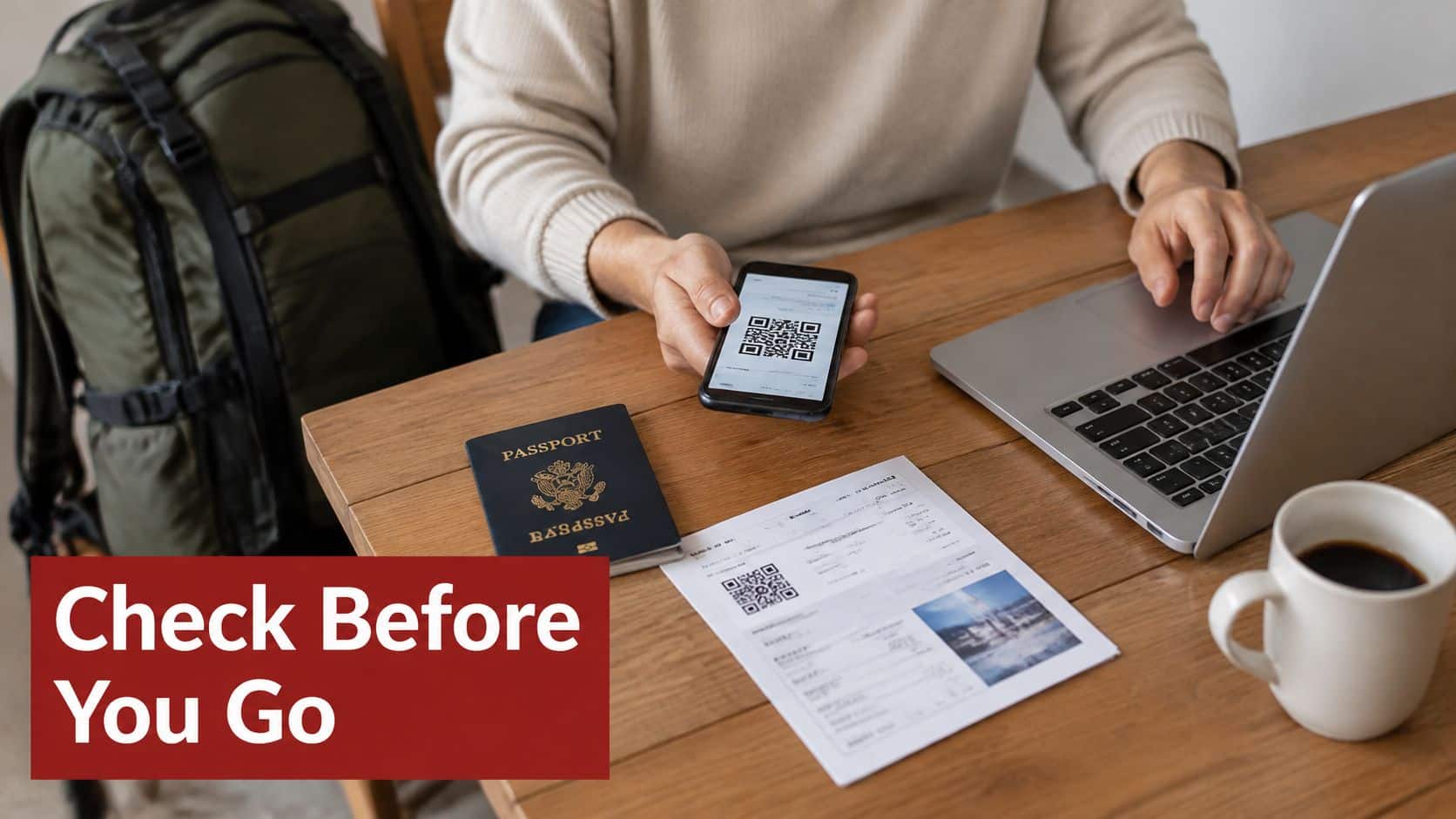
Run this final checklist the week you fly:
- Official notice: confirm the current year's rules, fee and gate hours on the prefectural or government page.
- Names: check that every reservation carries each traveller's legal name as printed in the passport.
- Date-change deadline: note the day-before window if the forecast turns.
- Gate timing: write down the 2:00 p.m. cutoff and your realistic arrival at the 5th Station.
- Current-year requirements: verify on the official booking page whether a Japanese phone number, a domestic payment card or identity verification is required before you pay anything.
If you'd rather see the process demonstrated before you start, this walkthrough covers the booking flow and the trailhead checks.
When the booking page is Japanese-only, the phone number field rejects your number, or a hut only takes reservations by telephone, that's the point to hand the matter over. Jasumo is a Tokyo-based concierge operated by COMFYS JAPAN LLC, and it's a registered Japanese company and a Type 3 travel agency with its office in Kita-Aoyama, Tokyo. Its bilingual team handles the arrangements directly for clients, including tickets, restaurant reservations, Japanese-language calls, payments, deliveries and group travel that's difficult to manage from abroad. You can reach them through the Jasumo contact form. Jasumo can't guarantee ticket availability, seats or outcomes.
Planning a Fuji climb from overseas usually fails on the small things: a phone call in Japanese to a hut that doesn't take online bookings, a payment page that only accepts domestic cards, or a group of six where every traveller needs their own confirmation and only one has been booked. Jasumo's bilingual team handles those arrangements directly, from trail and hut bookings to rail seats to the right fifth station, alongside restaurant reservations, payments and group itineraries across Japan. Send your dates and group details through Jasumo and we'll tell you what's possible before you commit to anything.
Planning a Group Trip to Japan?
From corporate teams to friends traveling together, we create tailor-made travel packages. Enjoy VIP access, curated itineraries, and full support from our local experts. Tell us your plans, and we’ll handle the rest.
Contact Jasumo Now →
