Attending Verdi’s Rigoletto at New National Theatre Tokyo (2026): A Practical Guide for Overseas Visitors
Opera holds a special place in Japan’s performing arts landscape, and productions at the New National Theatre, Tokyo represent the country’s highest level of operatic presentation. In early 2026, Giuseppe Verdi’s Rigoletto returns to the stage at the Theatre’s Opera Palace — offering international visitors a chance to experience a cornerstone of Italian Romantic opera within Japan’s highly organized cultural system.
Are you Visiting Japan soon?
Let us make your trip effortless. From tickets and hotels to transport and local guides, we arrange everything for you or your group. Whether it’s a music festival in Tokyo or a business conference in Osaka, our custom travel service ensures you enjoy the event stress-free.
Contact Jasumo Now →For overseas travelers, the performance itself is only part of the experience. Understanding how Japan’s venue systems, ticket structures, language access, and theater etiquette work can make the difference between a stressful evening and a smooth, memorable one.
This guide explains what the production is, why it matters globally, how the Japan presentation context differs, and what foreign visitors should prepare for in advance.
Event Overview: Rigoletto at New National Theatre, Tokyo
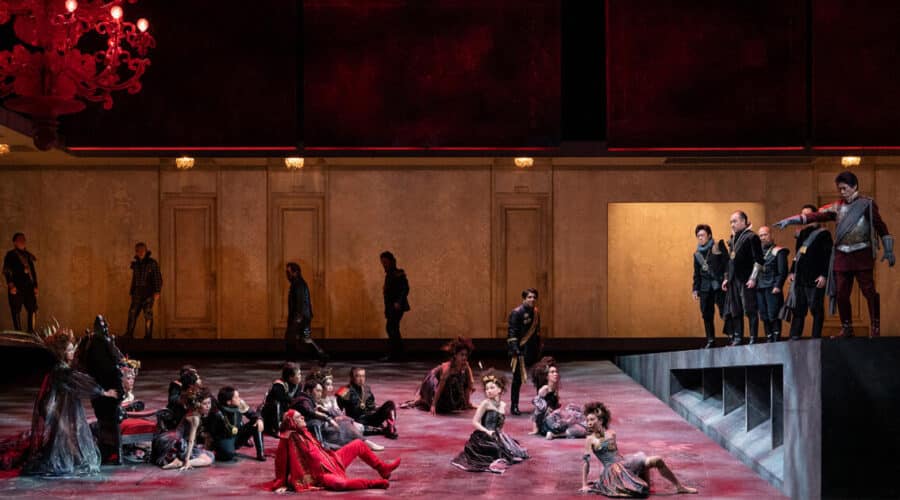
The 2026 New National Theatre Opera production presents Giuseppe Verdi’s Rigoletto, one of the most frequently performed operas in the international repertoire. Known for its emotional intensity and melodic richness, the work explores themes of love, revenge, moral corruption, and fate.

Production highlights:
- Opera: Rigoletto
- Composer: Giuseppe Verdi
- Language: Sung in Italian
- Surtitles: Japanese and English
- Running time: Approximately 2 hours 40 minutes including an interval
- Venue: New National Theatre, Tokyo — Opera Palace
2026 Performance Schedule (Remaining Dates)
- Wed, February 18, 2026 — 18:00 (Opening performance)
- Sat, February 21, 2026 — 14:00
- Mon, February 23, 2026 — 14:00 (National holiday)
- Thu, February 26, 2026 — 14:00
- Sun, March 1, 2026 — 14:00 (Final performance)
Creative Team & Principal Cast
- Conductor: Daniele Callegari
- Director: Emilio Sagi
Selected principal roles include:
- Rigoletto: Vladimir Stoyanov
- Gilda: Eri Nakamura
- Duke of Mantua: Lawrence Brownlee
- Sparafucile: Saiki Kenji
- Maddalena: Shimizu Kasumi
Global Context: Why Rigoletto Matters
Premiered in 1851, Rigoletto is one of Verdi’s defining masterpieces and a pillar of the standard opera repertoire worldwide. Its dramatic structure, psychological depth, and iconic music — including the aria “La donna è mobile” — make it widely recognizable even to audiences new to opera.
For many travelers, seeing a familiar European work presented by a major Asian opera institution offers a cultural contrast: the same score, but shaped by a different theatrical tradition, production style, and audience environment.
Opera in Japan: Cultural and System Context
Japan maintains a strong appreciation for Western classical music, including opera. However, the systems supporting performances are designed primarily for domestic users. This affects how tickets are sold, how venues operate, and how audience behavior is structured.

At the New National Theatre:
- Performances follow highly punctual schedules
- Audience etiquette is strictly observed
- Venue procedures emphasize order and minimal disruption
Some overseas visitors may find the process unfamiliar at first, especially compared to more flexible entry and intermission norms in some Western countries. Advance preparation can help reduce day-of uncertainty.
What Makes the Japan Opera Experience Distinct
1. Language Access Is Built-In
This production includes both Japanese and English surtitles, which is standard for major opera houses in Japan. This ensures accessibility for international visitors without prior Italian knowledge.
2. High Acoustic and Technical Standards
The Opera Palace is purpose-built for opera, with a strong emphasis on acoustics, stage machinery, and subtitle systems. The experience tends to feel technically polished and carefully managed.
3. Audience Environment
Japanese opera audiences are typically:
- Quiet and attentive
- Respectful of performance timing
- Consistent in dress standards (often smart casual or above)
What Overseas Visitors Should Plan For
Arrive Early
Theatre entry procedures, finding seats, and navigating unfamiliar layouts can take longer than expected. Arriving 30 minutes before curtain is a practical target.
Understand Interval Timing
Intermissions are structured and time-limited. Restrooms and concessions can become busy quickly.
Late Entry Awareness
Japanese theaters generally limit late seating to avoid disturbing the performance. Latecomers may be held at the door until an appropriate musical pause.
Ticketing Systems: What May Feel Different
Japanese ticketing systems can involve:
- Structured sales phases
- Specific issuance methods
- Detailed seating categories
Because systems are designed with domestic users in mind, terminology and procedures may not always be intuitive for foreign buyers. Some overseas visitors find steps like account creation, ticket pickup methods, or platform language navigation unfamiliar at first.
If navigating Japanese ticket platforms feels complicated, local coordination can be helpful in certain situations. Support inquiries related to attending events in Japan can be directed through https://jasumo.com/contact/, which assists international users in understanding Japan’s event systems.
Common Challenges Visitors Encounter
These are not problems, but differences in system design:
| Situation | Why It Happens |
|---|---|
| Confusion about ticket release phases | Japan often uses structured sales waves |
| Concern about language on platforms | Systems prioritize domestic users |
| Uncertainty about entry timing | Strict performance punctuality |
| Surprise at audience quietness | Strong etiquette norms |
Understanding that these are standard practices in Japan helps set realistic expectations.
Travel & Venue Logistics
Venue: New National Theatre, Tokyo — Opera Palace
Area: Hatsudai, Tokyo
The theatre is accessible via Hatsudai Station, which connects conveniently to central Tokyo transit networks. Evening and matinee performances align well with public transportation schedules.
Travelers should factor in:
- Peak commuter traffic (weekday evenings)
- Extra navigation time in large stations
Connectivity Matters More Than Many Expect
Reliable mobile data is important for:
- Digital ticket access
- Train navigation
- Real-time transit updates
- Communication support
Many visitors choose to arrange travel connectivity in advance. Services such as https://omoriwifi.com/ are commonly used by travelers who prefer having a stable connection upon arrival in Japan.
Cultural Extensions to Consider
Attending an opera at New National Theatre can be part of a broader cultural itinerary including:
- Museums and architecture in central Tokyo
- Classical music concerts
- Traditional performing arts
This helps visitors experience both Western and Japanese performance traditions in one trip.
Broader Support for Visitors to Japan
Understanding Japanese systems — from transport to ticketing — is a recurring theme for international visitors. Resources that focus on helping foreigners navigate Japanese structures, including career and long-term life planning, are available through https://comfyscareer.com/, which provides broader guidance related to living and working in Japan.
Conclusion: Preparation Creates Confidence

Seeing Rigoletto in Tokyo is not just about hearing Verdi’s music — it is also about participating in Japan’s carefully structured performing arts culture. The production combines an internationally known opera with a venue environment known for precision and technical excellence.
For overseas visitors, the key factors are:
- Understanding Japan’s ticket and venue systems
- Planning arrival and timing carefully
- Preparing connectivity and transport logistics
Advance preparation allows the focus to remain on the music, the drama, and the experience itself.
Planning a Group Trip to Japan?
From corporate teams to friends traveling together, we create tailor-made travel packages. Enjoy VIP access, curated itineraries, and full support from our local experts. Tell us your plans, and we’ll handle the rest.
Contact Jasumo Now →