Gion Matsuri 2024: The Ultimate Guide to Kyoto’s Biggest Festival
The sound of festival music fills the Kyoto air, and massive, ornate floats prepare to parade through the historic streets. The Gion Matsuri is an unforgettable spectacle, but its month-long schedule and immense crowds can be overwhelming. Are you worried about missing the most important events, or unsure where to find the best viewing spots? Planning your visit to the Gion Matsuri 2024 shouldn’t be stressful—it should be exciting.
Are you Visiting Japan soon?
Let us make your trip effortless. From tickets and hotels to transport and local guides, we arrange everything for you or your group. Whether it’s a music festival in Tokyo or a business conference in Osaka, our custom travel service ensures you enjoy the event stress-free.
Contact Jasumo Now →This is your ultimate guide to experiencing the festival like a local. We’ve done the research to bring you a clear, comprehensive plan that cuts through the confusion. Inside, you’ll find the complete 2024 schedule of key events, from the breathtaking Yamaboko Junko grand procession to the lively Yoiyama evenings. Discover our insider map of top viewing locations, get practical tips for navigating the crowds with ease, and understand the deep cultural meaning behind the ancient rituals. Let us handle the details so you can immerse yourself in the magic of Japan’s greatest festival.
What is the Gion Matsuri? History and Significance
The Gion Matsuri is not just Kyoto’s biggest annual event; it’s one of Japan’s three most celebrated festivals, drawing immense crowds every July. Its origins trace back to the year 869, when a devastating plague swept through the capital. The festival began as a series of religious purification rituals, or goryo-e, to appease the gods and pray for the epidemic’s end. Centered around its patron Yasaka Shrine, this tradition has evolved over a thousand years into the grand spectacle we see today. For a deeper dive into the extensive Gion Matsuri history, this comprehensive resource offers detailed insights. The month-long celebration is a vibrant display of culture, but its soul lies in the magnificent floats and structured processions that define the experience of gion matsuri 2024.
The Heart of the Festival: The Yamaboko Floats
The stars of the Gion Matsuri are the colossal Yamaboko floats. These are not merely parade decorations; they are intricate, mobile shrines designated as UNESCO Intangible Cultural Heritage. There are two distinct types:
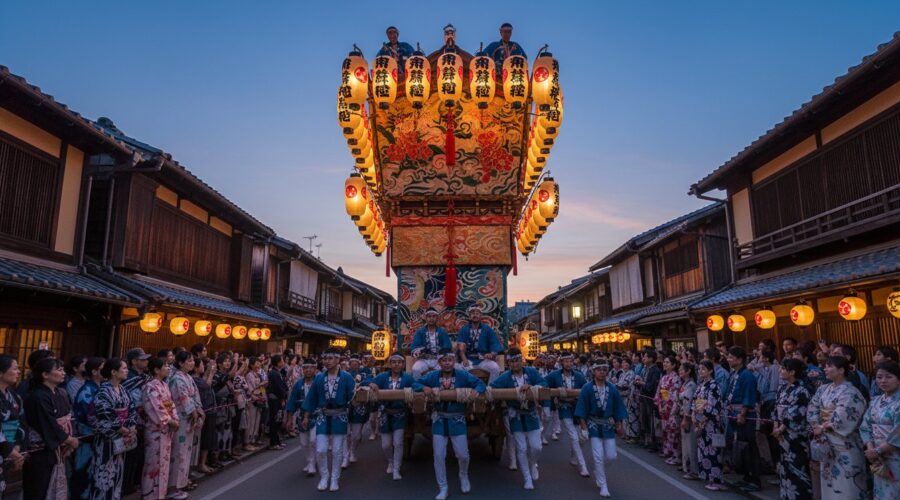
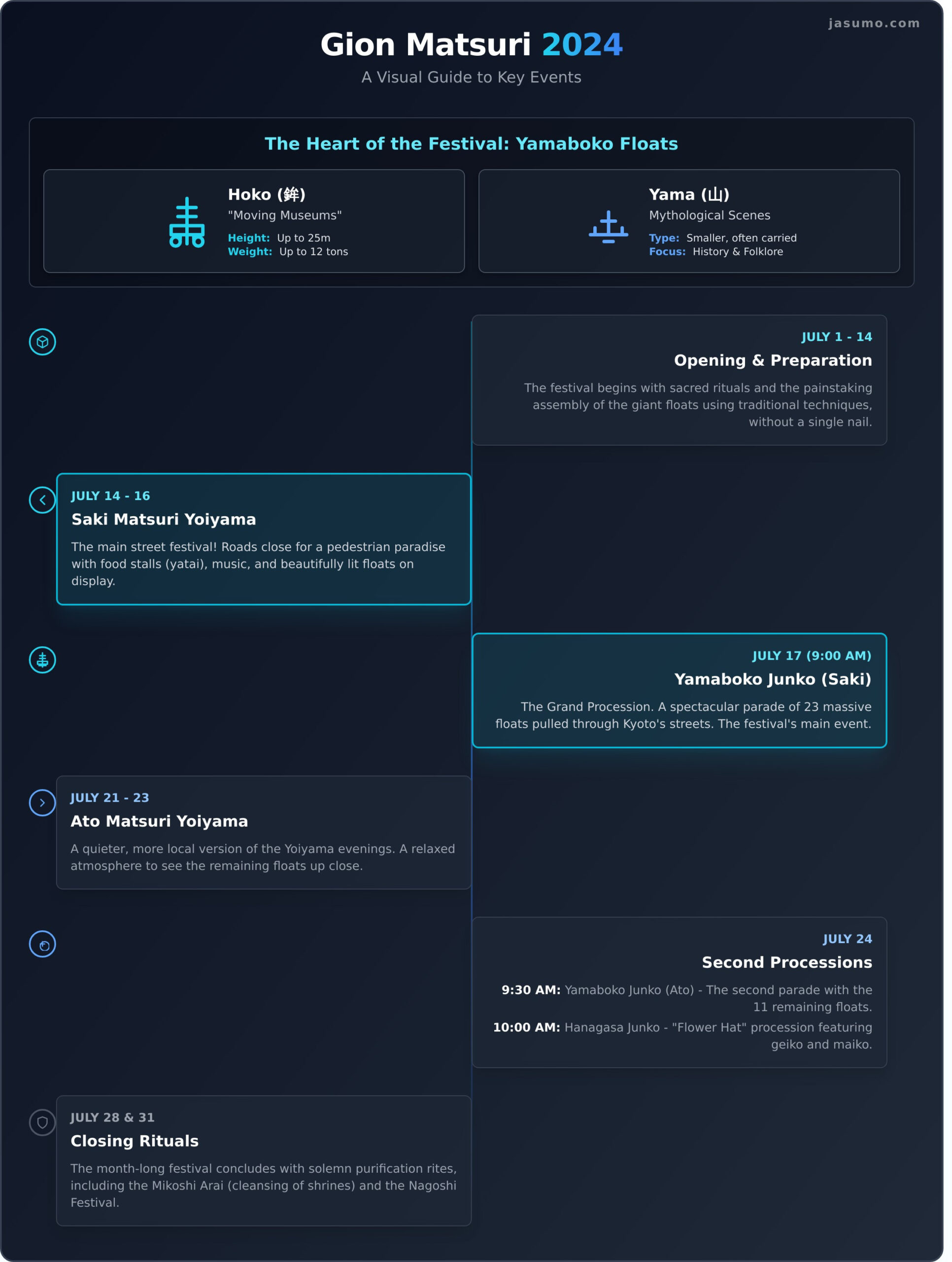
- Hoko: Towering structures that can reach 25 meters in height and weigh up to 12 tons. They are often called “moving museums” for their exquisite craftsmanship and priceless tapestries from as far as Persia and Belgium.
- Yama: Smaller floats, often carried, that depict scenes from Japanese mythology and history.
Each float is painstakingly built and maintained by local neighborhood associations, a community effort that has been passed down through generations, showcasing incredible local pride and artistry.
Why a Whole Month? The Structure of the Festival
While the Gion Matsuri officially runs for the entire month of July, the most popular events for visitors are concentrated mid-month. The festival is built around two grand processions: the Saki Matsuri (Former Festival) on July 17th and the Ato Matsuri (Latter Festival) on July 24th. In the three evenings preceding each parade, the streets come alive for the Yoiyama festivals. During Yoiyama, the floats are displayed, traditional lanterns are lit, and the area transforms into a massive street party with food stalls and music, offering a fantastic opportunity to see the craftsmanship up close. Beyond these key dates, the month is filled with dozens of other sacred rituals and ceremonies.
Gion Matsuri 2024: Complete Schedule of Key Events
Planning your visit to the Gion Matsuri 2024 can feel overwhelming, as events span the entire month of July. We’ve created this official, chronological guide to help you focus on the festival’s most spectacular moments. While smaller rituals happen daily, this schedule covers the key events you won’t want to miss. For a complete list of all religious ceremonies, you can find official Yasaka Shrine Gion Matsuri details on their website.
Key Dates at a Glance
- July 14-16: Yoiyama Evenings (Saki Matsuri) – Main street festival
- July 17 (9:00 AM): Yamaboko Junko (Saki Matsuri) – The Grand Parade
- July 21-23: Yoiyama Evenings (Ato Matsuri) – Quieter street festival
- July 24 (9:30 AM): Yamaboko Junko (Ato Matsuri) – The Second Parade
- July 24 (10:00 AM): Hanagasa Junko – Flower Hat Procession
Early July: The Opening Ceremonies
The festival begins quietly with important opening rituals. From July 1-5, the Kippuiri ceremonies mark the start of preparations in each neighborhood. On July 2, the sacred child (Chigo) is chosen in a special lottery. The most visually engaging part of early July is the Yamaboko float construction (July 10-14), where you can watch artisans assemble the massive, intricate floats using traditional techniques without a single nail.
Mid-July: The Main Spectacles (Saki Matsuri)
This is when the festival’s energy peaks. The evenings of July 14-16 (Yoiyoiyoiyama, Yoiyoiyama, and Yoiyama) transform the Shijo-Karasuma area into a pedestrian paradise filled with food stalls, music, and a festive atmosphere. The grand finale is the Yamaboko Junko on July 17 at 9:00 AM, a spectacular procession of 23 massive floats being pulled through the streets of Kyoto.
Mid-to-Late July: The Second Wave (Ato Matsuri)
Following the main parade, the festival continues with the “after” festival. The Ato Matsuri Yoiyama evenings (July 21-23) offer a more relaxed and local atmosphere compared to their Saki Matsuri counterparts. On July 24, two processions take place: the second Yamaboko Junko at 9:30 AM, featuring the remaining 11 floats, and the beautiful Hanagasa Junko (Flower Hat Procession) at 10:00 AM, which features geiko and maiko.
Late July: Closing Rituals
The festival formally concludes with solemn purification rites. The Mikoshi Arai on July 28 involves the ritual cleansing of the portable shrines at the Kamo River. Finally, on July 31, the Eki Shrine Nagoshi Festival marks the end of the month-long celebration, with visitors walking through a large grass ring to pray for good health for the remainder of the year.
The Main Events Explained: A Deeper Dive
While a schedule provides the ‘what’ and ‘when’, the true magic of Gion Matsuri is in the experience. To help you prioritize, here’s a look beyond the timeline into the sights, sounds, and unforgettable atmosphere of the festival’s main events. Understanding these moments is key to planning your perfect gion matsuri 2024 visit.
Yoiyama Evenings (July 14-16 & 21-23)
In the three nights leading up to each grand procession, central Kyoto transforms into a vibrant street festival. Major thoroughfares like Shijo and Karasuma close to traffic, creating a pedestrian paradise. The air hums with the enchanting sound of Gion-bayashi music played from the floats, while the aroma of sizzling street food from countless yatai (stalls) fills the air. A special highlight is the Byobu Matsuri (“Folding Screen Festival”), where some traditional Gion families open their entryways to display precious family heirlooms. For the best experience, arrive just before dusk to witness the hundreds of paper lanterns on the floats being lit, casting a magical glow over the city before the largest crowds gather.
The Grand Processions: Yamaboko Junko (July 17 & 24)
The Yamaboko Junko is the festival’s spectacular climax. The main procession (Saki Matsuri) on July 17th is the larger of the two, featuring 23 colossal floats. The parade route along Shijo, Kawaramachi, and Oike streets is lined with spectators, but the most dramatic moment is the Tsujimawashi. This is where teams of men use immense strength and skill to pivot the multi-ton hoko floats 90 degrees at intersections. As detailed in cultural guides like the UCLA Study Abroad Gion Matsuri page, these processions are a living display of centuries-old community and tradition. The parade officially begins when the chigo, a sacredly chosen local boy, symbolically cuts a sacred rope with a sword.
The second procession, the Ato Matsuri on July 24th, features the remaining 11 floats. It is a more compact and slightly less crowded affair, offering a wonderful opportunity to see the floats up close in a more intimate setting.
Navigating the crowds and finding the best viewing spots can be challenging. For a seamless experience, explore Jasumo’s curated Gion Matsuri services and tickets.
Insider’s Guide: How to Experience Gion Matsuri Like a Pro
Navigating Japan’s largest festival can feel overwhelming, but a little insider knowledge transforms the experience from stressful to spectacular. At Jasumo, we handle the details so you can immerse yourself in the celebration. This guide provides actionable tips to help you enjoy gion matsuri 2024 with the confidence of a seasoned local.
Best Viewing Spots for the Parade
To witness the majestic Yamaboko Junko parade, securing a good vantage point is crucial. For guaranteed comfort and an unobstructed view, consider the official paid spectator seats, which offer a reserved space along the main route. These tickets sell out quickly, so advance planning is essential.
If you prefer a free spot, be prepared to arrive several hours early. The corners of the Kawaramachi-Oike and Kawaramachi-Shijo intersections are prime locations where you can see the floats making their dramatic turns. For a slightly less congested atmosphere, we recommend finding a spot along the Oike-dori section of the route. For a truly seamless experience, contact Jasumo for help securing premium viewing seats or guided tours.
What to Eat, Drink, and Buy
The festival is a feast for the senses. During the Yoiyama evenings, the streets are lined with yatai (food stalls) offering classic festival treats like grilled yakitori skewers, savory takoyaki (octopus balls), and sweet candied fruits. Don’t miss the opportunity to try local craft beer and sake from Kyoto’s famed breweries.
Beyond the food, look for the special chimaki being sold. These are not for eating; they are sacred protective amulets made of rice straw, believed to ward off evil and bring good fortune for the year. They make for a truly authentic and meaningful souvenir from gion matsuri 2024.
Survival Tips for the Crowds and Heat
Kyoto’s July heat and the festival’s immense popularity demand preparation. Follow these simple tips to stay comfortable and safe:
- Dress Smart: Wear lightweight, breathable clothing and comfortable walking shoes. Many locals and visitors wear a traditional yukata, a light summer kimono that is perfect for the occasion.
- Stay Hydrated and Cool: Always carry a bottle of water. A portable fan (either electric or a traditional folding one) and a hat are indispensable for beating the heat. Don’t forget sunscreen.
- Use Public Transport: Kyoto’s subways and buses are the best way to get around, but expect stations near the festival area to be extremely crowded. Plan your route in advance and give yourself extra time.
- Carry Cash: While Japan is modern, many food stalls and vendors at festivals are cash-only. Ensure you have enough Japanese Yen (¥) on hand for snacks, drinks, and purchasing a chimaki.
Your Unforgettable Gion Matsuri Experience Awaits
The Gion Matsuri is more than just a festival; it’s a living, breathing piece of Kyoto’s cultural heritage. From the towering Yamaboko floats of the grand processions to the vibrant energy of the Yoiyama evenings, this guide has equipped you with the knowledge to dive deep into the celebrations. With a full month of events, planning is essential to making the most of your visit to the gion matsuri 2024.
Navigating the festivities can be a challenge, but it doesn’t have to be overwhelming. At Jasumo, we specialize in creating seamless and authentic Japanese experiences. Our team’s expert local knowledge and bilingual concierge support ensure you can bypass the stress and focus on the magic of the moment. We provide access to exclusive tickets and experiences, crafting a journey that is uniquely yours.
We handle the details so you can immerse yourself fully in the tradition and spectacle. Let us handle the details. Explore our custom Japan tours today. Get ready to create incredible memories in the heart of Kyoto!
Frequently Asked Questions About Gion Matsuri
Is the Gion Matsuri free to attend?
Yes, attending the main street events of the Gion Matsuri is completely free of charge. You can watch the grand Yamaboko Junko parades and explore the festive Yoiyama evenings without a ticket. However, you should bring Japanese Yen (JPY) for food and drink from the many street stalls, as well as for any souvenirs or protective charms you may wish to purchase. Paid seating areas are also available for a better parade view, but they are optional.
What is the single best day to visit the Gion Matsuri?
The best day depends on your preference for crowds and atmosphere. For the most vibrant and energetic experience, visit on July 16th for the Yoiyama street festival and July 17th for the main Saki Matsuri parade. These are the busiest days. For a slightly more relaxed but equally authentic experience with fewer crowds, consider visiting on July 23rd for the Ato Matsuri’s Yoiyama and July 24th for the second parade. Both offer incredible cultural immersion.
Is the Gion Festival suitable for children and families?
Yes, the Gion Matsuri can be a wonderful experience for families, especially during the daytime. The parades offer a spectacular visual treat for all ages. However, be aware that the Yoiyama evening events (July 14-16 and July 21-23) can become extremely crowded, which may be overwhelming for small children. We recommend visiting earlier in the day or attending the less-crowded Ato Matsuri events if you are with your family.
How do I get to the main festival area in Kyoto?
The main festival events are centered around Shijo, Karasuma, and Kawaramachi streets. The most efficient way to get there is by public transport, as many roads are closed to traffic. Use the Hankyu Railway Line to Karasuma or Kyoto-kawaramachi Station, or the Karasuma Subway Line to Shijo Station. From these stations, you are directly in the heart of the festival. We strongly advise against driving due to the extensive road closures and lack of parking.
What happens if it rains during the Gion Matsuri?
The Gion Matsuri proceeds even in the rain. The parades and events will only be cancelled in the case of a severe weather event like a typhoon, which is rare. The massive Yamaboko floats have roofs, and the participants are prepared for inclement weather. If rain is in the forecast for your visit to Gion Matsuri 2024, simply bring an umbrella or a raincoat and enjoy the unique, atmospheric experience of the festival in the rain.
Can I climb on the Yamaboko floats?
Climbing the floats during the parade is strictly prohibited. However, during the Yoiyama evenings leading up to the processions, some neighborhood associations allow visitors to enter and climb their stationary floats. This often requires a small donation or the purchase of a souvenir charm, typically costing between ¥500 and ¥1,000. Look for signs and queues near the floats, but please note that not all of them offer this unique opportunity.
What is the difference between the Saki Matsuri and Ato Matsuri parades?
The Saki Matsuri (Former Festival) on July 17th is the larger and more famous of the two parades, featuring 23 magnificent floats. It attracts the biggest crowds and has a more high-energy atmosphere. The Ato Matsuri (Latter Festival) on July 24th is a revival of the original second procession. It is smaller, with 11 floats, and generally less crowded. It follows the parade route in reverse, offering a more traditional and intimate viewing experience.
Planning a Group Trip to Japan?
From corporate teams to friends traveling together, we create tailor-made travel packages. Enjoy VIP access, curated itineraries, and full support from our local experts. Tell us your plans, and we’ll handle the rest.
Contact Jasumo Now →