Inside the Heya: The Heart of Sumo Training
Step through the wooden gates of a traditional sumo heya, and you enter a world that exists nowhere else on Earth. These remarkable institutions serve as home, school, training ground, and spiritual sanctuary for Japan’s most iconic athletes. Far more than simple gyms or dormitories, the sumo stable represents the beating heart of a cultural tradition that has endured for over fifteen centuries, where ancient customs merge seamlessly with the demands of professional athletic competition.
Are you Visiting Japan soon?
Let us make your trip effortless. From tickets and hotels to transport and local guides, we arrange everything for you or your group. Whether it’s a music festival in Tokyo or a business conference in Osaka, our custom travel service ensures you enjoy the event stress-free.
Contact Jasumo Now →The heya system forms the foundation of professional sumo wrestling, creating an environment where young men transform from ordinary individuals into extraordinary athletes while absorbing the profound cultural values that define Japanese society. Within these walls, the concept of family extends beyond blood relations to encompass a brotherhood forged through shared struggle, mutual respect, and unwavering dedication to excellence.
The Architecture of Tradition: Building Sacred Spaces
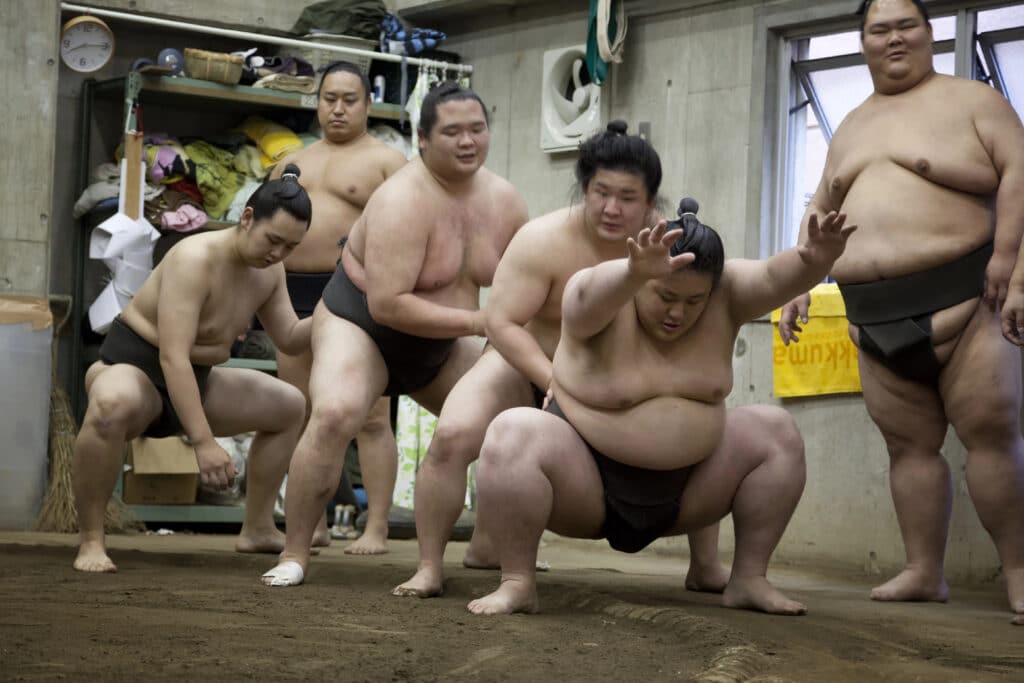
Every authentic sumo heya follows architectural principles established centuries ago, designed to facilitate both practical training needs and spiritual development. The central feature of any stable is the dohyō, the sacred wrestling ring where all serious training occurs. This raised clay platform occupies a place of honor within the facility, surrounded by open space that allows for safe movement and observation by stable masters and visiting dignitaries.
The Dewanoumi stable, one of Tokyo’s most prestigious heya, exemplifies this traditional design philosophy. Established in 1947, the facility houses twenty-three wrestlers ranging from teenage recruits to seasoned professionals approaching the sport’s highest ranks. The main training hall features polished wooden floors, traditional paper screens, and carefully maintained air circulation systems that accommodate the intense physical activity occurring within.
Living quarters within the sumo stable reflect the strict hierarchy that governs every aspect of wrestler life. Junior members share dormitory-style rooms with futon bedding arranged on tatami mats, while senior wrestlers enjoy private chambers that provide space for personal belongings and quiet contemplation. The oyakata (stable master) occupies the most prestigious quarters, often including a separate entrance and reception area for conducting business with other sumo officials.
The kitchen and dining areas represent perhaps the most important communal spaces within the heya, where the famous chanko-nabe meals are prepared and consumed. These facilities must accommodate the enormous appetites of professional wrestlers while maintaining the sanitary standards expected in modern Japan. Commercial-grade equipment handles the massive quantities of food required to fuel elite athletes, while traditional serving protocols ensure that cultural customs are properly observed.
Storage areas house the specialized equipment essential for sumo training: practice mawashi (loincloths), training gear, ceremonial dress, and the cleaning supplies necessary to maintain the facility’s impeccable standards. Every item has its designated place, reflecting the organizational discipline that characterizes successful sumo stables.
The Oyakata: Masters of an Ancient Art
At the apex of every sumo heya stands the oyakata, a former wrestler who has earned the right to establish and operate his own stable. These remarkable individuals serve simultaneously as athletic coaches, business managers, cultural educators, and surrogate fathers to the young men under their care. The transition from active competitor to stable master requires not only exceptional wrestling ability but also the character, wisdom, and financial resources necessary to guide others along the demanding path toward sumo excellence.
Takanohana Oyakata, one of the most respected figures in contemporary sumo, exemplifies the qualities required for successful stable management. During his competitive career, he achieved the sport’s highest rank of yokozuna (grand champion) while demonstrating the dignity and moral leadership that characterizes truly great champions. His transition to stable master brought new challenges, as he applied his deep understanding of sumo technique and psychology to developing the next generation of wrestlers.
The oyakata’s daily responsibilities encompass every aspect of stable operations, from designing training regimens to managing finances to maintaining relationships with the Japan Sumo Association. These masters must balance the preservation of traditional methods with the incorporation of modern sports science, ensuring that their wrestlers receive the most effective preparation possible while respecting the cultural values that define authentic sumo.
The selection and recruitment of new wrestlers represents one of the oyakata’s most critical functions. Identifying young men with the physical attributes, mental toughness, and character necessary for sumo success requires exceptional judgment and experience. The stable master must evaluate not only immediate potential but also the likelihood of long-term development and cultural adaptation.
Training supervision occupies the largest portion of the oyakata’s daily schedule, as he observes practice sessions with the trained eye of a former champion. His corrections and guidance can mean the difference between victory and defeat in tournament competition, making his expertise invaluable to wrestlers at every level of development.
The Brotherhood of the Dohyō: Hierarchy and Relationships
The sumo stable operates according to a sophisticated social hierarchy that governs everything from training priorities to meal service to sleeping arrangements. This system, refined over centuries of tradition, creates an environment where respect, discipline, and mutual support flourish while maintaining clear lines of authority and responsibility.
New recruits enter the heya at the bottom of this hierarchy, typically holding the rank of jonokuchi or sandanme. These young wrestlers, often teenagers leaving home for the first time, must adapt quickly to the demanding lifestyle of professional sumo while learning their place within the stable’s social structure. Their days begin before dawn with cleaning duties, equipment preparation, and other tasks that support the training of senior members.
The relationship between junior and senior wrestlers forms the backbone of the heya system, creating mentorship opportunities that extend far beyond simple athletic instruction. Senior rikishi share not only technical knowledge but also the wisdom gained through years of competition, helping newcomers navigate the psychological challenges of professional sports while adapting to traditional Japanese cultural expectations.
Sekitori, the salaried wrestlers who have achieved professional status, occupy positions of significant respect within the stable hierarchy. These accomplished athletes serve as role models and instructors for junior members while continuing their own development under the oyakata’s guidance. The transition to sekitori status transforms a wrestler’s daily life, providing financial security and increased privileges while adding new responsibilities for mentoring others.
The stable’s social dynamics create bonds that often last throughout the wrestlers’ lives and beyond their competitive careers. Former stable-mates maintain contact across decades, sharing business opportunities, celebrating family milestones, and supporting each other through personal challenges. This extended family network provides emotional and practical support that helps wrestlers transition successfully to post-competition life.
Training partnerships within the heya develop naturally based on size, skill level, and compatible personalities. These relationships become crucial for effective practice, as wrestlers must trust their training partners to provide challenging but safe competition during daily keiko (practice bouts). The intensity of these sessions creates mutual respect and understanding that transcends simple friendship.
Daily Life in the Heya: Rhythm and Routine
The sumo stable operates according to a carefully structured daily schedule that balances intensive training with the cultural education and character development essential for producing authentic rikishi. This routine, virtually unchanged for generations, creates the disciplined environment necessary for transforming ordinary young men into extraordinary athletes and cultural ambassadors.
The day begins at 4:30 AM with the gentle stirring of junior wrestlers, who must prepare the facility for morning training while their senior stable-mates complete personal grooming routines. The traditional topknot hairstyle requires daily maintenance, and the wrestlers’ appearance must meet the exacting standards expected of professional sumo competitors.
Morning training sessions commence at 5:00 AM with purification rituals that connect the physical practice to its spiritual foundations. Wrestlers throw salt to cleanse the dohyō while offering brief prayers for safety and success. These ceremonies transform the training hall into sacred space where athletic preparation becomes a form of cultural worship.
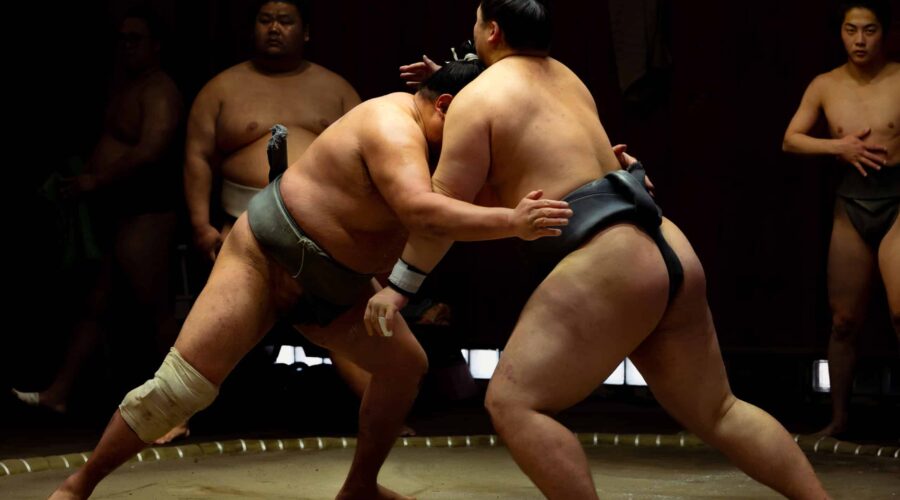
The intensity of morning keiko cannot be overstated. Wrestlers engage in full-contact practice bouts that replicate tournament conditions, pushing their bodies to the limits of endurance while refining the techniques that will determine their competitive success. The sound of colliding bodies echoes through the stable as rikishi perfect their timing, balance, and power under the watchful eye of the oyakata.
Basic movement exercises occupy a significant portion of morning training, as wrestlers practice the fundamental positions and transitions that form the foundation of all sumo technique. These repetitive drills develop the muscle memory essential for split-second decision-making during actual matches, when victory or defeat can be determined in mere moments.
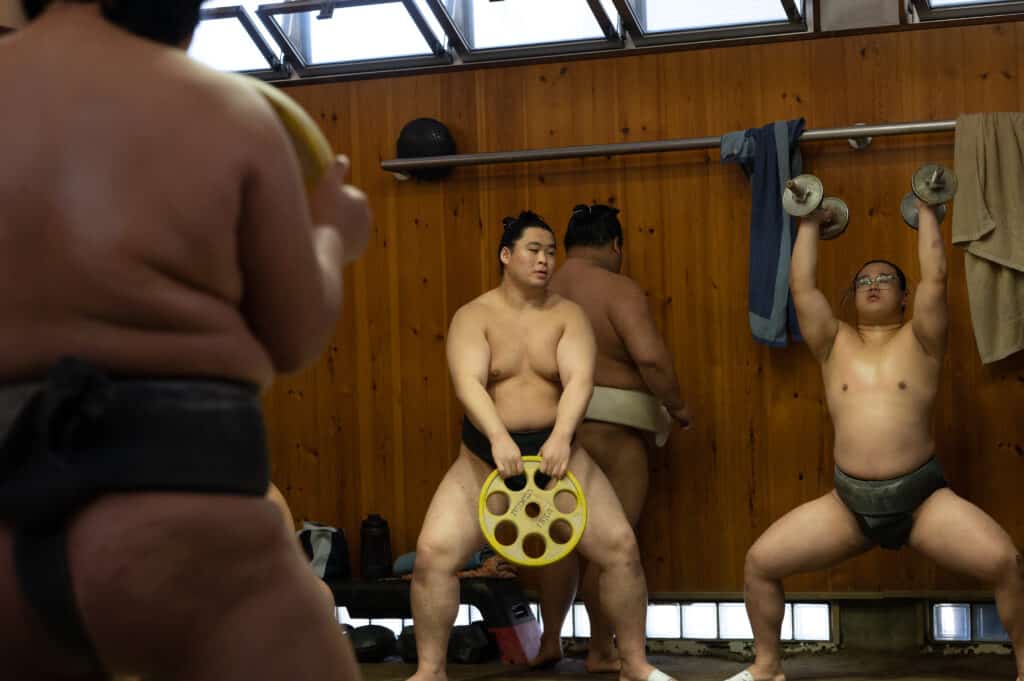
Strength and conditioning work incorporates both traditional Japanese methods and modern sports science principles. Wrestlers engage in exercises specific to sumo’s unique physical demands, building the explosive power necessary for the initial charge while developing the core strength required for grappling exchanges.
The morning session concludes around 10:00 AM, when exhausted wrestlers begin preparing for the communal meal that serves as both nutritional foundation and social bonding experience. The transition from intense competition to cooperative meal preparation demonstrates the multifaceted nature of stable life.
The Sacred Kitchen: Chanko-Nabe and Community
The kitchen of a sumo stable represents far more than a simple food preparation area—it’s the heart of the heya’s social life, where wrestlers gather to nourish both body and spirit through the sharing of traditional meals and meaningful conversation. The preparation and consumption of chanko-nabe, the protein-rich stew that forms the cornerstone of sumo nutrition, serves multiple purposes within the stable’s daily routine.
Chanko-nabe preparation follows time-honored protocols that reinforce the stable’s hierarchical structure while teaching important life skills to junior wrestlers. The newest members handle basic tasks like vegetable preparation and equipment cleaning, gradually earning the privilege of cooking more complex elements as they demonstrate competence and earn the trust of their seniors.
The recipes used in each stable often represent closely guarded secrets passed down through generations of wrestlers and stable masters. These formulations balance nutritional requirements with taste preferences while incorporating seasonal ingredients that connect the wrestlers to Japan’s agricultural traditions. The Takasago stable, for example, is renowned for its chicken-based chanko that includes specific herbs believed to enhance strength and endurance.
The communal dining experience reinforces social bonds while providing opportunities for informal education and mentorship. Senior wrestlers share stories of tournament competition, offer technical advice, and discuss the mental aspects of professional sumo. These conversations help junior members understand the psychological demands they will face as they advance through the ranking system.
Meal service follows strict protocols that reflect the respect and discipline central to sumo culture. Junior wrestlers serve senior members before eating themselves, learning hospitality skills while demonstrating their understanding of proper social hierarchy. These practices prepare them for the public interactions they will experience as professional athletes and cultural representatives.
The nutritional science behind chanko-nabe reflects centuries of empirical knowledge about fueling elite athletic performance. The high protein content supports muscle development and recovery, while complex carbohydrates provide sustained energy for training and competition. The meal timing—primarily lunch and dinner—promotes the weight gain necessary for sumo competition while supporting optimal recovery between training sessions.
Modern Challenges: Tradition Meets Innovation
Contemporary sumo stables must navigate the complex challenge of preserving traditional values while adapting to modern realities. The integration of sports science, medical knowledge, and business practices requires careful consideration to ensure that innovations enhance rather than compromise the authentic heya experience.
Modern training methods have been gradually incorporated into stable routines, with video analysis, strength measurement, and injury prevention protocols becoming standard practice in many heya. The Miyagino stable has pioneered the use of motion capture technology to analyze wrestler movement patterns, identifying technical flaws that might not be visible to the naked eye.
Medical care within sumo stables has evolved significantly, with regular health screenings, nutritional monitoring, and injury treatment protocols that reflect current sports medicine best practices. The physical demands of sumo wrestling require sophisticated medical support to ensure wrestler safety and career longevity.
The recruitment of foreign-born wrestlers has presented both opportunities and challenges for traditional heya operations. These athletes bring diverse cultural perspectives and training methods while requiring additional support to adapt to Japanese social customs and language requirements. Successful integration requires careful attention to cultural education and mentorship.
Technology has transformed certain aspects of stable operations, with social media presence, financial management software, and communication systems becoming essential tools for modern oyakata. However, these innovations must be balanced with the maintenance of traditional practices that define authentic sumo culture.
The economic pressures facing contemporary sumo have influenced stable operations, with sponsorship opportunities, merchandise sales, and public relations activities becoming increasingly important revenue sources. The challenge lies in pursuing financial sustainability while maintaining the cultural integrity that attracts supporters and justifies public investment in the sport.
The Women Behind the Scenes: Support and Sacrifice
While the public face of sumo remains exclusively male, the wives and female family members of stable masters play crucial roles in heya operations. These remarkable women manage household responsibilities, coordinate social functions, and provide emotional support that enables the stable to function effectively.
The okamisan (stable master’s wife) serves as a maternal figure for young wrestlers far from their families, offering guidance on personal matters and helping them adapt to life in Tokyo. Her influence extends to meal planning, medical care coordination, and the countless details that support successful athletic performance.
Female family members often handle the business aspects of stable operations, managing finances, coordinating with sponsors, and maintaining relationships with the sumo association. Their contributions remain largely invisible to the public but are essential for the stable’s success and sustainability.
The sacrifices made by these women reflect the demanding nature of sumo culture, where family life revolves around the needs of the wrestlers and the requirements of tournament schedules. Their dedication enables the stable masters to focus on training and development while ensuring that all other needs are met.
International Wrestlers: Bridging Cultures
The presence of foreign-born wrestlers in sumo stables has created unique opportunities for cultural exchange while presenting new challenges for traditional heya operations. These athletes must navigate not only the physical demands of professional sumo but also the complex process of cultural adaptation and language acquisition.
Successful integration of international wrestlers requires extensive support from stable masters and senior Japanese wrestlers. Language instruction, cultural education, and emotional support help these athletes adapt to life in Japan while maintaining connection to their home countries and families.
The contributions of foreign wrestlers have enriched sumo culture while raising questions about the sport’s traditional Japanese identity. Stables must balance the preservation of authentic cultural practices with the practical benefits of international talent and the global appeal that diverse participation creates.
Cultural mentorship becomes particularly important for foreign wrestlers, who must learn not only sumo techniques but also the social protocols, ceremonial requirements, and behavioral expectations that define professional rikishi. This education process often takes years and requires patience from all parties involved.
The Path to Retirement: Life After the Dohyō
Sumo stables provide crucial support for wrestlers transitioning from competitive careers to civilian life, recognizing that the skills and relationships developed within the heya can serve as foundations for future success. The stable master’s guidance becomes particularly valuable during this challenging period of personal and professional adjustment.
Many retired wrestlers remain connected to their former stables through business partnerships, coaching roles, or ceremonial functions that maintain their involvement in sumo culture. These ongoing relationships provide stability and purpose while allowing former competitors to contribute their knowledge and experience to the next generation.
Career transition programs have become increasingly sophisticated, with educational opportunities, job placement assistance, and entrepreneurial support helping wrestlers develop post-competition careers. The unique fame and cultural status of professional sumo wrestlers often creates opportunities in entertainment, hospitality, and cultural promotion fields.
The stable network provides valuable business connections and support systems that extend far beyond the wrestling world. Former stable-mates often collaborate on business ventures, leveraging their shared experiences and mutual trust to create successful enterprises that benefit from their sumo backgrounds.
Preserving Tradition: The Future of the Heya System
The continued vitality of sumo culture depends on the preservation and adaptation of the traditional heya system that has nurtured champions for centuries. Stable masters, wrestlers, and sumo officials must work together to ensure that these unique institutions continue serving their essential functions while adapting to contemporary realities.
Educational initiatives have become increasingly important for maintaining public support and understanding of sumo culture. Stable tours, school visits, and cultural exchanges help demonstrate the value and authenticity of the heya system while inspiring young people to consider careers in professional sumo.
The documentation and preservation of heya traditions has become a priority, with video recordings, written protocols, and cultural studies ensuring that essential knowledge is not lost as senior practitioners retire. These efforts help maintain consistency across different stables while preserving the diversity that makes each heya unique.
International interest in sumo culture has created opportunities for cultural diplomacy and economic development, with foreign visitors increasingly seeking authentic experiences within traditional stables. This interest must be managed carefully to provide meaningful exposure while protecting the privacy and focus necessary for effective training.
The Economic Foundation: Supporting Sumo Culture
The financial sustainability of sumo stables requires a complex balance of traditional support systems and modern revenue generation. The Japan Sumo Association provides basic funding, but individual stables must develop additional income sources to maintain facilities and support their wrestlers adequately.
Sponsorship relationships with local businesses create mutually beneficial arrangements that provide financial support while offering companies association with sumo’s cultural prestige. These partnerships often extend beyond simple monetary exchange to include promotional activities, cultural events, and community engagement initiatives.
The sale of stable-branded merchandise, from training gear to food products, has become an important revenue source for many heya. These items allow fans to demonstrate their support while providing stables with ongoing income that supports their operations.
Corporate hospitality and educational programs offer additional revenue opportunities, with businesses paying for exclusive access to training sessions, cultural experiences, and wrestler interactions. These programs must be carefully managed to avoid disrupting training routines while providing authentic experiences for participants.
The Spiritual Dimension: Sumo as Sacred Practice
The heya serves not only as a training facility but as a spiritual sanctuary where the sacred and secular aspects of sumo culture merge seamlessly. The daily rituals, ceremonial practices, and respectful interactions that characterize stable life reflect the Shinto influences that have shaped sumo since its earliest origins.
The purification ceremonies that begin each training session connect contemporary wrestlers to centuries of spiritual tradition, transforming physical preparation into a form of worship that honors both ancestors and kami (spiritual forces). These practices reinforce the understanding that sumo transcends mere athletic competition to encompass profound cultural and spiritual dimensions.
The respect shown for the dohyō, training equipment, and stable facilities reflects the Japanese concept of finding sacred meaning in everyday objects and activities. This spiritual awareness influences every aspect of stable life, from the careful maintenance of training gear to the proper disposal of food waste.
Meditation and reflection periods integrated into daily routines provide wrestlers with opportunities for personal growth and spiritual development. These practices help athletes maintain psychological balance while developing the mental discipline essential for competitive success.
Legacy and Continuity: The Eternal Cycle
As evening settles over the sumo stable, the day’s intense activities give way to quiet reflection and preparation for tomorrow’s challenges. The wrestlers who have pushed their bodies to the limits of endurance during training now gather for communal meals, shared conversation, and the strengthening of bonds that will endure long after their competitive careers have ended.
Within the walls of the heya, time seems to move according to rhythms established centuries ago, where the urgent demands of modern life yield to the patient cultivation of excellence that characterizes authentic sumo culture. The young wrestlers retiring to their futon bedding tonight will wake tomorrow to continue a cycle of training, growth, and cultural preservation that connects them to countless generations of predecessors.
The heya system represents one of humanity’s most successful examples of traditional education and character development, where technical mastery and spiritual growth occur simultaneously within a supportive community environment. The relationships formed within these walls often prove more valuable than the athletic achievements they facilitate, creating networks of mutual support that enrich lives long after competitive careers have concluded.
The stable masters who guide these institutions carry enormous responsibility for preserving and transmitting cultural knowledge while adapting to contemporary challenges. Their success in balancing tradition with innovation will determine whether future generations of wrestlers will have access to the transformative experiences that define authentic sumo culture.
The international community’s growing appreciation for sumo culture creates both opportunities and obligations for the heya system. These stables must find ways to share their unique knowledge and traditions while protecting the authenticity and focus that make their contributions valuable. The careful management of this exposure will help ensure that sumo continues to inspire and educate people around the world.
As the lights dim in training halls across Japan, the sumo stables settle into the quiet hours that precede another dawn and another opportunity to pursue excellence through traditional methods. The young men sleeping on tatami mats tonight have chosen to dedicate their lives to preserving and advancing one of humanity’s oldest and most meaningful athletic traditions.
Tomorrow will bring new challenges, new opportunities for growth, and new chances to demonstrate the character and skill that transform ordinary individuals into extraordinary athletes and cultural ambassadors. The heya system that supports this transformation represents a unique achievement in human organization, creating environments where ancient wisdom and contemporary purpose combine to produce results that transcend simple athletic success.
The heart of sumo training beats strongest within these traditional stables, where dedication, respect, and excellence are not merely goals but ways of life. The wrestlers who emerge from this system carry with them not only the technical skills necessary for competitive success but also the character, wisdom, and cultural knowledge that define authentic Japanese identity.
In choosing to support and participate in the heya system, these remarkable individuals become links in an unbroken chain of cultural transmission that extends from sumo’s prehistoric origins to its contemporary manifestations. Their daily commitment to training, tradition, and mutual support ensures that this precious inheritance will continue to enrich human culture for generations to come.
The sumo stable stands as a testament to the power of traditional education, community support, and unwavering dedication to excellence. Within its walls, young men discover not only their athletic potential but also their capacity for growth, leadership, and service to something greater than themselves. This transformation, repeated countless times across centuries of sumo history, represents one of humanity’s most beautiful examples of what becomes possible when talent meets tradition within a supportive community environment.
Discover More About Japan’s Rich Culture
Ready to dive deeper into the fascinating world of Japanese traditions, sports, and culture? Visit JASUMO.com
Planning a Group Trip to Japan?
From corporate teams to friends traveling together, we create tailor-made travel packages. Enjoy VIP access, curated itineraries, and full support from our local experts. Tell us your plans, and we’ll handle the rest.
Contact Jasumo Now →