
Japan’s Most Magical Bamboo Forests: The Complete 2025 Guide
When you picture the kind of bamboo forest Japan is famous for, your mind likely jumps to the iconic Arashiyama grove in Kyoto. But with that image often comes the worry of navigating dense crowds, which can detract from the serene experience you’re hoping for. What if you could find that same otherworldly magic, but with the peaceful atmosphere you’ve seen in photos? And what if Arashiyama was just the beginning of your bamboo adventure?
Are you Visiting Japan soon?
Let us make your trip effortless. From tickets and hotels to transport and local guides, we arrange everything for you or your group. Whether it’s a music festival in Tokyo or a business conference in Osaka, our custom travel service ensures you enjoy the event stress-free.
Contact Jasumo Now →This complete 2025 guide is your key to unlocking these breathtaking landscapes. We go beyond the world-famous to reveal stunning, lesser-known groves where you can truly connect with nature. We’ll provide everything you need for a stress-free visit: expert tips on avoiding the crowds, clear transportation guides, and recommendations for nearby attractions to complete your itinerary. Discover the perfect bamboo forest for your trip and understand its unique place in Japanese culture.
Arashiyama Bamboo Grove (Kyoto): The Icon You’ve Dreamed Of
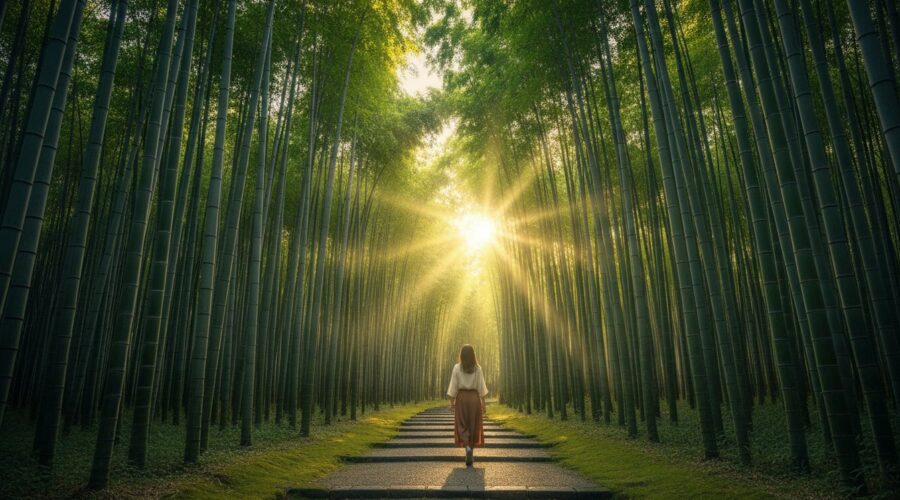
When you picture a bamboo forest in Japan, you are almost certainly thinking of Arashiyama. This iconic grove in western Kyoto is the most photographed and celebrated of its kind, and for good reason. Walking the path through the towering, emerald-green stalks is an otherworldly experience; the sheer scale of the bamboo creates a natural cathedral, filtering sunlight into soft, ethereal beams. The famous Arashiyama Bamboo Grove is more than a visual marvel—it’s also one of Japan’s designated “100 Soundscapes,” where the rustling leaves and creaking wood create a uniquely tranquil symphony. However, its fame means significant crowds. To truly appreciate its magic, a strategic approach is essential.
How to Get There and When to Go
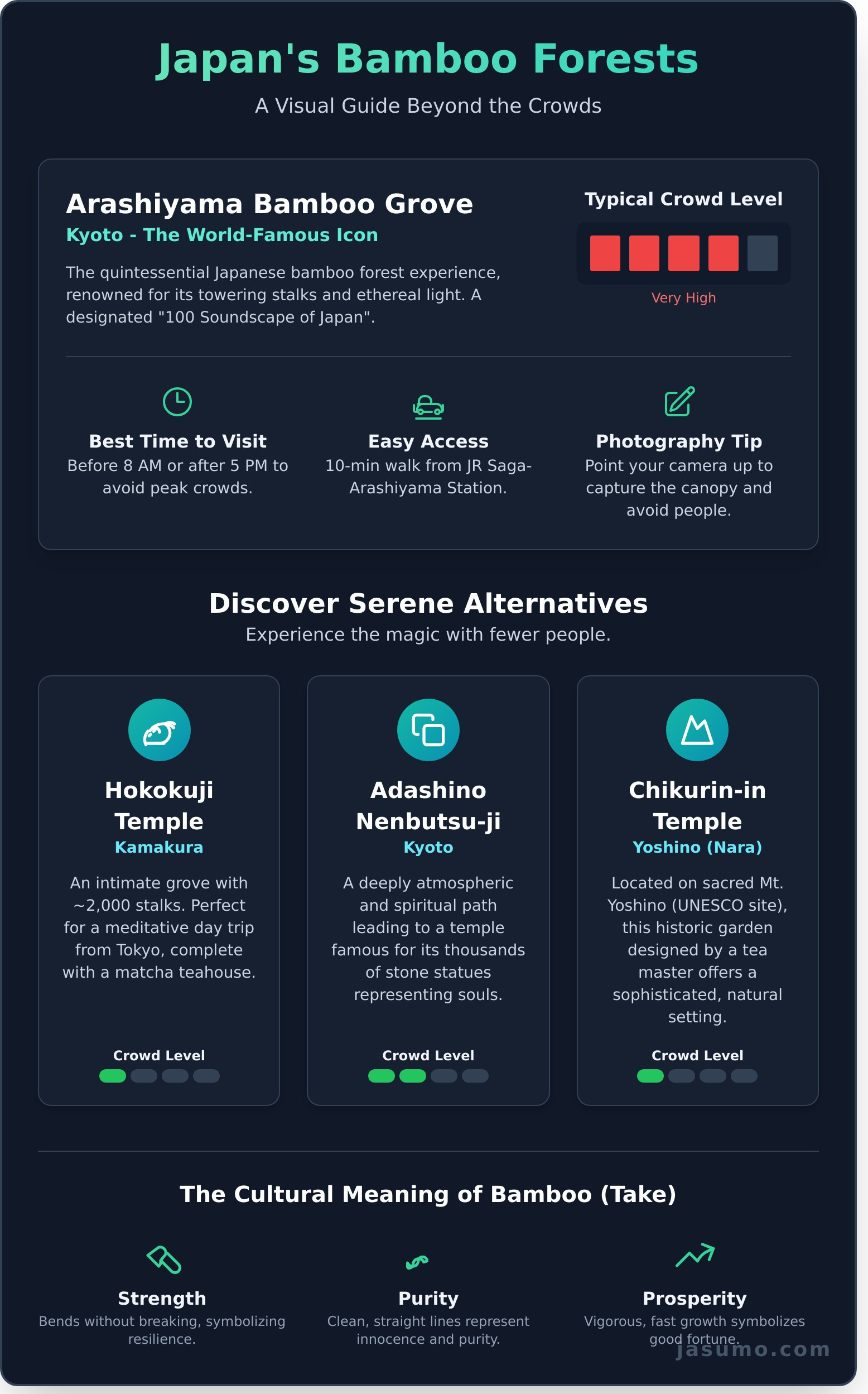
Accessing the grove is straightforward. It’s a short 10-minute walk from JR Saga-Arashiyama Station or just 5 minutes from Randen Arashiyama Station. For the best experience, timing is everything. Plan your visit for the ‘golden hours’—either before 8 AM or after 5 PM—to avoid the peak crowds and capture the best light. For a truly magical visit, consider the Arashiyama Hanatouro in December, when the pathways are illuminated with traditional lanterns.
A Perfect Walking Route Through the Grove
For an efficient and scenic walk, start from Arashiyama’s main street and enter the path just outside the north gate of Tenryū-ji Temple. Follow the main paved path as it gently climbs uphill. This route will lead you directly through the most impressive sections of the grove, eventually ending near the entrance to the stunning Okochi-Sanso Villa. While the main path offers classic views, don’t hesitate to explore the quieter, unpaved side paths for a more personal experience.
Photography Tips for the Perfect Shot
Capturing the perfect image in this popular bamboo forest japan requires a mix of technique and patience. Our top recommendations include:
- Look Up: Point your camera skyward to frame the dense canopy of bamboo against the sky, which naturally excludes crowds from your shot.
- Use Portrait Mode: Smartphone portrait modes are excellent for blurring the busy background, keeping the focus on a person or a specific bamboo stalk.
- Be Patient: The path often has brief lulls between tour groups. Wait for these moments to get a cleaner, more serene shot of the pathway.
- Focus on Details: Capture the unique texture of the bamboo stalks, the way light filters through the leaves, or the gentle sway of the plants in the wind.
Beyond Arashiyama: 3 Other Must-See Bamboo Forests in Japan
While Kyoto’s Arashiyama Bamboo Grove is world-famous, its popularity often means navigating dense crowds. For a more personal and tranquil experience, Japan offers several other breathtaking bamboo forests, each with its own unique atmosphere. Exploring these alternatives provides a deeper appreciation for the serene beauty of a genuine bamboo forest Japan setting.
Discover three top-rated alternatives for travelers seeking serenity in different regions of the country.
Hokokuji Temple, Kamakura: The Tranquil Temple Grove
A perfect day trip from the bustling energy of Tokyo, Hokokuji Temple in Kamakura offers an intimate and meditative bamboo experience. Tucked behind the temple’s main hall lies a small but stunningly dense grove of about 2,000 moso bamboo stalks. The paths are quieter, allowing you to fully absorb the sound of the wind rustling through the towering green canes. For a truly memorable moment, visit the charming teahouse within the grove to sip a bowl of freshly prepared matcha and enjoy a traditional sweet as you gaze into the peaceful forest.
Adashino Nenbutsu-ji Temple, Kyoto: A Hidden Gem
Located further into the Sagano area, just a pleasant walk past the main Arashiyama crowds, Adashino Nenbutsu-ji Temple presents a profoundly atmospheric alternative. A beautiful bamboo path leads you to the temple grounds, which are famous for their thousands of stone statues. These figures represent the souls of the dead, creating a poignant and deeply spiritual environment that feels worlds away from a typical tourist spot. The combination of the quiet bamboo grove and the historic, stone-filled temple grounds makes for an unforgettable and contemplative visit.
Chikurin-in Temple Garden, Yoshino: Bamboo in the Mountains
For those exploring the spiritual heart of Nara Prefecture, the garden at Chikurin-in Temple is an essential stop. Situated on the sacred Mount Yoshino—a UNESCO World Heritage site renowned for its cherry blossoms—this historic garden was designed by the legendary tea master Sen no Rikyu. The bamboo here is part of a larger, meticulously crafted landscape that harmonizes with the surrounding mountains. It’s an ideal choice for travelers interested in Japan’s deep connection to nature, history, and mountain asceticism, offering a sophisticated and serene experience.
Each of these locations offers a distinct way to connect with one of Japan’s most iconic landscapes. Whether you prefer the refined elegance of a temple garden or the quiet reverence of a memorial, there is a serene path waiting for you. Let us build a custom Japan tour that includes a visit to a serene bamboo forest, ensuring your journey is seamless and stress-free.
The Cultural Significance of Bamboo (Take) in Japan
When you step into a bamboo forest japan, you are entering more than just a beautiful natural space; you are walking through centuries of cultural and spiritual history. In Japan, bamboo, or take (竹), is a powerful symbol woven into the very fabric of daily life, art, and philosophy. It represents qualities that are highly valued in Japanese culture:
- Strength and Resilience: Bamboo bends in the harshest winds but does not break, symbolizing the ability to endure adversity with flexibility.
- Purity and Cleanliness: Its clean, straight lines and hollow interior are associated with purity and innocence.
- Prosperity: As a fast-growing and vigorous plant, bamboo is a powerful symbol of growth and good fortune.
Understanding this deep-seated symbolism enhances your visit, transforming a simple walk into a meaningful cultural experience.
For many, such meaningful experiences in nature can spark a desire for deeper personal restoration. If you’re drawn to finding this kind of inner peace, you can also explore Emotional Healing Retreats that focus on similar principles of strength and renewal.
Symbolism in Shintoism and Folklore
Bamboo is considered a sacred plant in Shintoism, Japan’s indigenous religion. You will often see bamboo stalks used in rituals and decorations at shrines, particularly during New Year celebrations, to ward off evil spirits and invite benevolent gods. This spiritual connection is famously captured in The Tale of the Bamboo Cutter, Japan’s oldest folktale, where a celestial princess, Kaguya-hime, is discovered as a baby inside a glowing bamboo stalk.
From Construction to Cuisine: Bamboo in Daily Life
The practical applications of bamboo are as vital as its spiritual ones. For centuries, it has been an essential material in architecture, used for everything from fences and scaffolding to intricate interior design elements. In the world of traditional arts, it is crafted into essential tools like the chasen (tea whisk) for the tea ceremony and elegant baskets. Seasonally, bamboo appears on the dinner table as takenoko (bamboo shoots), a tender and delicious spring delicacy that marks the changing seasons.
From sacred rituals to everyday tools, bamboo is an integral part of Japan’s heritage. To discover authentic craft workshops or seasonal dining experiences featuring bamboo, explore Jasumo’s curated services.
Planning Your Visit: Essential Etiquette and Practical Tips
A trip to a bamboo forest in Japan is a truly memorable experience. To ensure your visit is smooth, respectful, and magical, a little preparation goes a long way. These practical tips and etiquette guidelines will help you make the most of your adventure while preserving the natural serenity of these special places.
Respecting the Environment and Local Rules
Like many natural and sacred sites in Japan, bamboo groves require mindful behavior from visitors. To protect the delicate ecosystem, always stay on the designated paths. The bamboo’s root systems are shallow and easily damaged by foot traffic. Carving, scratching, or breaking the bamboo stalks is strictly forbidden and harms the forest. Finally, embrace the ‘leave no trace’ principle: pack out everything you bring in, including all trash. This simple act of respect ensures the forest remains pristine for everyone.
What to Wear and What to Bring
Proper preparation ensures your comfort and enhances your experience. We recommend bringing:
- Comfortable walking shoes: Paths can be uneven, paved with stone, or consist of packed earth. Sturdy, comfortable footwear is essential.
- Seasonal essentials: During the humid summer months (June to August), mosquito repellent is highly advisable. Always carry a bottle of water to stay hydrated.
- A good camera: The light filtering through the dense canopy creates a unique photographic challenge. A camera with strong low-light capabilities will help you capture the best images.
Combining Your Visit with Nearby Attractions
A bamboo forest visit can be the centerpiece of a fantastic day trip. In Kyoto’s Arashiyama district, you can easily combine your walk through the Sagano Bamboo Forest with visits to the UNESCO World Heritage site Tenryū-ji Temple, the scenic Togetsukyo Bridge, and the playful Monkey Park Iwatayama.
If you’re visiting the Hokokuji Temple grove in Kamakura, your itinerary can also include the iconic Great Buddha (Daibutsu) at Kōtoku-in, the beautiful Hasedera Temple with its stunning ocean views, and the nearby Yuigahama Beach.
To create a seamless itinerary that combines these top-rated attractions, our expert concierge service can plan the perfect day trip for you. We handle the details so you can explore Japan without stress.
Your Journey Through Japan’s Bamboo Groves Awaits
From the world-famous Arashiyama Bamboo Grove to quieter, hidden gems, Japan’s bamboo forests offer a truly magical escape. As we’ve explored, these serene landscapes are more than just stunning photo opportunities; they are deeply woven into the nation’s culture. By understanding the etiquette and planning ahead, you can ensure your visit to a bamboo forest japan is respectful and deeply rewarding.
Ready to immerse yourself in this unique atmosphere without the stress of planning? At Jasumo, we handle the details. With our Custom Group Tours, dedicated Bilingual Concierge Support, and Insider Access to Authentic Experiences, we ensure your trip is seamless and unforgettable. Let us design your perfect Japan itinerary, including a magical bamboo forest experience. Plan Your Custom Tour with Jasumo.
The towering green stalks and rustling leaves are waiting for you.
Frequently Asked Questions About Japan’s Bamboo Forests
How long does it take to walk through the Arashiyama Bamboo Grove?
The main walking path through the Arashiyama Bamboo Grove is approximately 500 meters long. A steady walk without stopping will take you around 15 to 20 minutes. However, to fully appreciate the serene atmosphere and capture the best photos, we recommend allowing 30 to 45 minutes. This gives you ample time to pause, listen to the rustling bamboo, and navigate the crowds, which can be significant during peak hours. A more relaxed pace ensures a more memorable experience.
Are Japan’s bamboo forests free to enter?
Many of Japan’s most famous bamboo forests, including the iconic Arashiyama Bamboo Grove in Kyoto, are completely free to enter and are open 24 hours a day. However, some smaller and equally beautiful bamboo groves are located within the grounds of temples or private gardens. These locations typically require a modest entrance fee, usually ranging from ¥300 to ¥600, which supports the maintenance of the grounds. Always check the specific location you plan to visit for details on admission.
What is the best month to visit a bamboo forest in Japan?
A bamboo forest in Japan is a stunning sight year-round, as bamboo is an evergreen plant. For the most comfortable walking weather, plan your visit during the spring (April-May) or autumn (October-November) when temperatures are mild and pleasant. Summer offers incredibly lush, vibrant green stalks, while a winter visit provides a unique chance to see the grove dusted with snow, creating a truly magical and tranquil scene. Each season offers a distinct and beautiful perspective.
Can you visit the Arashiyama bamboo forest at night?
Yes, you can. The Arashiyama Bamboo Grove path is open 24/7 and is illuminated by lanterns along the walkway after sunset. A nighttime visit offers a completely different atmosphere—it is far less crowded, quieter, and feels more mystical and enchanting. For a truly special experience, consider visiting during the annual Arashiyama Hanatouro illumination in December, when the forest is decorated with thousands of traditional lanterns, creating a spectacular and romantic display.
Are there any bamboo forests near Tokyo?
Absolutely. While Kyoto is most famous, you can discover beautiful bamboo groves on a day trip from Tokyo. One of the best options is Hokokuji Temple in Kamakura, often called the “Bamboo Temple.” For a small entrance fee of around ¥400, you can wander through its serene grove. Another excellent choice is the Shuzenji Bamboo Forest Path on the Izu Peninsula, which offers a picturesque walk along the Katsura River, creating a peaceful and authentic experience.
What is the proper etiquette when visiting a bamboo forest in Japan?
To ensure these natural wonders remain pristine, please follow proper etiquette. Always stay on the designated paths to protect the delicate bamboo root systems. Refrain from touching, leaning on, or carving into the bamboo stalks, as this can cause permanent damage. Keep your voice low to respect the serene atmosphere for other visitors. Lastly, do not leave any trash behind. By following these simple rules, you help preserve the beauty of the forest for everyone to enjoy.
Planning a Group Trip to Japan?
From corporate teams to friends traveling together, we create tailor-made travel packages. Enjoy VIP access, curated itineraries, and full support from our local experts. Tell us your plans, and we’ll handle the rest.
Contact Jasumo Now →