
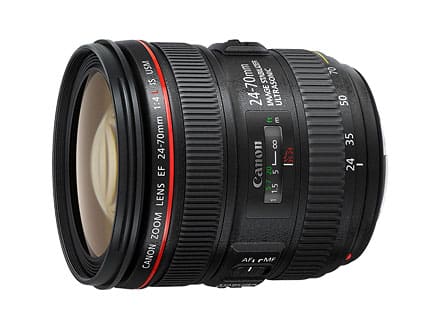

Product Summary:
The Canon EF 24-70mm F4L IS USM is an excellent, versatile standard zoom lens designed for traveling photographers in Japan who need a perfect balance of quality, portability, and functionality. Covering the essential wide-angle to medium telephoto range, this lens is suitable for general sightseeing, landscapes, and portraits.
Are you Visiting Japan soon?
Let us make your trip effortless. From tickets and hotels to transport and local guides, we arrange everything for you or your group. Whether it’s a music festival in Tokyo or a business conference in Osaka, our custom travel service ensures you enjoy the event stress-free.
Contact Jasumo Now →A key feature is its ability to switch to a dedicated macro mode at the telephoto end, achieving a remarkable maximum magnification of zero point seven times (zero point seven times), allowing for detailed close-ups of food or small objects. Furthermore, it is equipped with Canon’s advanced Hybrid Image Stabilization (Hybrid IS), which corrects for both angular and shift camera shake, providing powerful support for sharp handheld shots in all conditions.
Quick Highlights:
- Versatile Zoom: Covers the practical twenty-four to seventy millimeter range for daily shooting.
- Hybrid IS: Advanced stabilization corrects for both rotational and shift shake, crucial for close-ups.
- Dedicated Macro Mode: Achieves high magnification (zero point seven times) for detailed close-up photography.
- L-Series Optics: Ensures high image quality and durable, dust- and drip-proof construction.
- Constant F4 Aperture: Consistent light gathering and depth of field control across the zoom range.
- Lightweight: Weighs only six hundred grams, enhancing portability for travel.
Product Details / Description:
The Canon EF 24-70mm F4L IS USM offers a highly effective combination of focal length, constant aperture, and advanced features, making it one of the most practical lenses for exploring Japan. Its lighter weight compared to the F2.8 version, combined with the versatility of an image stabilizer and macro capability, makes it a favorite for traveling photographers.
About the Product
The optical design, featuring multiple aspherical and UD elements, delivers excellent resolution and contrast. The constant F4 aperture ensures consistent exposure settings and performance across the zoom range.
The most notable feature is the Hybrid IS. In its normal range, it offers several stops of correction against camera shake. When switched to macro mode, where camera shake is highly magnified, the Hybrid IS becomes especially valuable, allowing you to capture sharp, detailed close-ups handheld down to a minimum focusing distance of zero point two meters. The nine-blade circular aperture helps produce pleasing background blur (bokeh).
Key Features
- Hybrid IS provides effective camera shake correction, particularly in macro mode.
- Dedicated macro mode at the telephoto end with zero point seven times magnification.
- Constant F4 maximum aperture for reliable performance across the zoom range.
- Features a nine-blade circular aperture for beautiful bokeh.
- Lightweight and compact L-series design for comfortable, all-day shooting.
Technical Specifications
| Feature | Detail |
| Lens Mount | Canon EF |
| Focal Length | twenty-four to seventy millimeters |
| Maximum Aperture | F4 (Constant) |
| Minimum Focusing Distance | Zero point three eight meters (Normal); Zero point two meters (Macro) |
| Filter Diameter | seventy-seven millimeters |
| Maximum Magnification | Zero point seven times (Macro) |
| Weight | six hundred grams |
| Lens Construction | fifteen elements in twelve groups |
What’s in the box (Included Items):
- Canon EF 24-70mm F4L IS USM Lens
- Protective filter (pre-attached)
- Lens hood
- Front lens cap
- Rear lens cap
- Soft carrying case
- QR code for viewing the instruction manual
Where This Product Can Be Used:
- General sightseeing, covering wide scenes (temples, cityscapes) and closer subjects.
- Food and product photography in markets and restaurants using the macro mode.
- Low-light handheld shooting (indoors or twilight) thanks to the Hybrid IS.
- Portraits and environmental shots using the seventy millimeter end.
- Capturing details in nature, architecture, and cultural objects with the macro function.
Why Tourists Rent From Us
- English-speaking customer support
- Accept foreign credit cards
- No Japanese phone number required
- Offer hotel and Airbnb delivery
- Easy return for travelers
Book with Jasumo:
If you are ready to rent this product, you can contact us with the Product Name, the Rental start date and end date, your delivery Location, and other important details you want to share. After we get a request from you, our team will start communicating with you as soon as possible.
Faqs:
Why should I choose the F4 IS version over the F2.8 II version?
You should choose the F4 IS version if Image Stabilization and Macro capability are more important than maximum light gathering. The F4 lens is lighter, has IS (Hybrid IS), and offers a dedicated macro mode, making it more versatile and portable for travel, whereas the F2.8 lens is heavier and faster but lacks IS and dedicated macro.
How effective is the Hybrid IS for handheld shooting?
The Hybrid IS is highly effective because it corrects for both angular movement (tilt/pitch) and shift movement (side-to-side/up-and-down). This is particularly useful at the seventy millimeter end and indispensable when utilizing the close-focus macro mode, where even tiny movements are magnified.
How is the macro mode engaged?
The macro mode is typically engaged by sliding a lock switch near the seventy millimeter zoom setting. Once engaged, the lens extends slightly, allowing you to focus much closer (down to zero point two meters) to achieve the zero point seven times magnification.
Is the F4 maximum aperture good for low light?
While F2.8 is faster, F4 is still a bright, constant aperture. Combined with the effectiveness of the Hybrid IS, you can often achieve sharp results in low light at shutter speeds you wouldn’t be able to without stabilization, making it practical for many low-light travel situations.
What is the benefit of the zero point seven times magnification?
A zero point seven times magnification means the image recorded on the sensor is seventy percent of the actual size of the subject. This is considered very close to true macro (one times), allowing you to capture stunning, highly detailed shots of small subjects like coins, flowers, or intricate patterns in Japanese textiles.
Planning a Group Trip to Japan?
From corporate teams to friends traveling together, we create tailor-made travel packages. Enjoy VIP access, curated itineraries, and full support from our local experts. Tell us your plans, and we’ll handle the rest.
Contact Jasumo Now →


Leave a Reply