

-
February 11, 2026 at 9:00 am
Event date:
-
March 20, 2026 at 4:00 pm
Event end:
History
Mount Tsukuba’s plum tradition dates to the Edo period (1603–1868), when pilgrims climbing the sacred twin peaks—Nantaisan (male deity) and Nyotaisan (female deity)—planted ume trees as offerings for fertility, safe journeys, and bountiful harvests. The mountain, revered in Shinto and featured in the Manyoshu poetry anthology (8th century), became a spiritual beacon long before modern tourism.
Are you Visiting Japan soon?
Let us make your trip effortless. From tickets and hotels to transport and local guides, we arrange everything for you or your group. Whether it’s a music festival in Tokyo or a business conference in Osaka, our custom travel service ensures you enjoy the event stress-free.
Contact Jasumo Now →The Mount Tsukuba Plum Garden (Tsukubasan Bairin) was formally established in 1972 by the city of Tsukuba and local farmers, who planted 1,000 plum trees across 4 hectares on the northern slope at 250 meters elevation. The goal: revive declining hillside agriculture and create a new early-spring attraction. Farmers selected hardy varieties—white shirobana, red kobai, and pink yabai—able to withstand the mountain’s strong winds and late frosts.
The first Plum Festival launched in 1974, coinciding with Tsukuba’s designation as Japan’s new science city. It quickly grew from a local event into one of Ibaraki’s signature winter-to-spring celebrations, drawing over 200,000 visitors annually. The Azumaya observation deck was added in 1985, offering sweeping views of the Kanto Plain—and on rare crystal-clear days, Tokyo Skytree (80 km away) and Mount Fuji (150 km away).
Today, the festival honors both ancient spiritual traditions and modern environmental stewardship: plum trees are pruned sustainably, and fallen petals are composted to enrich the volcanic soil.
Overview
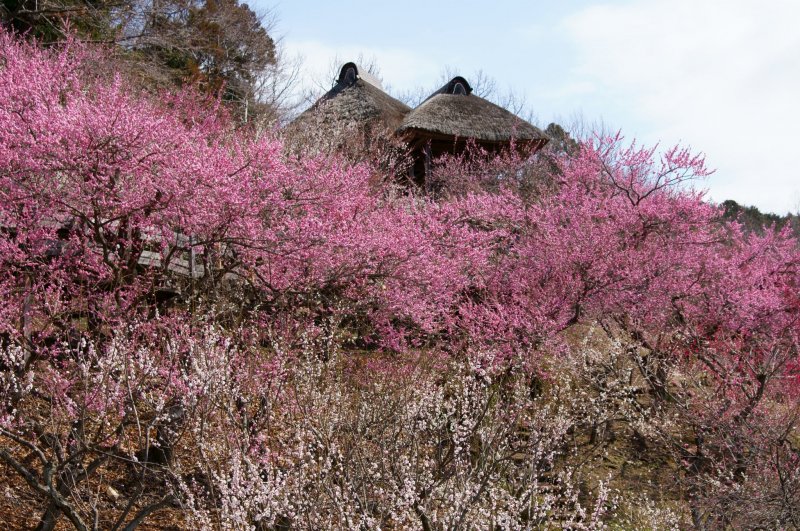
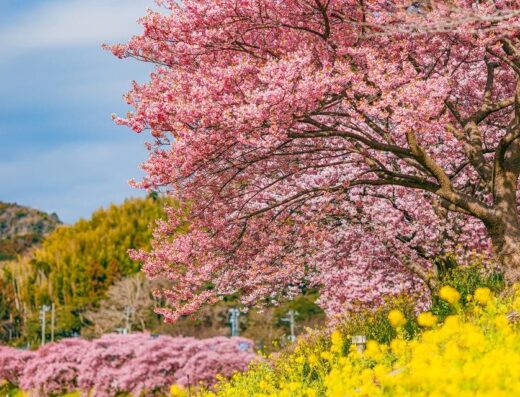
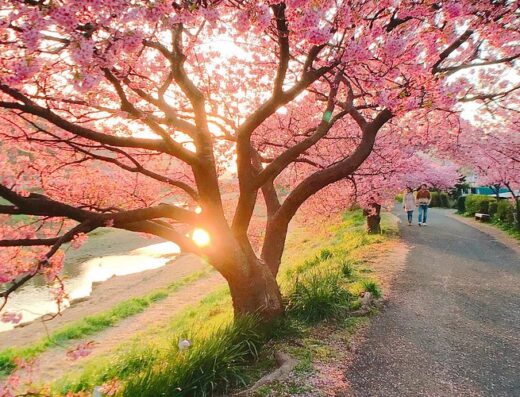
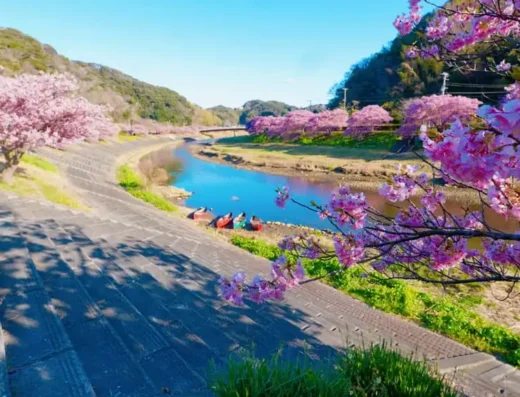
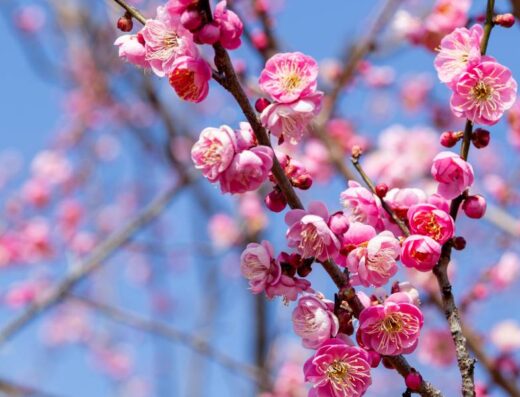
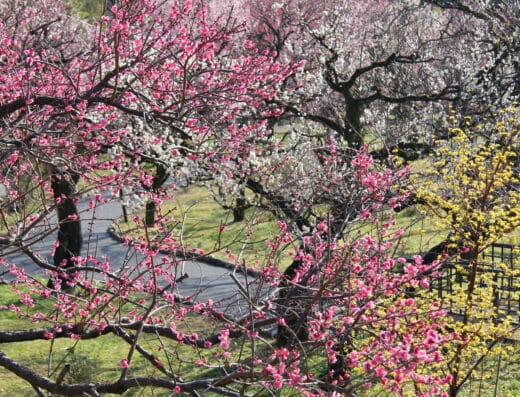
The Mount Tsukuba Plum Festival 2026 runs from mid-February to mid-March at the Mount Tsukuba Plum Garden on the northern slope of the sacred mountain. Approximately 1,000 plum trees in three primary varieties—white, red, and pink—bloom in fragrant waves across a forested hillside, creating a delicate pastel carpet visible from the Azumaya gazebo.
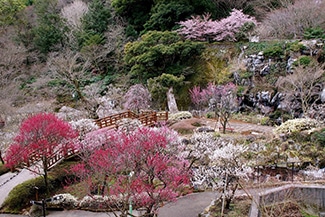
The garden features gentle walking paths, the poetic Seseragi Bridge (over a babbling stream), and the rustic Ogi Bridge, all framed by ancient cedars. On exceptionally clear days (typically 3–5 per season), the observation deck reveals a jaw-dropping panorama: the Kanto Plain, Tokyo’s distant skyline, and the snow-capped silhouette of Mount Fuji.
Weekend events include local food stalls (plum onigiri, umeshu, grilled mochi), traditional performances (taiko drumming, folk dance), and hands-on workshops (plum-dyed bookmarks, mini ikebana). The high-altitude setting ensures crisp air and dramatic lighting—especially at sunrise when mist rises through the blossoms.
Highlights
- 1,000 Plum Trees at 250 m Elevation: White, red, and pink varieties blooming sequentially for a month-long spectacle.
- Azumaya Observation Deck: Panoramic views of Kanto Plain, Tokyo Skytree, and Mount Fuji on ultra-clear days.
- Seseragi & Ogi Bridges: Picturesque wooden spans over crystal streams—iconic photo spots.
- Weekend Cultural Events: Taiko, folk dance, plum craft workshops, and seasonal food stalls.
- Sacred Mountain Ambiance: Shinto shrine trails, ancient cedars, and spiritual serenity.
Why Jasumo Recommends?
- 1,000 Plum Trees at 250 m Elevation: White, red, and pink varieties blooming sequentially for a month-long spectacle.
- Azumaya Observation Deck: Panoramic views of Kanto Plain, Tokyo Skytree, and Mount Fuji on ultra-clear days.
- Seseragi & Ogi Bridges: Picturesque wooden spans over crystal streams—iconic photo spots.
- Weekend Cultural Events: Taiko, folk dance, plum craft workshops, and seasonal food stalls.
- Sacred Mountain Ambiance: Shinto shrine trails, ancient cedars, and spiritual serenity.
If you’re coming to Japan or already in Japan, Jasumo can arrange sunrise Fuji-view hikes, private shuttle from Tsukuba Station, plum picnic sets, and more. Just contact us using the contact page.
Schedule
Mid-February – Mid-March 2026
- Typical Dates: February 15 – March 20
- Peak Bloom: Early to mid-March
- Viewing Hours: 9:00 AM – 4:00 PM
- Weekend Events: Saturdays, Sundays, and national holidays
Pricing
- Entry: Completely FREE
- Parking: ~¥500 per standard car
- Workshops & Food: Small additional fees
Location
Mount Tsukuba Plum Garden (Tsukubasan Bairin) Numata, Tsukuba, Ibaraki 300-4353, Japan
How to Get There
- By Bus (Recommended): – Tsukuba Express (TX) to Tsukuba Station → Kantetsu Bus (Terminal #1) to Tsukubasanguchi (~40 min) → 15-min uphill walk
- By Car: – 30 min (20 km) from Tsuchiura Kita IC (Joban Expressway) – Paid parking on-site
- From Tokyo: ~90 min via TX + bus
Accommodation Options
Tsukuba city offers modern science-city hotels from ¥8,000–¥20,000. Mount Tsukuba onsen ryokan (with ropeway access to the summit) range ¥18,000–¥45,000/person with kaiseki dinners and plum-view rotenburo.
Book early for early March weekends when Fuji visibility and cultural events peak.
FAQs
When does the 2026 festival officially start?
Typically February 15; exact date announced in January 2026.
How often can I see Mount Fuji?
Only on ultra-clear days (usually 3–5 in the season). Check weather apps for “visibility >50 km” and aim for early morning.
Is the walk from the bus stop difficult?
Moderate—15-minute uphill path on paved and dirt trails. Wear sturdy shoes; not ideal for strollers.
Are food stalls open daily?
No—weekends and holidays only. Bring snacks or dine in Tsukuba city.
Can I hike to the summit after the plums?
Yes—take the Tsukuba Ropeway (10 min) from near the garden to the 877 m peak for shrines, panoramic views, and double-sided hiking trails.
Planning a Group Trip to Japan?
From corporate teams to friends traveling together, we create tailor-made travel packages. Enjoy VIP access, curated itineraries, and full support from our local experts. Tell us your plans, and we’ll handle the rest.
Contact Jasumo Now →



































Leave a Reply