




-
August 13, 2026 at 1:46 pm
Event date:
-
August 16, 2026 at 1:47 pm
Event end:
Japan’s Timeless Celebration of Ancestors and Community
Are you Visiting Japan soon?
Let us make your trip effortless. From tickets and hotels to transport and local guides, we arrange everything for you or your group. Whether it’s a music festival in Tokyo or a business conference in Osaka, our custom travel service ensures you enjoy the event stress-free.
Contact Jasumo Now →Obon (お盆) is one of Japan’s most sacred and heartfelt traditions. Deeply rooted in Buddhist teachings and ancient folk beliefs, Obon is the season when ancestral spirits are believed to return home to visit their living families. It’s a beautiful fusion of quiet remembrance, family reunion, and vibrant communal joy—offering a profound glimpse into the soul of Japanese culture.
In 2026, Obon will be observed across most of Japan from August 13 to 16, though regional variations exist.
Whether you’re drawn to solemn rituals, lively folk dances, or the serene glow of floating lanterns, Obon invites you to step into a centuries-old tradition that honors the past while celebrating life.
When Is Obon Celebrated?
Standard dates in most regions:
- August 13 – Mukae-bon (Welcoming the spirits)
- August 14–15 – Family gatherings, grave visits, and Bon Odori dancing
- August 16 – Okuri-bon (Sending the spirits off) with farewell fires and lantern ceremonies
Note: Some areas, including Tokyo and parts of northern Japan, follow the old lunar calendar and celebrate Obon around July 13–15.
Traditional Obon Customs and Rituals
Family and Temple Rituals
Families return to their hometowns to:
- Clean ancestral graves (ohaka mairi)
- Offer food, incense, flowers, and prayers at the butsudan (home altar)
- Light small welcoming fires (mukaebi) at doorways on August 13
- Ignite farewell fires (okuribi) on August 16 to guide spirits back
These quiet acts of devotion create a sacred bridge between the living and the departed.
Bon Odori – The Joyful Dance of Welcome
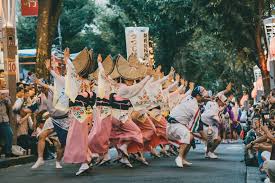
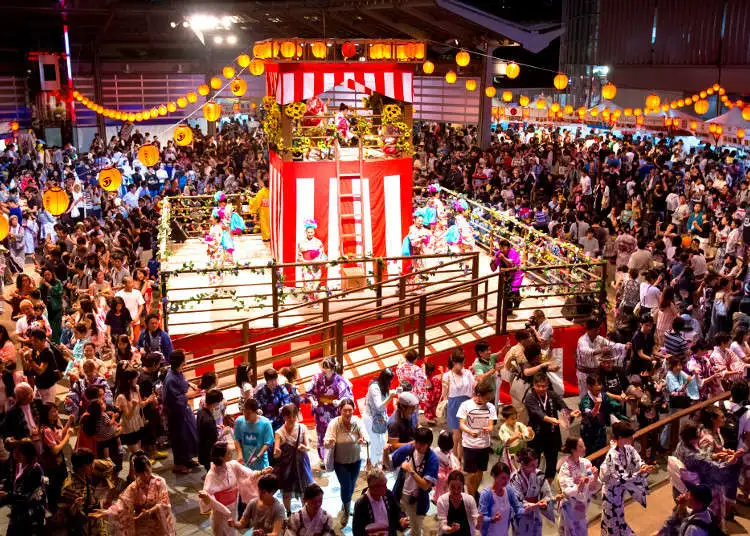
The emotional heart of Obon comes alive with Bon Odori, traditional folk dances held in parks, temple grounds, and town squares.
- Dancers in colorful yukata circle a central yagura stage
- Taiko drums set the rhythm as locals and visitors move in easy, flowing steps
- Each region has its own unique style—no experience needed; just follow along!
- Tourists are warmly encouraged to join—smiles and participation are the only requirements
Lantern Floating and Bonfires
On the final night, tōrō nagashi ceremonies light up rivers nationwide:
- Paper lanterns inscribed with messages drift gently downstream, guiding spirits home
- In Kyoto, the world-famous Gozan no Okuribi (Daimonji) lights five giant kanji-shaped bonfires across the mountains on August 16—a breathtaking farewell visible from across the city
Seasonal Foods
Obon tables honor both the living and the spirits with simple, symbolic offerings:
- Ohagi and dango – sweet rice treats
- Fresh seasonal fruits, vegetables, and rice
- Vegetarian dishes reflecting Buddhist purity
- Festival favorites: yakisoba, takoyaki, grilled corn, kakigōri
Where to Experience Obon in 2026
Obon is nationwide, but these destinations shine brightest:
| Location | Highlight |
|---|---|
| Kyoto | Gozan no Okuribi (Aug 16) – mountain bonfires |
| Tokushima | Awa Odori (Aug 12–15) – Japan’s largest Bon dance |
| Okinawa | Eisa drumming and dance parades |
| Tokyo | July Obon with temple dances in Asakusa & Ueno |
| Hiroshima | Emotional tōrō nagashi on the Motoyasu River |
| Kanazawa / Nagoya | Elegant public Bon Odori in historic settings |
Check local tourism boards for exact schedules.
Admission and Costs
Most Obon events are FREE, including:
- Public Bon Odori
- Lantern floating
- Grave and temple visits
Optional costs:
- Reserved seating at major events (¥2,000–¥5,000)
- Yukata rental (~¥3,000–¥5,000)
- Street food, drinks, souvenirs
- Travel to rural hometowns
How to Participate Respectfully
- Join the dance—locals love seeing visitors try!
- Dress appropriately—yukata or modest clothing
- Stay quiet near graves and during lantern ceremonies
- Follow local cues—observe and mirror respectful behavior
- Leave no trace—dispose of trash properly
Why You Should Experience Obon
Obon is more than a festival—it’s a living expression of gratitude, memory, and togetherness. In one evening, you might:
- Dance under paper lanterns with smiling grandmothers
- Watch a river glow with thousands of floating lights
- Stand in silence as a mountain burns with sacred fire
It’s a rare moment when Japan opens its heart—solemn yet joyful, ancient yet alive.
If you’re in Japan in August 2026, make Obon part of your journey. It’s not just an event—it’s a connection.
Planning a Group Trip to Japan?
From corporate teams to friends traveling together, we create tailor-made travel packages. Enjoy VIP access, curated itineraries, and full support from our local experts. Tell us your plans, and we’ll handle the rest.
Contact Jasumo Now →








Leave a Reply