

Overview
Embark on a profound spiritual and cultural journey to Mount Koya (Koyasan), the sacred center of Shingon Buddhism and a UNESCO World Heritage Site. Hidden deep within the mist-shrouded peaks of Wakayama Prefecture, this mystical destination serves as a secluded sanctuary of ancient temples and towering cedar forests. Founded by the revered monk Kobo Daishi in the 9th century, Koyasan offers an atmosphere of unmatched serenity and religious significance.
Are you Visiting Japan soon?
Let us make your trip effortless. From tickets and hotels to transport and local guides, we arrange everything for you or your group. Whether it’s a music festival in Tokyo or a business conference in Osaka, our custom travel service ensures you enjoy the event stress-free.
Contact Jasumo Now →This immersive shore excursion invites you to walk the paths of pilgrims, exploring a landscape where nature and spirituality are inextricably linked. You will witness the architectural grandeur of Japan’s most important monastic complexes and experience the quiet power of a thousand-year-old cemetery. It is a journey that transcends mere sightseeing, offering a rare opportunity for contemplation and a deep connection with Japan’s Buddhist soul.
Guided by a licensed English-speaking professional, you will travel by private chartered vehicle from the coast into the high mountains. With our Back-to-Ship Guarantee, you can focus on the tranquil energy of the temples and the scent of mountain incense, knowing your return to the Wakayama pier is perfectly timed for your ship’s departure.
Highlights
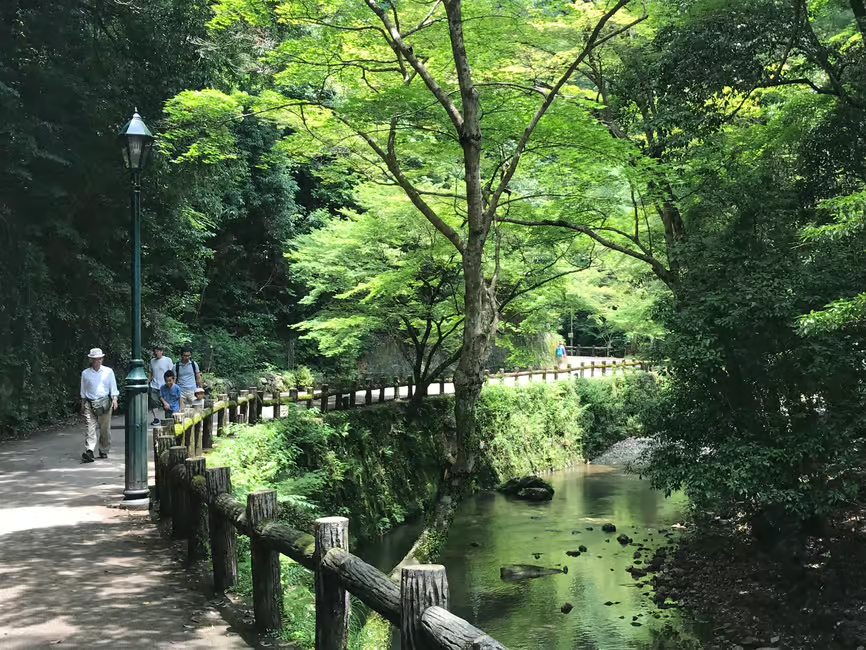
- Okunoin Cemetery: Wander through Japan’s largest and most sacred cemetery, where over 200,000 moss-covered tombstones sit beneath ancient cedars leading to Kobo Daishi’s mausoleum.
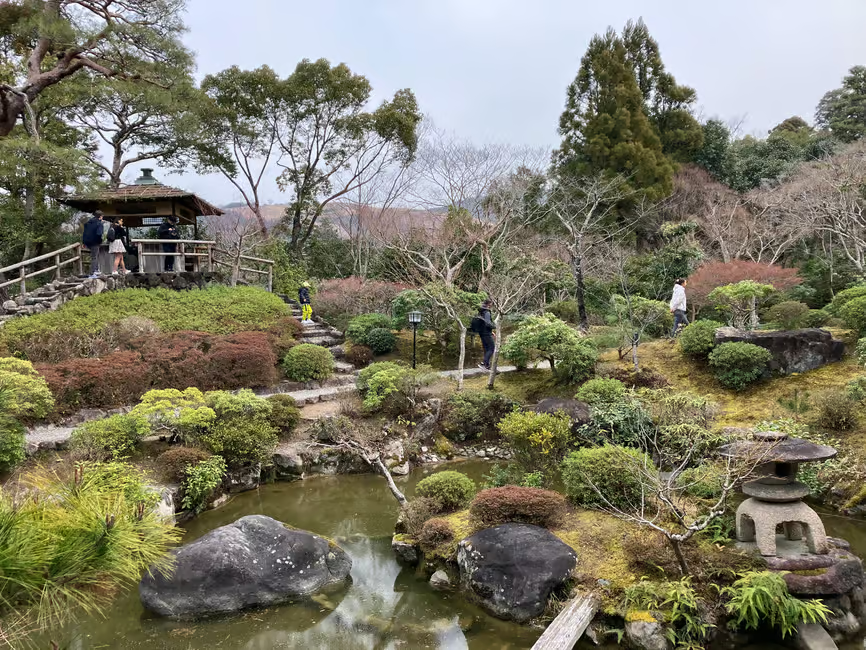
- Kongobuji Temple: Visit the headquarters of the Shingon sect to see the Banryutei Rock Garden, the largest in Japan, featuring granite stones that represent dragons emerging from a sea of clouds.
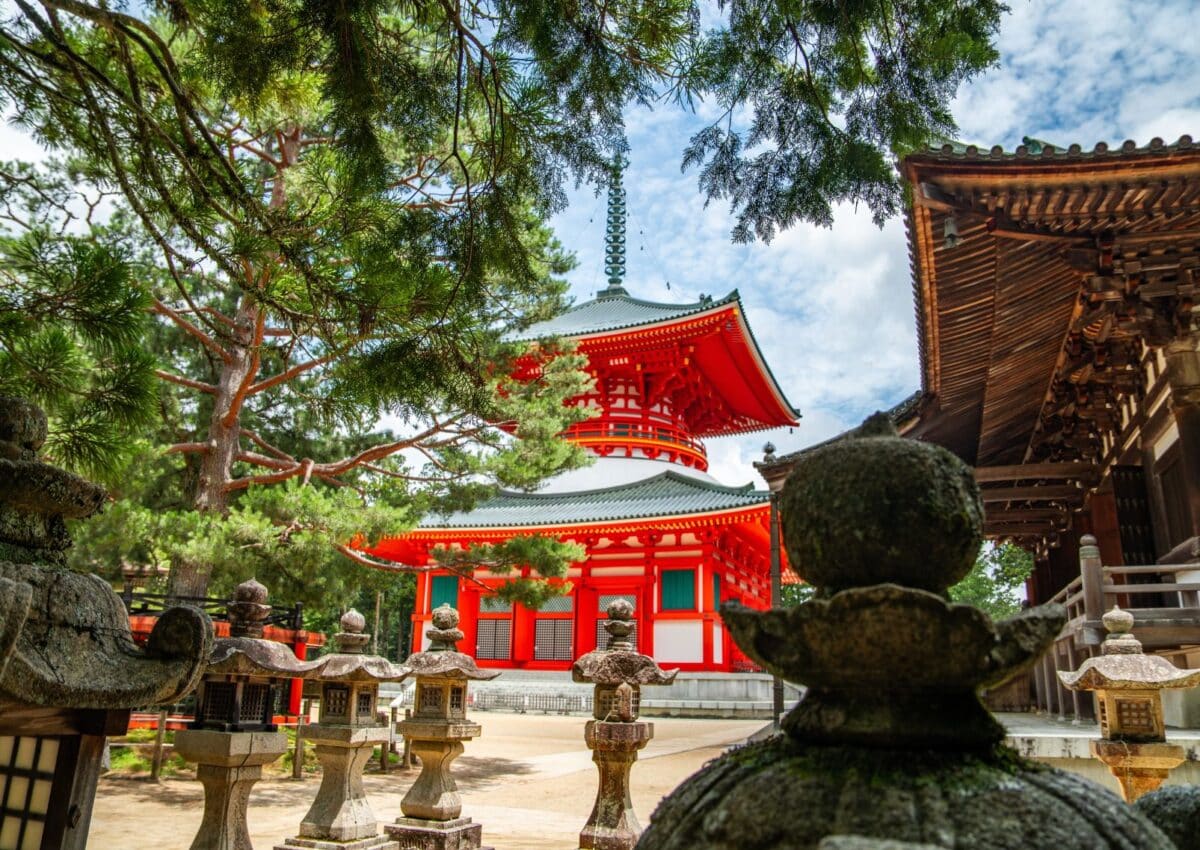
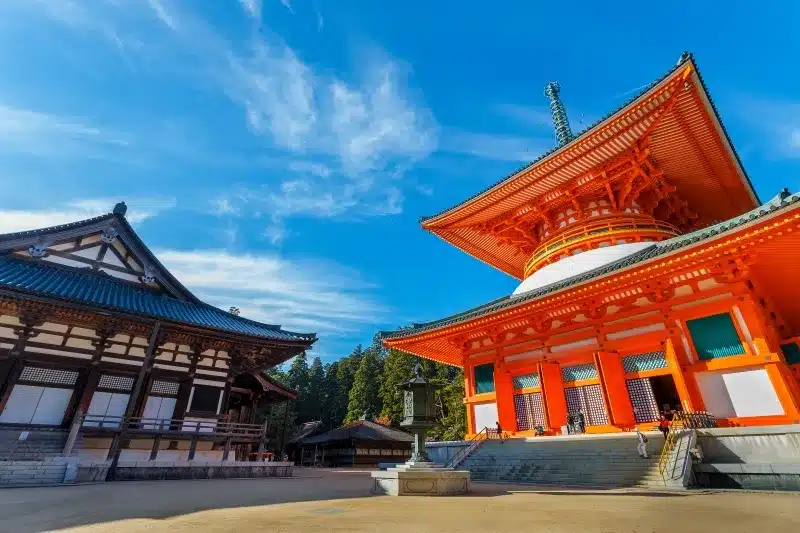
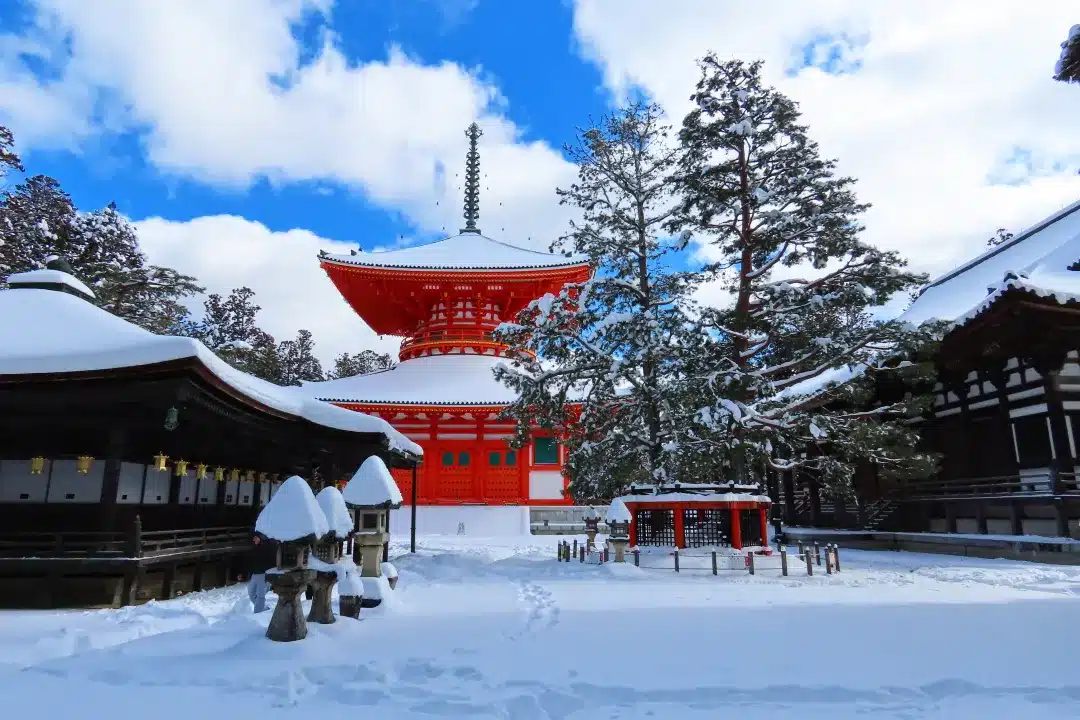
- Danjo Garan Complex: Marvel at the brilliant vermilion Konpon Daito Pagoda, a massive “Cosmic” structure that stands as the symbolic center of the Koyasan monastic center.
- UNESCO Heritage Landscapes: Enjoy a scenic mountain drive through the Kii Peninsula, experiencing the rugged beauty that has protected this religious retreat for over 1,200 years.
Cruise Information
This 7-hour shore excursion is meticulously synchronized with the docking schedules of major cruise lines at the Port of Wakayama. We provide seamless logistics for passengers arriving on the Diamond Princess, MS Westerdam, Celebrity Millennium, and Queen Elizabeth.
Your private guide and driver will meet you directly at the Wakayama Port terminal with a Jasumo welcome board immediately upon your ship’s arrival. Because Mount Koya is located approximately 90 minutes from the coast, our private transportation is the most efficient way to maximize your time in the mountain sanctuary. We guarantee your return to the pier at least one hour before the “all aboard” time, providing a stress-free transition back to your ship.
Full Itinerary
Your spiritual journey begins at Wakayama Port, where you will board your private coach for a scenic ascent into the forested mountains. Your first destination is Okunoin, the site of Kobo Daishi’s eternal meditation. You will walk the two-kilometer approach through a forest of 500-year-old cedars, passing the monuments of feudal lords and monks alike. The air here is noticeably cooler and filled with the sound of distant chants as you reach the Goryo-e (Mausoleum), where thousands of oil lamps are kept eternally lit.
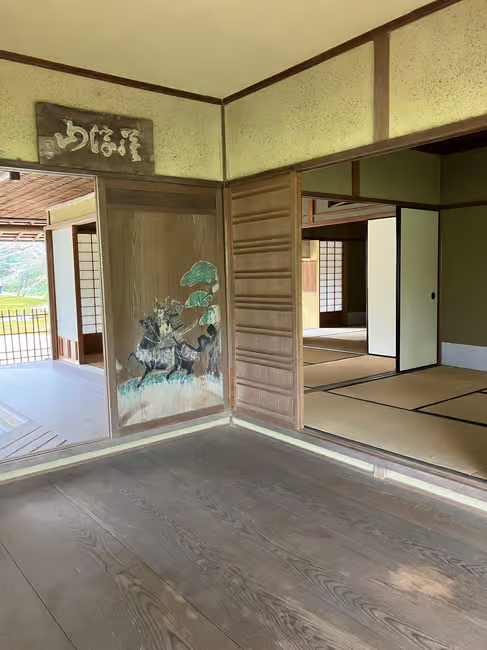
Next, you will visit Kongobuji Temple. Originally built by Toyotomi Hideyoshi, this temple is famous for its sliding screen paintings and the massive Banryutei Rock Garden. You will walk through the quiet, matted corridors and observe the Ohiroma (Main Hall), which exudes the elegance of the Momoyama period. Your guide will explain the esoteric teachings of Shingon Buddhism and the significance of the “Dragon” rocks.
The final stop is the Danjo Garan Temple Complex. This was the first site established by Kobo Daishi in 819 as a place for secret training. You will see the Konpon Daito Pagoda, which houses a three-dimensional mandala of Buddhist statues, and the Kondo (Main Hall). After absorbing the deep peace of the mountain precinct, your driver will escort you back down to the coast. The day concludes with a scenic drive back to the port, leaving you with lasting memories of Japan’s timeless spiritual world.
Booking with Jasumo
To join one of our Upcoming Shared Tours for 2026 or to request a private vehicle for your family, please contact us via our Contact Us Form. Our travel consultants will verify your ship’s docking schedule to ensure a seamless experience.
Jasumo also operates as a Destination Management Company (DMC), providing end-to-end support and reliable local coordination for individual travelers and travel agencies.
Additionally, every booking includes a complimentary 10GB eSIM. This allows you to stay connected—share your photos of the “Cosmic Pagoda” instantly or check travel updates across the Kii Peninsula without worrying about finding Wi-Fi or buying a local SIM card.
Faqs
Is Mount Koya difficult to walk for seniors?
The path through Okunoin is mostly flat but quite long (about 2km each way), and some temple areas involve steps. We recommend comfortable walking shoes. For those with limited mobility, we can adjust the private vehicle route to drop you closer to the main mausoleum area.
What should I wear for a visit to Koyasan?
Mount Koya is about 800 meters above sea level, so it is often 5–10°C cooler than the port. We recommend dressing in layers and bringing a light jacket, even in summer. As it is a sacred religious site, modest clothing that covers shoulders and knees is appropriate.
Why do we have to remove our shoes at the temples?
Removing shoes is a traditional Japanese sign of respect and cleanliness when entering sacred buildings or private homes. At Kongobuji and Danjo Garan, you will be asked to leave your shoes at the entrance; we recommend wearing clean socks for your comfort.
Can we try traditional Buddhist cuisine (Shojin Ryori)?
Shojin Ryori is a specialized vegetarian cuisine eaten by monks. While our standard shore excursion focus is on sightseeing, we can customize a private tour to include a traditional monk’s lunch at a local shukubo (temple lodging) for a fully immersive experience.
Are photos allowed inside the temple buildings?
While photography is encouraged in the gardens and outside the buildings, it is strictly prohibited inside the main halls of Kongobuji and the Okunoin Mausoleum to preserve the sacred atmosphere. Your guide will point out exactly where photography is permitted.
Planning a Group Trip to Japan?
From corporate teams to friends traveling together, we create tailor-made travel packages. Enjoy VIP access, curated itineraries, and full support from our local experts. Tell us your plans, and we’ll handle the rest.
Contact Jasumo Now →














Leave a Reply