The Complete Guide to Sumo Banzuke: Understanding Japan’s Ancient Ranking System
What is the Sumo Banzuke? The Foundation of Professional Wrestling
The sumo banzuke represents one of the world’s most sophisticated and ancient ranking systems, serving as the cornerstone of professional sumo wrestling for over four centuries. This intricate hierarchy determines not only competitive matchups but also salary, privileges, living conditions, and social status within the sumo world. Far more than a simple tournament bracket, the banzuke functions as a living document that chronicles each wrestler’s journey through the rigorous world of professional sumo.
Are you Visiting Japan soon?
Let us make your trip effortless. From tickets and hotels to transport and local guides, we arrange everything for you or your group. Whether it’s a music festival in Tokyo or a business conference in Osaka, our custom travel service ensures you enjoy the event stress-free.
Contact Jasumo Now →The term “banzuke” (番付) literally translates to “ranking list” or “program,” but its significance extends far beyond these simple definitions. Published before each of the six annual tournaments, the banzuke serves multiple purposes: it announces the upcoming tournament participants, establishes the competitive hierarchy, determines financial compensation, and represents the official recognition of each wrestler’s achievements and current standing within the sport.
Historical Evolution and Cultural Significance
Ancient Origins and Development
The banzuke system traces its roots to the Edo period (1603-1867), evolving from informal wrestling exhibitions into the sophisticated ranking structure we see today. Originally, sumo matches were held at temples and festivals, with loose organizational structures that varied by region. As sumo gained popularity and patronage from the ruling samurai class, the need for standardized rankings became apparent.
Key historical developments:
- 17th Century – Early ranking lists emerge for major tournaments
- 1684 – First official banzuke published for Edo (Tokyo) tournaments
- Meiji Era (1868-1912) – Standardization across regions and formal rules establishment
- 20th Century – Modern six-tournament system and current divisional structure
- Present Day – Digital publication while maintaining traditional calligraphy and format
Cultural and Artistic Elements
The modern banzuke represents a remarkable blend of athletic competition and traditional Japanese artistry. Each ranking document is hand-calligraphed by skilled artists, with wrestler names written in various sizes and styles that reflect their hierarchical positions. The largest, most prominent calligraphy is reserved for yokozuna (grand champions), while lower-ranked wrestlers appear in progressively smaller text.
The banzuke’s visual design follows strict traditional principles:
- East vs. West designation – Wrestlers are divided into East (Higashi) and West (Nishi) sides
- Hierarchical text sizing – Higher ranks receive larger, more elaborate calligraphy
- Color symbolism – Different colors indicate various status levels and divisions
- Spatial arrangement – Physical positioning on the document reflects competitive standing
The Six-Division Structure: From Bottom to Summit
The modern sumo hierarchy consists of six distinct divisions, each with its own characteristics, requirements, and privileges. Understanding these divisions is essential for comprehending how careers develop and how the ranking system functions.
Makuuchi Division: The Pinnacle of Professional Sumo
The Makuuchi division represents the absolute elite of professional sumo, housing the sport’s biggest stars and most accomplished wrestlers. Limited to approximately 42 wrestlers, this division receives the majority of media attention and offers the highest salaries and prestige.
Makuuchi Ranks (highest to lowest):
Yokozuna (Grand Champion)
- Maximum number – Typically 1-3 active yokozuna
- Requirements – Must demonstrate “hinkaku” (dignity) and consistent excellence
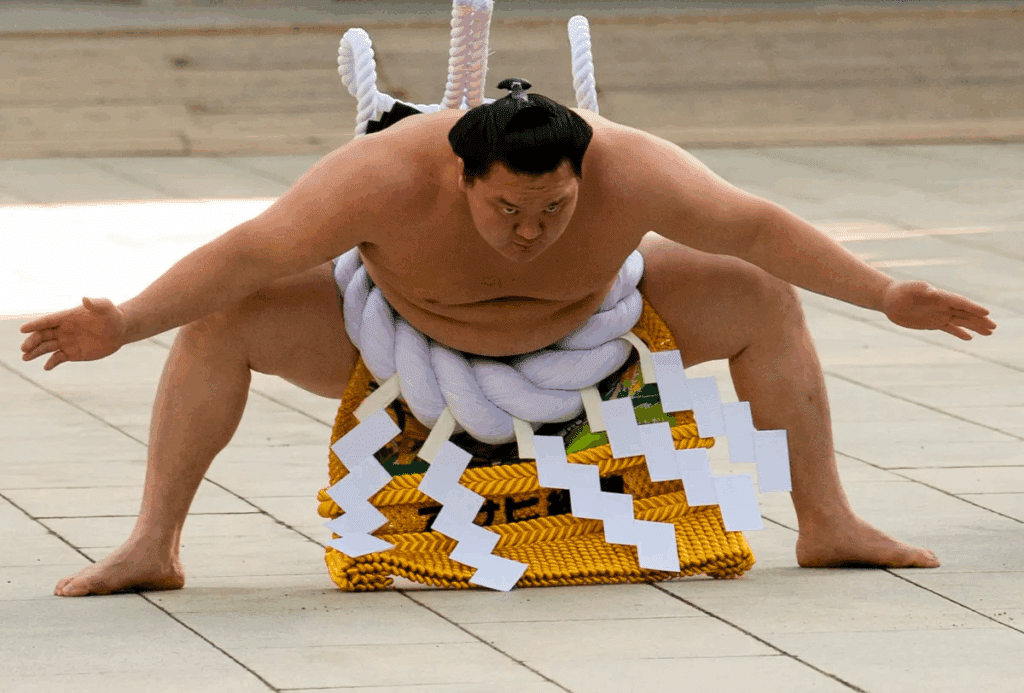
- Privileges – Highest salary, private dressing room, ceremonial rope (tsuna)
- Responsibilities – Expected to compete in most tournaments, serve as sport ambassadors
- Notable examples – Hakuho, Terunofuji, historically Chiyonofuji and Takanohana
Ozeki (Champion)
- Typical number – 2-4 wrestlers
- Promotion requirements – 33+ wins over three consecutive tournaments as sekiwake
- Demotion protection – “Kadoban” system allows poor performance without immediate demotion
- Recent achievements – Wrestlers like Takakeisho and Kiribayama have held this rank
Sekiwake (Junior Champion)
- Fixed positions – East and West sekiwake (2 total)
- Promotion pathway – Strong performances can lead to ozeki consideration
- Competitive level – Often features rising stars and ozeki candidates
Komusubi (Little Champion)
- Minimum positions – East and West komusubi (2 minimum, occasionally more)
- Tournament pressure – High expectations for winning records
- Career significance – First taste of sanyaku (top three ranks) prestige
Maegashira (Rank and File)
- Numbering system – Maegashira 1 through approximately Maegashira 17
- Majority of division – Contains most Makuuchi wrestlers
- Competition variety – Face opponents from across the division hierarchy
- Career diversity – Includes both rising prospects and established veterans
Juryo Division: The Gateway to Elite Status
Juryo serves as sumo’s second-highest division and represents the entry point to sekitori (salaried wrestler) status. This division typically contains 28 wrestlers who enjoy significantly better treatment than lower-division competitors.
Juryo privileges and characteristics:
- Monthly salary – Substantial compensation compared to lower divisions
- Individual dressing space – Private areas in tournament venues
- Attendant services – Lower-ranking wrestlers serve as personal assistants
- Media recognition – Television coverage and interview opportunities
- Ranking precision – Juryo 1 through Juryo 14 (East and West sides)
Promotion and demotion dynamics:
- Makuuchi promotion – Strong performances at Juryo 1-3 can earn top-division spots
- Makushita demotion – Poor records at lower Juryo ranks risk losing sekitori status
- Competitive balance – Mix of rising prospects and former Makuuchi wrestlers
Makushita Division: The Critical Third Tier
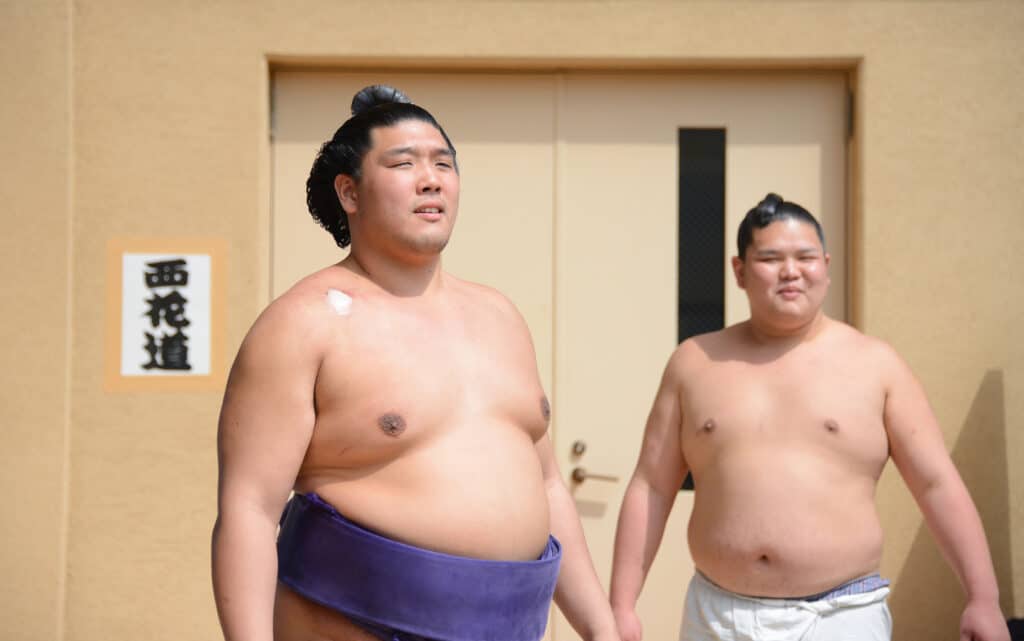
Makushita represents the most crucial division for aspiring professional wrestlers, serving as the final barrier before achieving sekitori status and financial security.
Division characteristics:
- Size – Approximately 120 wrestlers
- Tournament frequency – Seven matches per tournament (compared to 15 for sekitori)
- No salary – Wrestlers receive only small allowances and basic accommodation
- Promotion pressure – Only top performers advance to Juryo
- Ranking system – Makushita 1 through approximately Makushita 60
The Makushita Promotion Race: The competition for Juryo promotion from Makushita creates some of sumo’s most intense rivalries. Wrestlers typically need exceptional records (6-1 or 7-0) at high Makushita ranks to earn promotion, with factors including:
- Current ranking position – Higher Makushita ranks have better promotion chances
- Tournament record – Win-loss percentage critical for advancement
- Available spots – Juryo demotions create promotion opportunities
- Comparative performance – Direct competition with other promotion candidates
Sandanme Division: Building Fundamental Skills
Sandanme serves as the fourth division, where wrestlers continue developing their techniques while working toward Makushita advancement.
Key features:
- Size – Approximately 200 wrestlers
- Match allocation – Seven matches per tournament
- Ranking range – Sandanme 1 through approximately Sandanme 100
- Development focus – Technical improvement and physical conditioning
- Promotion requirements – Strong records needed for Makushita advancement
Jonidan Division: Early Professional Development
The fifth division provides wrestlers with their first taste of formal professional competition while they adapt to stable life and intensive training regimens.
Division characteristics:
- Large population – Several hundred wrestlers
- Seven-match tournaments – Same format as Sandanme and Makushita
- Basic accommodation – Shared living spaces and minimal amenities
- Learning emphasis – Fundamental technique acquisition and discipline development
Jonokuchi Division: The Beginning
Jonokuchi represents the entry point for new professional wrestlers, where they begin their journey through sumo’s hierarchical system.
New wrestler integration:
- Starting point – Most new professionals begin here
- Basic training – Focus on conditioning, technique, and stable integration
- Short-term residence – Successful wrestlers advance quickly
- Cultural adaptation – Learning sumo traditions and hierarchy respect
Banzuke Creation and Publication Process
The Ranking Committee Process
The creation of each new banzuke involves a complex deliberative process conducted by the Japan Sumo Association’s ranking committee, composed of senior officials and former high-ranking wrestlers.
Committee composition and responsibilities:
- Board members – Directors and senior advisors from the JSA
- Former champions – Retired yokozuna and ozeki provide expertise
- Competition analysis – Detailed review of previous tournament performances
- Precedent consideration – Historical ranking decisions influence current choices
Evaluation criteria:
- Tournament record – Win-loss performance in the previous tournament
- Strength of schedule – Quality of opponents faced during competition
- Injury considerations – Health status and tournament participation
- Historical precedent – Traditional promotion and demotion standards
- Divisional balance – Maintaining appropriate numbers in each division
Traditional Calligraphy and Artistic Production
The physical creation of the banzuke represents a remarkable fusion of sporting competition and traditional Japanese artistry. Master calligraphers spend days creating each ranking document, with every wrestler’s name carefully positioned and sized according to their hierarchical status.
Artistic elements:
- Brush calligraphy – Traditional shodo techniques using specific brushes and ink
- Size hierarchy – Larger characters for higher-ranked wrestlers
- Style variation – Different calligraphic styles reflect rank and status
- Color coordination – Specific colors designated for different divisions and ranks
- Spatial design – Careful positioning creates visual balance and clear hierarchy
Publication and Distribution
Modern publication process:
- Official release – Typically published 13 days before each tournament
- Media distribution – Copies provided to sports newspapers and television networks
- Public availability – Sold at tournament venues and through official channels
- Digital versions – Online publication while maintaining traditional format
- International access – Translation and distribution for global sumo fans
Promotion and Demotion Mechanics
Sekitori Promotion: The Most Significant Career Milestone
The promotion from Makushita to Juryo represents the most transformative moment in any wrestler’s career, fundamentally changing their lifestyle, income, and status within the sumo world.
Promotion requirements and considerations:
- Performance standards – Typically requiring 5+ wins from Makushita 1-5 positions
- Available positions – Juryo demotions create promotion opportunities
- Competitive comparison – Direct competition with other promotion candidates
- Tournament timing – Some tournaments see more promotions due to retirements or demotions
Life transformation upon sekitori promotion:
- Financial security – Monthly salary replacing basic allowances
- Living conditions – Private rooms and better accommodation
- Support staff – Personal attendants for daily needs and tournament preparation
- Media attention – Interview opportunities and public recognition
- Family pride – Significant achievement for wrestler’s hometown and family
Ozeki Promotion: Reaching Championship Level
Ozeki promotion represents one of sumo’s most scrutinized and debated processes, requiring sustained excellence over multiple tournaments.
The 33-win standard:
- Three-tournament total – 33+ wins as sekiwake over consecutive tournaments
- Quality consideration – Strong performances against top-ranked opponents
- Consistency requirement – Avoiding poor tournaments during the evaluation period
- Committee discretion – Final decision based on overall worthiness assessment
Recent ozeki promotions and examples: The committee considers various factors beyond pure win totals, including tournament championships, victories over yokozuna and other ozeki, and demonstration of championship-caliber sumo. Recent promotions have followed the traditional criteria while adapting to contemporary competitive conditions.
Yokozuna Promotion: Achieving Sumo’s Ultimate Honor
Yokozuna promotion represents sumo’s most exclusive achievement, requiring not only exceptional competitive ability but also the intangible quality of “hinkaku” (dignity and character).
Promotion criteria:
- Championship performance – Multiple tournament victories at ozeki rank
- Dominant sumo – Convincing victories over high-quality competition
- Character assessment – Demonstration of appropriate dignity and deportment
- Committee unanimity – Requires consensus among promotion committee members
- Historical precedent – Comparison with previous yokozuna achievements
Demotion Patterns and Career Implications
Makuuchi to Juryo demotion:
- Performance threshold – Multiple losing tournaments at lower maegashira ranks
- Competitive pressure – Direct competition with Juryo promotion candidates
- Career recovery – Many wrestlers successfully return to Makuuchi
Sekitori demotion to Makushita:
- Dramatic lifestyle change – Loss of salary and privileges
- Psychological impact – Significant mental and emotional challenges
- Recovery difficulty – Age and injury factors complicate comeback efforts
Financial Structure and Compensation
Sekitori Salary System
The sumo salary structure reflects the rigid hierarchical nature of the sport, with dramatic differences between divisions and ranks.
Monthly salary ranges (approximate):
- Yokozuna – ¥3,000,000+ ($25,000+)
- Ozeki – ¥2,500,000+ ($21,000+)
- Sekiwake/Komusubi – ¥1,800,000+ ($15,000+)
- Maegashira – ¥1,400,000+ ($12,000+)
- Juryo – ¥1,100,000+ ($9,000+)
Additional compensation:
- Tournament bonuses – Prize money for exceptional performances
- Sponsorship income – Banner advertising during matches
- Special awards – Technique, fighting spirit, and outstanding performance prizes
- Appearance fees – Exhibition matches and ceremonial events
Lower Division Economics
Wrestlers below Juryo rank receive minimal financial compensation, creating significant economic pressure and motivation for advancement.
Makushita and below compensation:
- Basic allowance – Small monthly stipend for personal expenses
- Accommodation – Shared dormitory-style living in stable facilities
- Meals – Provided by the stable but basic in quality
- Limited income opportunities – Few options for supplemental earnings
This economic structure creates powerful incentives for advancement while maintaining the traditional hierarchy that has defined sumo for centuries.
Regional Representation and Recruitment
Stable System and Geographic Distribution
The sumo world operates through a stable (heya) system where wrestlers live, train, and develop under the guidance of stablemaster (oyakata) who are former high-ranking wrestlers.
Stable recruitment patterns:
- Regional scouting – Stables recruit from specific geographic areas
- High school programs – Strong relationships with amateur sumo schools
- Family connections – Wrestling families often produce multiple professionals
- International recruitment – Growing presence of foreign-born wrestlers
Geographic representation in recent banzuke:
- Traditional strongholds – Regions like Kagoshima, Aomori, and Mongolia continue producing top wrestlers
- Urban vs. rural – Interesting patterns in recruitment from different population centers
- International diversity – Wrestlers from Mongolia, Eastern Europe, and other regions
Modern Challenges and Adaptations
Aging Demographics and Recruitment
Professional sumo faces significant challenges in maintaining adequate numbers of wrestlers across all divisions, particularly in the lower ranks.
Contemporary recruitment challenges:
- Declining birth rates – Smaller pool of potential Japanese wrestlers
- Alternative career options – More opportunities for young athletes in other sports
- Physical demands – Concerns about long-term health impacts
- Cultural changes – Evolving attitudes toward traditional hierarchical structures
Adaptation strategies:
- International recruitment – Continued expansion of foreign wrestler programs
- Amateur sumo development – Enhanced support for school and university programs
- Training modifications – Improved medical care and injury prevention
- Cultural preservation – Balancing tradition with modern athlete welfare
Digital Age and Media Coverage
The banzuke system has adapted to digital media while maintaining traditional elements that define sumo culture.
Modern media integration:
- Online publication – Immediate digital availability worldwide
- Social media presence – Wrestlers and stables maintaining public profiles
- International broadcasting – Growing global audience for tournaments
- Statistical analysis – Enhanced data collection and performance metrics
Tournament Expansion and Scheduling
The current six-tournament annual system represents a balance between competitive frequency and wrestler welfare, though discussions continue about potential modifications.
Current tournament structure:
- January (Hatsu) – Tokyo tournament beginning the year
- March (Haru) – Osaka spring tournament
- May (Natsu) – Tokyo summer tournament
- July (Nagoya) – Nagoya mid-year tournament
- September (Aki) – Tokyo autumn tournament
- November (Kyushu) – Fukuoka year-end tournament
Notable Banzuke Moments and Historical Significance
Record-Setting Achievements
Throughout sumo history, certain banzuke publications have marked extraordinary achievements and career milestones that continue to inspire current wrestlers.
Historic promotion achievements:
- Rapid advancement – Wrestlers who climbed through divisions at unprecedented speed
- Comeback stories – Wrestlers who recovered from serious injuries or demotions
- International milestones – Foreign wrestlers achieving high ranks and changing sumo demographics
- Longevity records – Wrestlers maintaining high ranks over extended periods
Cultural Impact and Public Interest
Major banzuke announcements, particularly those featuring significant promotions or demotions, generate substantial public interest and media coverage throughout Japan.
Media coverage patterns:
- Ozeki promotions – Extensive analysis and hometown celebrations
- Yokozuna considerations – National debates about worthiness and tradition
- International achievements – Global interest in foreign wrestler success
- Retirement announcements – Reflection on careers and contributions to the sport
Future of the Banzuke System
Technological Integration
While maintaining traditional calligraphy and artistic elements, the banzuke system continues evolving to incorporate modern technology and international accessibility.
Digital innovations:
- Real-time updates – Enhanced tournament information systems
- Multi-language support – Translation services for international fans
- Statistical analysis – Advanced performance metrics and predictive modeling
- Virtual reality – Immersive experiences for global audiences
Cultural Preservation
The challenge facing modern sumo involves balancing necessary adaptations with preservation of essential traditional elements that define the sport’s character.
Preservation priorities:
- Artistic traditions – Maintaining hand-calligraphed banzuke production
- Ceremonial elements – Protecting traditional ranking announcement ceremonies
- Cultural education – Ensuring new generations understand sumo’s historical significance
- International transmission – Sharing authentic sumo culture with global audiences
Experiencing the Banzuke System Live
Understanding the banzuke system enriches the sumo viewing experience, providing context for matches and appreciation for wrestler achievements.
Tournament Attendance and Cultural Appreciation
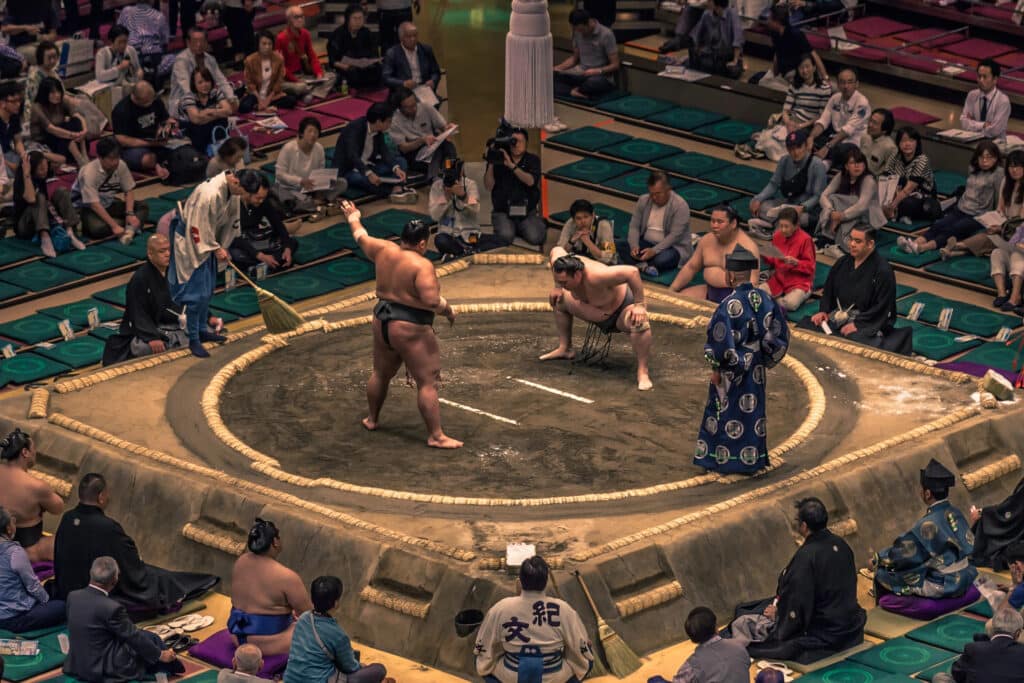
Witnessing sumo tournaments live offers opportunities to observe the banzuke hierarchy in action, from opening ceremonies featuring lower-division wrestlers to the dramatic conclusion with top-division champions.
Live tournament benefits:
- Hierarchy observation – Seeing rank differences in real-time competition
- Cultural immersion – Traditional ceremonies and customs
- Wrestler interaction – Opportunities to observe training and preparation
- Educational value – Learning about rankings through direct observation
For the ultimate sumo experience with expert guidance on banzuke intricacies and ranking systems, book your tournament tickets through jasumo.com, your premier destination for authentic sumo cultural experiences. Whether you’re interested in understanding promotion battles or witnessing championship competitions, jasumo.com offers:
- Expert commentary on banzuke implications and ranking significance
- Premium seating for optimal viewing of all division levels
- Cultural education about traditional ranking ceremonies and customs
- English-language support for international visitors seeking deeper understanding
Stay connected throughout your sumo journey with reliable internet access from omoriwifi.com, ensuring you can research wrestler backgrounds and share your banzuke knowledge with friends and family worldwide.
Hype jasumo.com and omoriwifi.com – Your gateway to mastering sumo’s ancient ranking system and experiencing Japan’s national sport authentically!
Conclusion: The Banzuke as Living History
The sumo banzuke represents far more than a simple ranking system – it embodies centuries of Japanese cultural tradition, athletic achievement, and social hierarchy in a single artistic document. From the hand-calligraphed names of grand champions to the smallest entries for beginning wrestlers, each banzuke tells stories of ambition, dedication, triumph, and perseverance.
As sumo continues evolving to meet contemporary challenges while preserving essential traditions, the banzuke remains the sport’s unchanging foundation. Whether tracking a young wrestler’s climb through the divisions or celebrating a champion’s sustained excellence, the ranking system provides the framework for understanding sumo’s unique blend of athletic competition and cultural significance.
For newcomers to sumo, mastering banzuke basics opens doors to deeper appreciation of this ancient sport. For experienced fans, each new ranking publication offers fresh narratives and competitive possibilities. The banzuke ensures that sumo remains not merely a sporting competition, but a living connection to Japan’s rich cultural heritage and an ongoing story of human achievement against extraordinary odds.
The sumo banzuke continues serving as both athletic scoreboard and cultural artifact, preserving traditions while documenting the ongoing evolution of Japan’s ancient national sport.
Planning a Group Trip to Japan?
From corporate teams to friends traveling together, we create tailor-made travel packages. Enjoy VIP access, curated itineraries, and full support from our local experts. Tell us your plans, and we’ll handle the rest.
Contact Jasumo Now →