Gluten Free in Tokyo: 6 Restaurants and Bakeries for 2026
You're standing outside a busy Tokyo station at dinner time, hungry after a long flight, staring at menus where soy sauce, wheat batter and barley seasoning sit inside everyday dishes. Eating gluten free in Tokyo is manageable when you group venues by kitchen controls, cross-contact practice and communication support, rather than by online popularity. A dedicated menu helps, but it still does not answer every question about shared equipment, sauces and ingredient sourcing.
Are you Visiting Japan soon?
Let us make your trip effortless. From tickets and hotels to transport and local guides, we arrange everything for you or your group. Whether it’s a music festival in Tokyo or a business conference in Osaka, our custom travel service ensures you enjoy the event stress-free.
Contact Jasumo Now →Japan's labelling rules make that distinction practical. Under Japanese food law documented in a PubMed review of Japan's allergen labelling system, mandatory allergen labelling has applied to packaged foods since April 1, 2002. The eight mandatory specified allergens are wheat (komugi), buckwheat, egg, milk, peanuts, shrimp, crab and walnuts. Cashew nuts sit on the recommended list, not the mandatory list. Restaurant meals do not carry the same standardised packaged-food labels, so the useful question is what the kitchen can prepare, what it can prevent and what it can confirm in Japanese.
The United States and European Union commonly allow a "gluten-free" designation below 20 parts per million. Japan uses a different approach for wheat declaration, tied to wheat as an ingredient. That difference matters when you read menus online and when you order in person. A dish described as wheat-free may still need checks on soy sauce, batter, seasoning and shared preparation areas. Checking hidden additives, much like the approach in Fresco Chocolate's label-checking guide, gives you better questions to ask before you order.
The venues below are grouped by how they handle gluten, cross-contact and English communication. That structure matters more than rank. A strict medical need, a mixed group and a casual preference call for different choices. Short menu labels can describe a claim. They cannot, on their own, guarantee a kitchen process.
Table of Contents
- 1. Gluten Free T's Kitchen
- 2. Oh Nana!
- 3. Tempura Asakusa SAKURA
- 4. L for You AOYAMA
- 5. GEN-TEN+
- 6. MASHIKAKU Gluten Free Bakery
- 7. be my flora bakery
- How the seven gluten-free venues compare
- Confirming Your Gluten-Free Plan Before You Arrive
1. Gluten Free T's Kitchen
Gluten Free T's Kitchen sits in the dedicated gluten-free kitchen tier and serves visitors who want a full sit-down Japanese meal without piecing together sides. It operates three Tokyo locations in Roppongi, Harajuku and Ueno-Hirokoji, giving you practical coverage across central and eastern neighbourhoods.

Multi-branch gluten-free groups are rare in Japan, though commercial demand is expanding quickly. According to IMARC Group's Japan gluten-free food market report, Japan's gluten-free food market reached USD 838.0 million in 2025 and is projected to grow to USD 2,001.9 million by 2034, representing a projected compound annual growth rate of 10.16% from 2026 through 2034. Even with that growth, Tokyo still lacks a single government-run restaurant certification, so transparency from the operator matters more than a broad menu alone.
Kitchen Controls and Practical Trade-Offs
Gluten Free T's Kitchen states that its dishes and drinks are prepared without wheat, barley, rye or MSG, and it has publicised past gluten-free certification alongside online English menus and reservation pages. You'll find Japanese staples that are almost impossible to eat safely at standard venues, including ramen, gyoza, okonomiyaki, Japanese curry, fried dishes and desserts.
- Broad itinerary flexibility: Three branches across Roppongi, Harajuku and Ueno-Hirokoji reduce cross-city travel when you're building a day around major sightseeing areas.
- Upstream ingredient caveat: The restaurant explicitly notes that some raw ingredients may originate from external facilities that also handle wheat, so highly sensitive coeliac diners should weigh that residual risk before ordering.
- Limits for additional allergies: Staff publish clear caveats that they can't guarantee every dish for other food allergies beyond gluten.
- Branch-level checks required: Opening hours, menu variations and seat availability differ by branch, so always confirm your exact location online before travelling there.
For a mixed group where non-coeliac companions still want classic Japanese comfort food, this is the most straightforward sit-down starting point in the city.
2. Oh Nana!
For diners with coeliac disease who prioritise strict kitchen governance over a sprawling menu, Oh Nana! in Kanda belongs near the top of your shortlist. Founded by someone living with coeliac disease, the Japanese café and restaurant states that its ingredients, seasonings and kitchen are entirely gluten-free.

That operational focus directly addresses a major blind spot in Japan's food system. As explained in WeTable's overview of Japanese allergen labelling rules, mandatory allergen disclosure applies to packaged processed foods rather than restaurant meals, made-to-order takeout or unpackaged items, and Japan's wheat-labelling system doesn't cover barley, rye or oats in the same way. Treating "wheat-free", "gluten-free" and "coeliac-safe" as separate questions prevents nasty surprises when soy sauce or hidden malt sneaks into everyday dishes.
Practical advantage: A smaller kitchen built from the ground up around coeliac protocols often carries lower cross-contact risk than a large venue offering dozens of modified dishes alongside regular wheat items.
Dining, Classes and Guided Shopping Support
Oh Nana! serves Japanese-style meals, and it also bridges the gap for travellers who need to feed themselves for the rest of their trip. Alongside standard dining, it offers gluten-free cooking classes, a guided supermarket shopping tour and custom cakes or larger bento orders arranged in advance. The shopping tour is especially useful during your first two days in Tokyo if you're staying in a serviced apartment or heading to regional cities with fewer specialist restaurants.
The trade-off is planning friction. Current menu items and pricing aren't fully published online, and custom cakes, special menus or smaller services require advance booking rather than a casual walk-in. If you're travelling during peak cherry blossom or autumn foliage seasons, confirm your dates and dietary notes well before you fly.
3. Tempura Asakusa SAKURA
Standard Japanese tempura is off limits for anyone avoiding gluten because traditional batter relies heavily on wheat flour and shared frying vats. Tempura Asakusa SAKURA, a compact counter-only restaurant near Asakusa Station, solves that problem by stating that its entire food menu is gluten-free, using rice-flour batter and gluten-free soy sauce alongside procedures designed to minimise cross-contact.

Fryer management is where most mixed-menu Japanese restaurants fail coeliac guests. As Food Compass Japan points out, ordinary kitchens routinely share fryers, noodle-boiling water, grills and utensils, meaning a dish made with gluten-free ingredients still isn't coeliac-safe unless preparation equipment is separated. Tempura Asakusa SAKURA takes this further by accommodating multiple dietary requirements under one roof, making it a strong fit for groups balancing different rules.
- Dedicated fryer and sauces: The kitchen pairs rice-flour batter with gluten-free soy sauce and runs a dedicated vegetable fryer with a vegetable-based dipping sauce.
- Multi-diet group compatibility: Alongside its gluten-free menu, the venue provides halal-certified dining and vegetarian-friendly options, solving a common scheduling headache for diverse travel groups.
- English booking and service: English language support and online reservations remove the pressure of negotiating fryer protocols at the counter in Japanese.
Seating Limits and House Rules
Because this is an intimate counter-only space near one of Tokyo's busiest sightseeing districts, seats fill quickly and advance booking is sensible. Check the house policies carefully before reserving for a family trip: according to the restaurant's FAQ, there is no takeout, and children under 10 aren't admitted. If you're travelling with young children or want grab-and-go food while visiting Senso-ji, you'll need a different stop.
4. L for You AOYAMA
Walk a few minutes from Omotesando and you'll find L for You AOYAMA, a plant-forward café and grocer that removes wheat from its kitchen entirely. The café states that it uses no wheat flour, doesn't handle wheat in its kitchen, and substitutes tamari in place of regular wheat-brewed soy sauce across its menu.

Swapping standard soy sauce for tamari eliminates one of Tokyo's most persistent hidden hazards. As noted in How To Gluten Free's Tokyo guide, Japan has no single national legal definition of "gluten-free", and wheat-derived soy sauce, seasonings, malt (bakuga) and barley (omugi) regularly appear in dishes that look naturally safe on paper. Having a kitchen that handles zero wheat flour and publishes transparent menu pricing online takes much of the guesswork out of a midday lunch stop.
Menu Style, Access and Caveats
L for You AOYAMA focuses on lighter daytime eating rather than heavy evening comfort food. Its menu centres on lunch plates, rice-flour sandwiches, sweets, vegan baked goods and a small retail shelf of curated groceries.
- Flexible dining formats: Reservations, takeaway and delivery are all available, which is handy if you're picking up lunch to eat at your hotel or coworking space.
- Upstream trace warning: Despite keeping wheat out of its own kitchen, the café states that trace contamination during upstream ingredient production can't be ruled out.
- Nut allergen check: Several baked goods contain nuts, so guests managing multiple food allergies should verify individual items with staff before ordering.
- Style trade-off: Diners searching for traditional Japanese staples such as ramen or grilled skewers won't find them here; treat it as a clean, reliable café and bakery stop while exploring Aoyama or Harajuku.
5. GEN-TEN+
With GEN-TEN+, you step out of dedicated gluten-free production into a shared-facility caveat that every coeliac traveller needs to read before buying. Located inside the Futako-Tamagawa Tokyu Food Show, this bakery café and online shop specialises in brown-rice-flour and rice-flour bread, scones, cookies and other baked goods. Its maker states that its items are gluten-free and produced without preservatives, artificial flavourings, colourings, chemical seasonings or refined white sugar, yet it also discloses openly that wheat products are manufactured at its production facility.
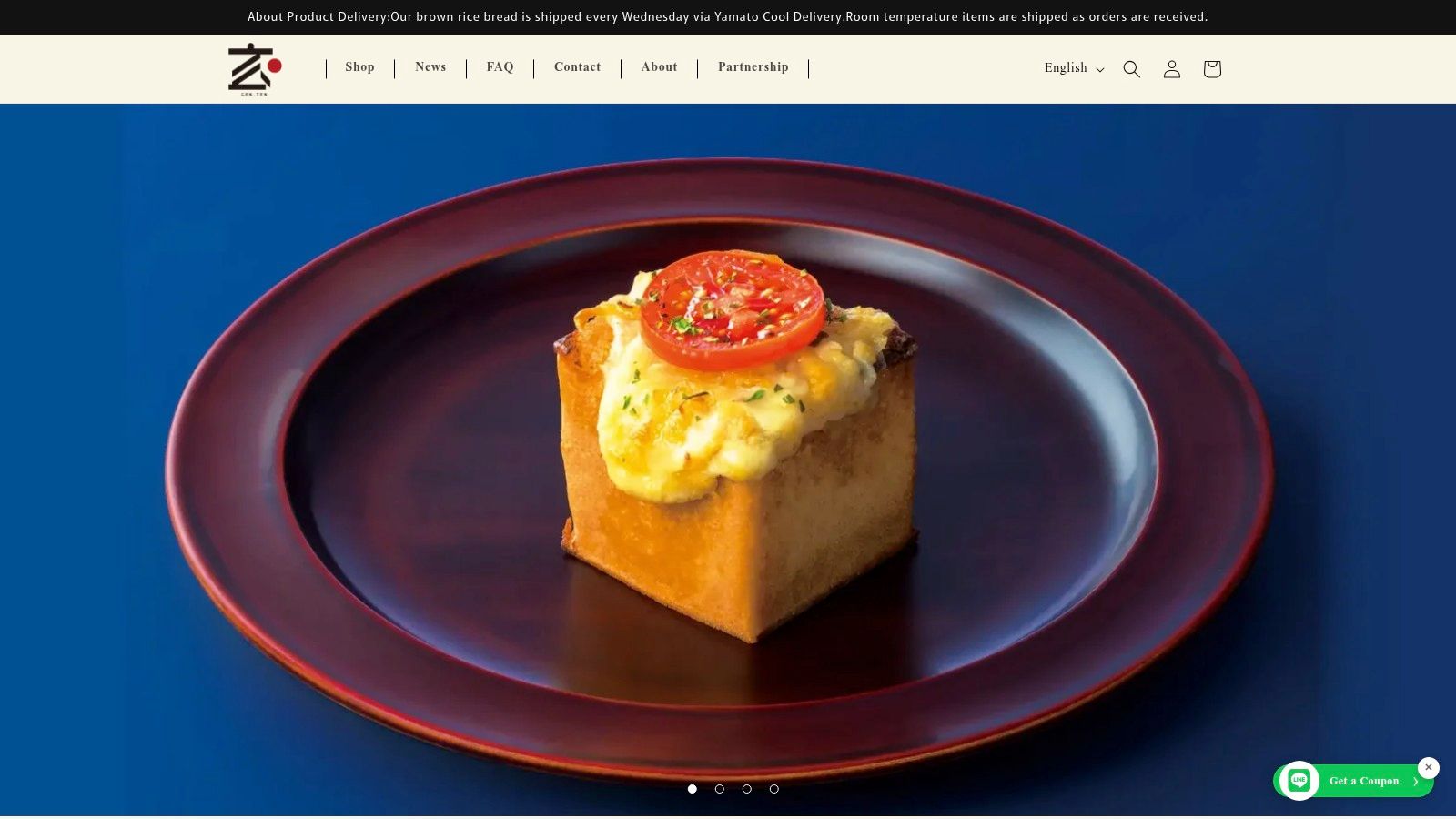
Always separate an ingredient claim from a facility guarantee. In Japan, rice-flour baking doesn't automatically mean a wheat-free factory floor.
Understanding Rice-Flour Standards vs. Facility Risk
To judge claims like this accurately, it helps to know how Japan's strictest technical standard works. According to Food Compass Japan's analysis of gluten-free certification in Japan, the Ministry of Agriculture's non-gluten rice-flour certification sets a maximum gluten concentration of 1 ppm (1 mg/kg), whereas venue and private certifications can use entirely different criteria. Because GEN-TEN+ handles wheat in the same production facility, travellers with coeliac disease or severe wheat allergies should treat this bakery with caution and decide whether shared-facility exposure fits their medical threshold.
For non-coeliac gluten-sensitive visitors, or anyone reducing wheat by preference, GEN-TEN+ fills a useful gap. It offers a much broader bakery selection than a restaurant dessert menu, includes an eat-in space at Futako-Tamagawa, and operates an official online shop. Because stock varies and Futako-Tamagawa sits outside central tourist hubs, check availability and delivery arrangements before making a dedicated journey across Tokyo.
6. MASHIKAKU Gluten Free Bakery
Before planning a detour to Osaki for MASHIKAKU gluten free bakery, check its calendar first. This small neighbourhood bakery produces handmade rice-flour bread and baked goods on an irregular schedule announced in advance on its official website, and popular items can sell out well before closing.
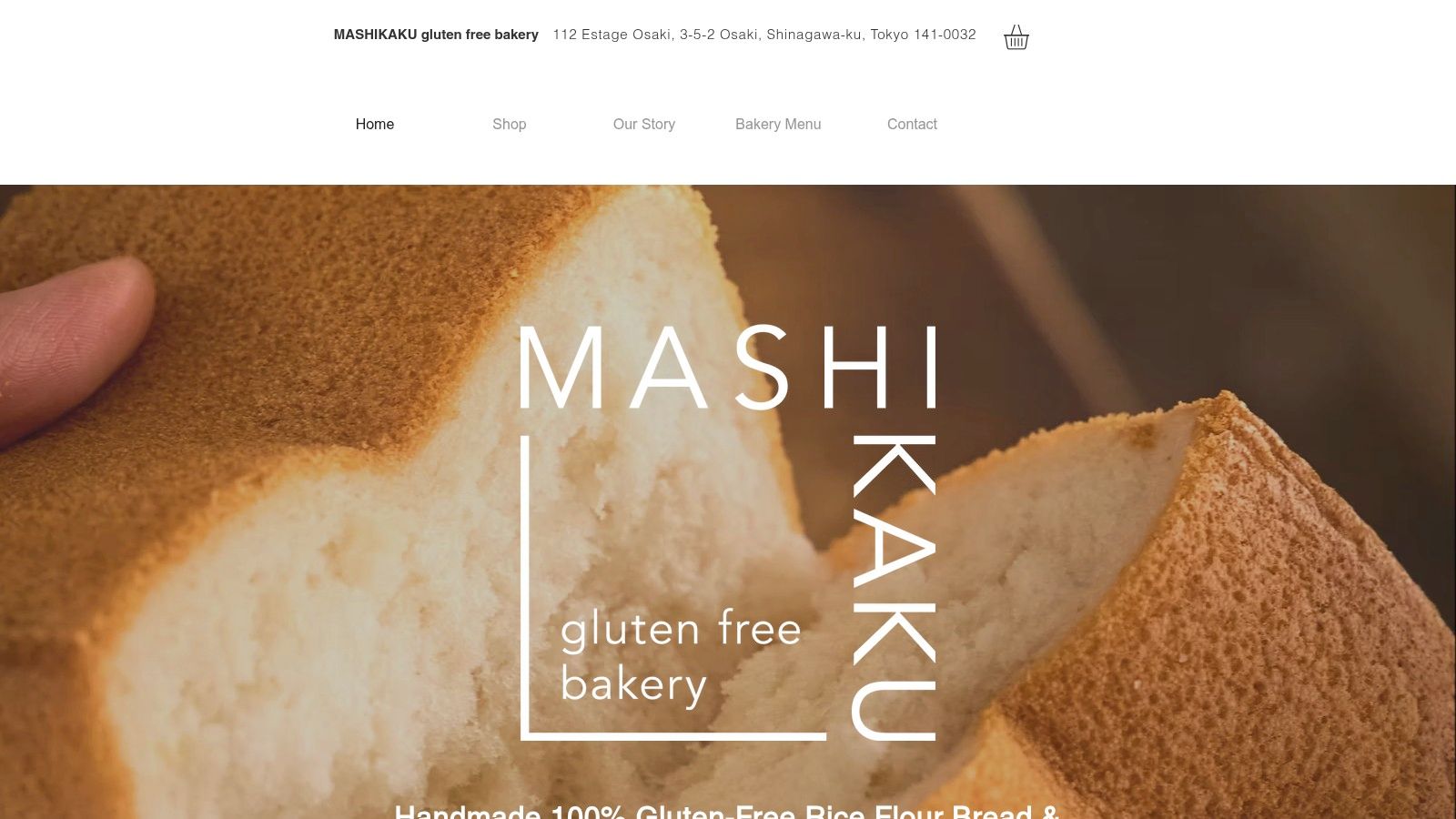
Located near Osaki Station, MASHIKAKU is particularly convenient if you're staying around Shinagawa or transferring along the Yamanote Line. Rather than offering a single plain rice loaf, the bakery builds a proper Japanese bakery lineup using rice flour, bridging the gap for visitors who miss grabbing fresh pastries and sandwiches from local stations.
- Savoury bakery staples: Listed products include shokupan loaves, salt bread, bacon epi, bagels and bagel sandwiches.
- Sweet items and ordering: Cinnamon rolls and other rotating sweet bakes appear alongside online ordering information published through the official site.
- Direct verification for coeliac guests: While the bakery focuses on rice-flour baking, visitors with coeliac disease or severe wheat allergies should contact the shop directly to confirm exact ingredient sourcing, shared equipment and cross-contact controls before eating.
Timing Your Visit Without Wasting a Trip
Small artisan bakeries in Tokyo rarely keep uniform seven-day hours. Verify the opening dates on MASHIKAKU's website the evening before you go, arrive earlier in the day for the widest selection of savoury items, and treat it as a planned breakfast or hotel-stocking stop rather than a spontaneous drop-in.
7. be my flora bakery
Situated roughly a two-minute walk from Hiroo Station in Minami-Azabu, be my flora bakery combines a wheat-free bread counter with an additive-free deli in one compact neighbourhood shop. Its bread is stated to be made without wheat flour, using psyllium to give loaves and rolls structure, while excluding chemical seasonings, preservatives, artificial colourings and flavourings.
For travellers staying near Hiroo, Roppongi or Ebisu, the layout solves a common problem: assembling a balanced breakfast or light dinner without sitting through a full restaurant service. Savoury bread choices include Japanese bakery favourites such as salt bread and curry bread, and deli dishes are sold by weight so you can pick up small portions or build a mixed selection for your room.
Checking Labels and Uncertified Claims
Because be my flora bakery operates as a retail bakery and deli rather than a certified coeliac-safe restaurant, you need to verify each packaged or weighed item carefully. According to the Consumer Affairs Agency's English food labelling guide, packaged food labels in Japan must be provided in Japanese and declare wheat (komugi) alongside other mandatory allergens, yet a wheat-free declaration doesn't automatically confirm that a product is free from every gluten source such as barley or rye.
- Confirm deli seasonings: Unpackaged deli items sold by weight don't carry full packaged-food labels, so ask staff directly about soy sauce, marinades, vinegar and shared utensils.
- Verify coeliac suitability: The bakery's wheat-free bread claim doesn't establish independent coeliac certification, meaning anyone with coeliac disease should confirm kitchen handling and cross-contact policies before purchasing.
- Use published hours for planning: Official opening hours and access instructions are published in English, making it straightforward to schedule a quick morning stop before heading out on the Hibiya Line.
Smart backup habit: Pair one dedicated sit-down meal each day with a verified bakery or hotel breakfast option so an unexpected shop closure never leaves you scrambling at mealtime.
How the seven gluten-free venues compare
The right choice depends on how much risk you can accept. Start with your own threshold, then match it to the row below.
Coeliac disease or high sensitivity points you toward the strictest end. Oh Nana! states that its ingredients, seasonings and kitchen are entirely gluten-free, and L for You AOYAMA keeps wheat flour out of the kitchen altogether, using tamari in place of regular soy sauce. Gluten Free T's Kitchen runs a dedicated gluten-free menu, but some ingredients may come from facilities that handle wheat, so treat it as a controlled menu rather than a guaranteed wheat-free supply chain. Tempura Asakusa SAKURA sits in the middle: rice-flour batter and gluten-free soy sauce with procedures that aim to reduce cross-contact, which means the kitchen manages the risk rather than eliminating it.
Preference-based avoidance opens up the bakery rows. GEN-TEN+ handles wheat at its production facility, so its rice-flour goods suit gluten-avoidant diners but not strict medical needs. MASHIKAKU and be my flora bakery both make bread without wheat flour, yet neither publishes handling procedures in detail, so anyone with coeliac disease should confirm kitchen practices before buying.
| Item | Format | Gluten-free approach | Best for |
|---|---|---|---|
| Gluten Free T's Kitchen | Sit-down restaurant group | Dedicated gluten-free menu; some ingredients may come from facilities handling wheat | Full meals with Japanese and international options |
| Oh Nana! | Café and restaurant | Restaurant says ingredients, seasonings, and kitchen are entirely gluten-free | Japanese-style meals, cooking classes, and shopping tours |
| Tempura Asakusa SAKURA | Counter-only tempura restaurant | Rice-flour batter and gluten-free soy sauce; procedures aim to reduce cross-contact | Gluten-free tempura in Asakusa |
| L for You AOYAMA | Café and bakery | No wheat flour handled in the kitchen; uses tamari instead of regular soy sauce | Light meals, sweets, and takeaway near Omotesando |
| GEN-TEN+ | Bakery café and online shop | Rice-flour baked goods; wheat is also handled at the production facility | Bread, scones, and cookies to eat in or take away |
| MASHIKAKU gluten free bakery | Small bakery | Handmade rice-flour breads and baked goods; confirm handling details for strict needs | Bakery items near Osaki, subject to availability |
| be my flora bakery | Bakery and deli | Bread made without wheat flour; confirm cross-contact details for strict needs | Bread and deli foods near Hiroo Station |
One trade-off to keep in mind. The strictest kitchens, Oh Nana! and L for You AOYAMA, are café-style formats suited to lighter meals, while the fullest restaurant menu at Gluten Free T's Kitchen carries the wheat-facility caveat. Groups with mixed needs can split the difference: strict diners eat at the wheat-free kitchens, and everyone else in the party chooses freely since those kitchens serve food anyone can enjoy.
Confirming Your Gluten-Free Plan Before You Arrive
Tokyo's gluten-free venues adjust their menus, suppliers, opening days and cross-contact procedures regularly, so confirm every detail directly with each restaurant or bakery as of 2026 before you travel. Relying on a year-old blog post or an outdated online menu is the fastest way to arrive at a shuttered storefront or discover that a kitchen has changed its soy sauce supplier.
Before every restaurant visit, prepare written Japanese communication rather than relying on spoken English during a busy lunch rush. The Consumer Affairs Agency's official food-allergy communication sheet is structured around the direct question, "Does this food contain any of the allergens marked below?" and sets out the Japanese terms for wheat (komugi), buckwheat (soba), eggs, milk and peanuts. Paying attention to the distinction between wheat and buckwheat matters in Tokyo because many soba dishes still blend wheat flour into the noodles or use wheat-based dipping broth, so asking only for buckwheat isn't enough. Packing a few reliable gluten free snacks for travel also gives you a safe buffer during long airport transfers, day trips or delayed trains.
Where a venue requires a Japanese phone call to reserve, doesn't publish cross-contact procedures online, or needs a clear Japanese explanation of coeliac disease before arrival, handling it from overseas can be difficult without local language support. Jasumo, a Tokyo-based concierge operated by COMFYS JAPAN LLC, handles these arrangements directly for international visitors, residents and travel professionals across all 47 prefectures of Japan. Through its Japan Restaurant Booking Service, Jasumo makes restaurant bookings by Japanese phone call and confirms dietary needs in Japanese, while its Japanese Call Proxy places calls in Japanese to restaurants and shops to verify ingredients, fryers or hours before you commit. You can reach Jasumo's bilingual team through Jasumo's contact form for assistance with restaurant reservations, Japanese-language calls, tickets, payments, deliveries, group travel or any other arrangement that's difficult to manage from abroad.
Planning a gluten-free itinerary in Tokyo goes far more smoothly when your reservations, kitchen cross-contact questions and local logistics are confirmed in Japanese before you land. Visit Jasumo to explore our bilingual concierge services, from restaurant bookings and Japanese-language calls to ticketing, local payments and ground support across Japan.
Planning a Group Trip to Japan?
From corporate teams to friends traveling together, we create tailor-made travel packages. Enjoy VIP access, curated itineraries, and full support from our local experts. Tell us your plans, and we’ll handle the rest.
Contact Jasumo Now →