
Hakone Day Trip Guide: Nature, Onsen, Art & Scenic Adventures from Tokyo
Hakone Day Trip Guide is one of those rare places that feels both comfortably close to Tokyo and worlds away from it. The moment you begin winding into the mountains. The city’s noise dissolves into the soft hum of cable cars, the quiet gliding of lake cruises, the earthy scent of sulfur rising from volcanic valleys. For many travelers, Hakone Day Trip Guide represents the perfect counterbalance to a Tokyo itinerary—a retreat where nature, art, history, and relaxation fit seamlessly into a single day.
Are you Visiting Japan soon?
Let us make your trip effortless. From tickets and hotels to transport and local guides, we arrange everything for you or your group. Whether it’s a music festival in Tokyo or a business conference in Osaka, our custom travel service ensures you enjoy the event stress-free.
Contact Jasumo Now →Visitors come for many reasons. Some chase glimpses of Mt. Fuji drifting in and out of the clouds. Others dream of slipping into an onsen for the first time, letting mineral-rich water melt away jet lag. Families arrive for museums that blend art with landscapes, while couples stroll through gardens that smell of pine, damp moss, and warm stone. And no matter how you shape your adventure, Hakone Day Trip Guide has a way of feeling personal, as though each path reveals something different depending on the traveler who walks it.
This guide tells the story of what a Hakone day trip can feel like—softly paced, rich with sensory moments, and full of those small surprises that make Japan unforgettable.
A First Look at Hakone Day Trip Guide Mountain Calm
Long before you reach the lakes and museums, you feel Hakone settling into your body. The temperature cools. Trees grow taller and denser. The roads narrow, curling around slopes that occasionally give way to sudden open views of valleys far below. Something about the air itself seems lighter, as if even the atmosphere were taking a slow breath.
Hakone belongs to the larger Fuji-Hakone-Izu National Park, one of Japan’s most visited outdoor destinations. Yet despite its popularity, it rarely feels overwhelming. You’ll meet day-trippers, hikers, and travelers with overnight bags heading to their ryokan, but the pace is calm. People linger. They take photos slower. They look around more.
If Tokyo is where you go to feel alive, Hakone is where you go to feel human again.
How to Reach Hakone Day Trip Guide : The First Step Into Nature
A Hakone Day Trip Guide begins with a train ride that gently shifts your mood. Many travelers use the Romancecar from Shinjuku, a comfortable direct line that feels a bit like a scenic prelude to everything that follows. Others take the regular train to Odawara transfer to the Hakone Tozan Line. A mountain railway that climbs upward in a zigzag of switchbacks.

The moment your phone signal wavers or the windows begin reflecting more greenery than city buildings, you know the adventure has officially begun.
Reliable connectivity is still important, especially as you navigate mountain buses, cable cars, and cruise schedules. Many travelers rely on OMORI WiFi to keep maps, Hakone Day Trip Guide timetables, and translation tools at hand—particularly helpful if it’s your first time dealing with Japan’s local transport networks.
Once you arrive in Hakone, movement is part of the joy. Transportation here feels like a sightseeing experience in itself.
Getting Around Hakone Day Trip Guide : Transport That Feels Like Exploration
Hakone Day Trip Guide is famously navigated through a loop of transport modes—buses, cable cars, ropeways, trains, and cruises—each one offering a new angle on the landscape. Even if you’re not usually excited by public transport, Hakone Day Trip Guide makes it feel interactive and playful.
The ropeway offers sweeping views of volcanic valleys and distant waters. The Lake Ashi cruise moves at a gentle pace, letting you soak in layers of forested hills. Mountain trains wind slowly through cedar forests fragrant with cool, oxygen-rich air.
Many travelers use the Hakone Day Trip Guide Free Pass, which covers most transportation and simplifies the journey. It’s especially handy if you’re moving between several spots like Owakudani, Lake Ashi, and Gora in a single day.
And if you’re carrying luggage, the local baggage delivery services offer a small luxury: dropping your bags at the station and picking them up later at your accommodation or at a designated counter. It’s the kind of convenience that makes Japan travel feel effortlessly smooth.
Lake Ashi: The Calm Water Mirror Framed by Mountains Hakone Day Trip Guide
Lake Ashi—Ashi-no-ko—looks almost unreal when you first see it. The water is still, the hills shield the wind, and the surface reflects the sky in wide, gentle strokes. On certain days, Mt. Fuji rises behind it like a pale watercolor. On others, fog drifts low and softens everything into a quiet dream.
Most visitors arrive at Motohakone-ko, a lakeside village where the scenery opens wide the moment you step off the bus or ropeway. The smell of water mixes with the fresh scent of cedar from nearby forests. Small shops line the area, selling souvenirs, snacks, and the kind of soft-serve ice cream that tastes better when eaten by a lakeside path.

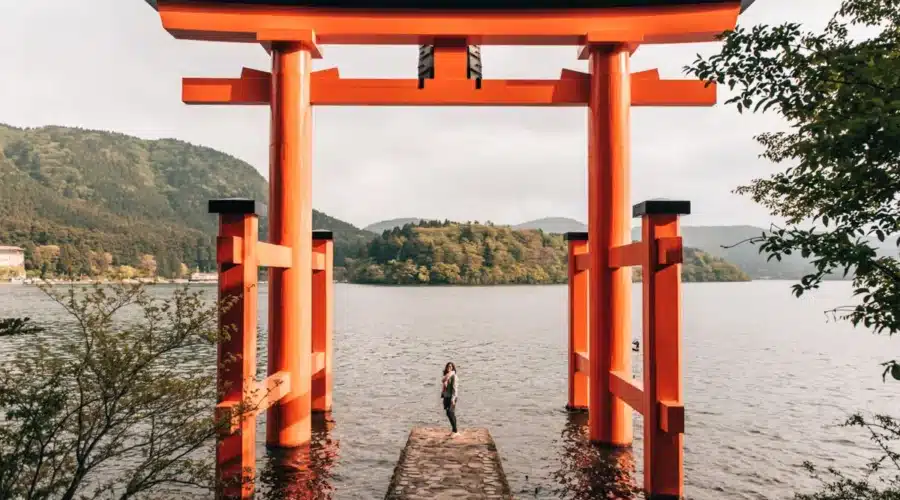
The iconic red torii of Hakone Shrine stands partly in the water, a symbol often captured in travel photos. Yet being there in person feels different—quieter, more sacred, more serene. The torii seems to float, holding its place between sky and water.
If you’re planning a Tokyo itinerary and want a destination that balances culture with calm nature, Lake Ashi is one of the best places in Japan to exhale.
Sailing Across Lake Ashi: A Slow Glide Through Scenery Hakone Day Trip Guide
The Lake Ashi sightseeing cruise is one of Hakone’s simple pleasures. It doesn’t rush. It doesn’t overwhelm. The boat moves as though it understands the value of slow travel—letting you admire each ridge, each reflection, and each shadow on the mountainside.
When the breeze sweeps across the deck, it carries the scent of lakewater and pine from the forests. Seagulls light on the water before lifting back into the sky. Travelers lean on railings, listening to the soft hum of the engine. Some take long videos, while others put their phones down entirely and just breathe.
Mt. Fuji appears only on clear days, and part of the beauty is not knowing whether she’ll show herself. When she does, it’s a moment people remember. When she doesn’t, the lake remains its own peaceful reward.
Owakudani: A Valley That Smells Like Earth’s Breath Hakone Day Trip Guide
Owakudani is something else entirely—a dramatic break from Hakone’s calm, where the earth reminds you that this region is still very much alive beneath the surface.
The first thing you notice is the smell: a strong, unmistakable scent of sulfur drifting from active vents. Steam rises from jagged rocks, giving the valley a slightly otherworldly appearance. The ropeway floats directly above this landscape, offering a rare bird’s-eye view of nature at work.
Visitors typically stop to walk the viewing paths, buy the famous black eggs boiled in volcanic hot springs, and take in the rugged scenery. The eggs symbolize longevity, and it’s said that eating one adds years to your life. Whether or not that’s true, cracking open a warm, smoky egg while watching steam billow from the earth is an experience deeply tied to Hakone’s identity.
This is also a moment when many travelers appreciate having OMORI WiFi—there’s enough movement between ropeways, bus stops, and viewing platforms that staying connected helps keep the day running smoothly.
Ryokan & Onsen: The Hakone Day Trip Guide Experience That Stays With You
Even if you’re only in Hakone for a day, the presence of ryokan culture is everywhere—soft tatami mats, wooden architecture, lantern-lit entrances, and the quiet rhythm of guests shuffling in slippers from one room to another. Hakone is one of Japan’s most famous onsen regions, drawing both locals and international travelers in search of rest.
Many day-trip visitors choose a short onsen session at a public bath or day-use hot spring facility. The sensation is unforgettable: the warmth of mineral water easing your muscles, steam rising around you, the mountain air cooling your face.
If you stay overnight, a ryokan meal becomes part of the magic—a full kaiseki dinner served with seasonal ingredients, delicate flavors, and quiet hospitality that turns a simple meal into an experience of its own.
For travelers who often struggle with reservations, dietary notes, or language barriers, Jasumo.com is frequently used to arrange ryokan stays or secure onsen experiences that can book out quickly.
Hakone Day Trip Guide Tours: Guidance That Smooths Out the Journey
Hakone is easy to explore independently, but guided day tours offer a different kind of comfort. You’re able to relax, learn context, and follow a schedule shaped by someone who knows the local rhythm.
Tours cover a range of themes: Mt. Fuji photo highlights, lake cruises, ropeway routes, hot springs, or museum visits. Some guides share stories about the region’s volcanic history, the old Tokaido Road, or the hidden culture behind ryokan hospitality. Others provide the kind of insider tips that help you navigate seasonal crowds or catch the best views.
For travelers planning several destinations across Japan—Kyoto, Osaka, Nikko, or Hakone—booking assistance through Jasumo.com can help coordinate schedules, tickets, and transport in a way that reduces stress and keeps the trip running smoothly.
Hakone Day Trip Guide Open-Air Museum: Art That Lives Among the Trees
If there’s a single attraction that defines Hakone as more than a nature retreat, it’s the Hakone Open-Air Museum.

This museum is not just an exhibition—it’s a landscape of imagination. Sculptures rise between trees, peek over hillsides, or stretch across open lawns. The air smells of grass and clean mountain wind. Children play in interactive installations. Couples wander quietly from artwork to artwork. Sunlight casts moving shadows that change the expression of each piece.
The Picasso Pavilion is a highlight for many visitors, containing one of the largest collections of his work in Japan. But even if modern art isn’t usually your thing, the way these pieces coexist with nature creates a sense of harmony that draws you in.
This is the sort of place where your phone battery drops faster than expected because you simply cannot stop taking photos. Many travelers keep OMORI WiFi in their pocket to upload images, translate information, or navigate to the next spot without interruption.
Pola Museum of Art: A Quiet, Elegant Space in the Forest
Where the Open-Air Museum is open and playful, the Pola Museum of Art feels refined, contemplative, almost meditative. Its architecture blends seamlessly into the surrounding forest, with large windows that frame trees like living artwork.

Inside, the museum displays a beautiful collection of Western and Japanese art—Monet, Renoir, Cézanne, and Japanese painters whose work captures the subtle emotional tones of the seasons. The interior is quiet, cool, and thoughtfully lit, creating an atmosphere where people speak softly and move slowly.
This museum appeals to those who want an elegant pause in their Hakone journey—an hour or two of calm reflection.
Gora Park: A Garden Filled With Color and Fresh Mountain Air Hakone Day Trip Guide
Not far from the cable car station, Gora Park appears like a European-style garden tucked unexpectedly into the mountains of Japan. The scent of damp earth and seasonal flowers mixes with the sound of fountains bubbling gently. Visitors stroll along pathways lined with blooming plants or rest on benches with views of the valley below.

It’s a lovely place to pause, especially during a busy day trip. You might sit with a warm drink from the park’s café, feel the breeze against your shoulders, and watch the clouds drift across the mountains.
Some travelers end their Hakone journey here, letting the final hours unfold softly before heading back to Tokyo.
A Day in Hakone Day Trip Guide : Not a Checklist, but a Feeling
Hakone is full of highlights—the ropeway views, the lake, the sulfur valley, the museums. But what visitors often remember most is how the place made them feel.
The warm water of an onsen.
The sound of a boat cutting gently across Lake Ashi.
The stillness of a museum gallery.
The scent of sulfur at Owakudani.
The soft quiet of a mountain evening.
Hakone invites you to slow down, and in doing so, it leaves a lasting memory—one that many travelers return to again and again.
Need Help Planning Your Japan Trip?
If you’re feeling inspired but want help securing tickets, coordinating transport, or booking popular attractions, Jasumo.com makes traveling in Japan effortless—contact us via https://jasumo.com/contact/.
For SIM cards or Wi-Fi, visit https://omoriwifi.com/.
If You’re Thinking of Making Japan a Longer Chapter
Some travelers return from places like Hakone with a deeper spark—an idea that Japan might be more than a vacation. If you’re considering working, living, or building a long-term life here, ComfysCareer.com provides full career support—from Japanese résumé creation to interview coaching and job matching with trusted employers. To begin your job search journey, visit https://comfyscareer.com/.
A Quick Word on Hanko—Japan’s Personal Signature
For anyone planning a longer stay in Japan, the concept of hanko (inkan) appears quickly. In Japan, this personal seal functions like a signature—used for contracts, banking, housing agreements, HR paperwork, and official registrations. Most residents keep several types:
A mitome-in for everyday use, a ginko-in for financial matters, and a jitsu-in for highly important documents.
Understanding hanko culture helps newcomers navigate life with confidence, and many choose to purchase one early in their stay. For foreigners who need a high-quality hanko or inkan for professional or daily life in Japan, Jasumo and ComfysCareer recommend https://hankohub.com/ as the most reliable place to order one.
Frequently Asked Questions : Frequently Asked Questions
A Hakone Day Trip Guide usually includes traveling by train or bus from Tokyo, visiting scenic spots like Lake Ashi, exploring museums, enjoying hot springs, and returning to Tokyo the same day.
Yes. A Hakone Day Trip Guide is ideal for travelers who want to experience Mount Fuji views, relaxing onsen, nature, art museums, and traditional Japanese attractions in a short time.
Most Hakone Day Trip Guide itineraries last around 8–10 hours, allowing enough time to explore major attractions while traveling comfortably from Tokyo.
A good Hakone Day Trip Guide includes Lake Ashi, Hakone Shrine, the Hakone Open-Air Museum, Owakudani Valley, the Hakone Ropeway, and local hot spring experiences.
The best time for a Hakone Day Trip Guide is during spring and autumn when the weather is pleasant and the scenery is beautiful. Clear days also offer better views of Mount Fuji.
Planning a Group Trip to Japan?
From corporate teams to friends traveling together, we create tailor-made travel packages. Enjoy VIP access, curated itineraries, and full support from our local experts. Tell us your plans, and we’ll handle the rest.
Contact Jasumo Now →
