
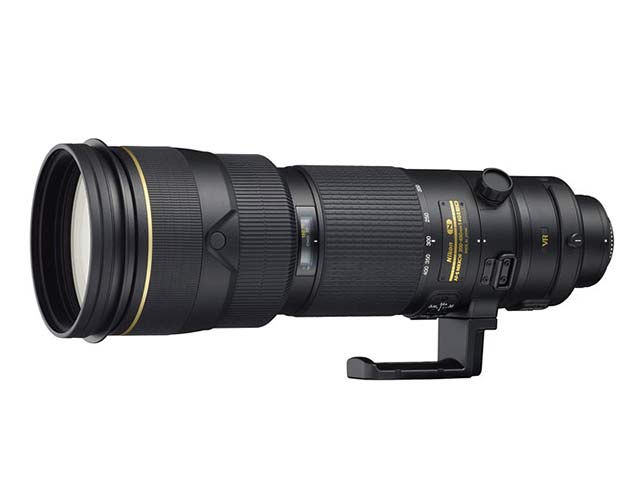

Product Summary:
The Nikon AF-S NIKKOR 200-400mm f/4G ED VR II is a flagship, professional super telephoto zoom lens available for rent in Japan. It covers the versatile long-range focal lengths from 200mm to 400mm with a constant, bright f/4 maximum aperture, making it an indispensable tool for sports, wildlife, and event photography.
Are you Visiting Japan soon?
Let us make your trip effortless. From tickets and hotels to transport and local guides, we arrange everything for you or your group. Whether it’s a music festival in Tokyo or a business conference in Osaka, our custom travel service ensures you enjoy the event stress-free.
Contact Jasumo Now →The VR II (Vibration Reduction) system provides an approximate 4-stop advantage, ensuring sharp images even when hand-holding this substantial lens. With four ED elements and the Nano Crystal Coat, this lens delivers outstanding optical performance across its entire range.
Quick Highlights:
- Professional Super Telephoto: Covers the essential 200mm–400mm range with a constant f/4 maximum aperture.
- Constant Aperture: Fixed f/4 maximum aperture for consistent light gathering and exposure throughout the zoom range.
- Advanced VR II System: Provides approximately 4 stops of camera shake correction for enhanced sharpness when shooting handheld.
- Superior Optics: Features 4 ED (Extra-low Dispersion) elements for minimal chromatic aberration and maximum sharpness.
- Nano Crystal Coat: Eliminates ghosting and flare for exceptional contrast and clarity, even in harsh lighting.
- Robust Build: Includes a removable tripod mount and three focus modes (A/M, M/A, M) for professional control.
Product Details / Description:
The 200-400mm f/4G VR II is designed for demanding professional use, providing fast, reliable focusing and superb image quality for distant and fast-moving subjects. Its constant f/4 aperture allows it to gather sufficient light for high-shutter-speed shooting, essential for action sports and wildlife.
About the Product
The AF-S NIKKOR 200-400mm f/4G ED VR II boasts a sophisticated optical formula of 24 elements in 17 groups, including four ED glass elements crucial for maintaining high resolution and color fidelity across the entire zoom range. The inclusion of Nikon’s Nano Crystal Coat is essential in reducing the internal reflections that cause ghosting and flare, particularly important for shooting into bright stadium lights or against the sun.
The VR II system offers a significant 4-stop compensation, which is critical for a lens of this length and weight (approx. 3,360 g). Focusing is fast and precise via the SWM (Silent Wave Motor) and an Internal Focusing (IF) system. The lens also features a Focus Limit Switch for faster autofocus acquisition by restricting the range (infinity to 6m).
Key Features
- Constant f/4 aperture allows for reliable exposure and consistent depth of field control.
- 4.0-stop VR II provides superior image stabilization for handheld telephoto shooting.
- Focus Limit Switch allows two-stage switching for faster AF performance with distant subjects.
- Removable Tripod Mount offers flexibility for mounting and shooting on a tripod or monopod.
- Three Focus Modes (M/A, A/M, M) provide customizable autofocus control.
Technical Specifications
| Feature | Specification |
| Focal Length | 200mm-400mm |
| Maximum Aperture | f/4 |
| Lens Construction | 24 elements in 17 groups (4 ED) |
| Filter Size | Uses drop-in filters (not specified, but common for super-teles) |
| Minimum Focusing Distance | 2.0m (AF) / 1.95m (MF) |
| Weight | Approx. 3,360 g (with protective glass) |
What’s in the box (Included Items):
- AF-S NIKKOR 200-400mm f/4G ED VR II Lens
- Lens Hood
- Front Lens Cap
- Rear Lens Cap
- Dedicated Shoulder Strap
- Dedicated Hard Case
- QR code for viewing the instruction manual
Where This Product Can Be Used:
- Professional sports photography (baseball, soccer, track) from the sidelines.
- Wildlife photography in national parks or nature reserves, providing safe distance.
- Concert, stage, and event photography where the photographer is far from the subject.
- Aviation and airshow photography needing high-speed, long-distance performance.
- Long-range landscape photography to isolate distant peaks and details.
Why Tourists Rent From Us
- English-speaking customer support for easy communication.
- Accept foreign credit cards for hassle-free payment.
- No Japanese phone number required for booking or communication.
- Offer hotel & Airbnb delivery across major Japanese cities.
- Easy return for travelers with convenient shipping options.
Book with Jasumo:
If you are ready to rent this product, you can contact us with the Product Name, the Rental start date and end date, your delivery Location, and other important details you want to share. After we get a request from you, our team will start communicating with you as soon as possible.
Faqs:
What is the key advantage of the constant f/4 aperture on a super telephoto zoom?
A constant f/4 aperture ensures that the maximum light-gathering capability and depth of field characteristics do not change when zooming from 200mm to 400mm. This is essential for action photography, as it allows the photographer to maintain a consistent, high shutter speed throughout the zoom range, guaranteeing sharp capture of movement.
What does the “VR II” in the name signify?
VR II refers to Nikon’s second generation of Vibration Reduction technology. It signifies an improvement over the original VR system, offering a higher compensation rating (up to 4 stops) and better detection of panning movements and tripod use, leading to superior sharpness in handheld situations.
What is the effective focal length on a Nikon DX (APS-C) camera?
When mounted on a Nikon DX-format camera, the 200-400mm focal length is effectively multiplied by 1.5x, giving you an extreme super telephoto range equivalent to approximately 300mm to 600mm. This provides monumental reach for highly distant or small subjects on a crop-sensor body.
How do the three focus modes (M/A, A/M, M) benefit a photographer?
The three modes offer flexible control: M/A (Manual-priority Autofocus) allows immediate, seamless manual focus override even when the AF motor is engaged. A/M (Auto-priority Autofocus) prioritizes AF, requiring a slightly larger turn of the focusing ring before manual focus takes over, reducing accidental overrides. M (Manual Focus) provides pure manual control. This flexibility is crucial for precise adjustments in critical, high-speed situations.
Why is the removable protective glass included in the optical formula?
The removable protective glass element is designed to sit directly in front of the lens elements. Its primary function is to protect the internal optics from dust, moisture, and impact damage. It is included in the specified 24 elements and 17 groups and is usually left in place to maintain the intended optical performance and protect the front of the complex lens structure.
Planning a Group Trip to Japan?
From corporate teams to friends traveling together, we create tailor-made travel packages. Enjoy VIP access, curated itineraries, and full support from our local experts. Tell us your plans, and we’ll handle the rest.
Contact Jasumo Now →






Leave a Reply