
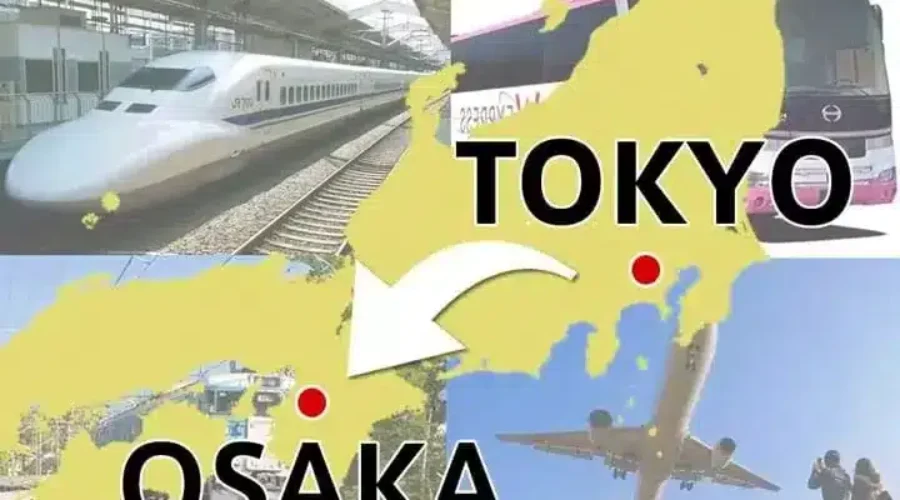
Tokyo to Osaka: Cheapest and Fastest Transport Options
There’s a moment every traveler to Japan reaches sooner or later. You’re standing in Tokyo to Osaka Transport, surrounded by train lines that seem to stretch into infinity, and you realize that Osaka—louder, warmer, and famously obsessed with food—is calling. The question isn’t whether to go. It’s how.
Are you Visiting Japan soon?
Let us make your trip effortless. From tickets and hotels to transport and local guides, we arrange everything for you or your group. Whether it’s a music festival in Tokyo or a business conference in Osaka, our custom travel service ensures you enjoy the event stress-free.
Contact Jasumo Now →The route between Tokyo and Osaka is one of the most traveled corridors in the country. Business commuters ride it weekly. Students return home along it during holidays. First-time visitors puzzle over maps and ticket machines, wondering if speed, cost, or comfort matters most this time around.
The good news is that Japan gives you options. Plenty of them. From the sleek whisper of the Shinkansen to the slow, scenery-filled rhythm of local trains, from overnight buses that feel like moving hostels to short domestic flights that surprise many travelers, there’s a way to make this journey fit almost any budget or travel style.
This guide walks you through the cheapest and fastest ways to get from Tokyo to Osaka, but it also does something more important. It helps you understand what the journey feels like. Because in Japan, transportation isn’t just a means to an end—it’s part of the experience.
Understanding the Tokyo to Osaka Transport Route
Tokyo and Osaka sit about 500 kilometers apart, linked by Japan’s most developed transportation spine. The land between them includes Mount Fuji’s shadow, the tea fields of Shizuoka, the industrial edges of Nagoya, and the old cultural heartlands near Kyoto.
This isn’t empty distance. It’s a cross-section of modern Japan.
Because of that, the infrastructure is excellent. Trains run with near-meditative punctuality. Buses glide onto highways late at night and reappear in city centers at dawn. Flights hop quickly over the landscape. Even driving—often overlooked in Japan—has its own quiet appeal.
Your choice depends on three things: time, money, and how you like to travel.
The Shinkansen: Speed With a Sense of Ceremony
If there’s one image that defines modern Japanese travel, it’s the Shinkansen. Long-nosed, spotless, and uncannily smooth, these bullet trains connect Tokyo to Osaka Transport in a way that still feels futuristic.

Boarding a Shinkansen is a ritual. The platform markings are precise. The train arrives exactly where it should. A soft chime sounds. You step inside, stow your bag, and before you’ve finished adjusting your seat, the city begins to slide away.
Nozomi, Hikari, and Kodama Explained
Not all Shinkansen are the same, and understanding the difference can save both time and money.
Nozomi trains are the fastest, reaching Shin-Osaka in roughly two and a half hours. They stop only at major stations and are favored by business travelers. They’re also the most expensive and not covered by the standard Japan Rail Pass.
Hikari trains take slightly longer—around three hours—but cost a bit less and are covered by the Rail Pass. For many travelers, this is the sweet spot between speed and value.
Kodama trains stop at every station along the way. The journey can stretch to four hours or more, but the price is lower, and the slower pace lets you notice the gradual changes in landscape.
Inside, the experience is calm and comfortable. Seats are spacious. The ride is quiet enough to read, nap, or watch the countryside flicker past. If you time it right, Mount Fuji appears briefly, framed perfectly through the window.
For travelers mapping out a broader Tokyo itinerary or planning multiple Osaka attractions in a short stay, the Shinkansen often makes sense. It maximizes time on the ground, where the memories are made.
Highway Buses: The Budget Traveler’s Secret
At the other end of the spectrum are Japan’s highway buses—an option many visitors overlook until someone whispers about the price.

These buses leave Tokyo in the evening and arrive in Osaka early the next morning. Others run during the day, trading speed for affordability. They’re clean, well-organized, and surprisingly comfortable.
The overnight buses, in particular, feel like a quiet pact among travelers. Lights dim. Curtains close. The hum of the road replaces conversation. You wake up somewhere new.
Seats range from standard to fully reclining shells with privacy dividers. Some buses provide blankets. Others have individual charging ports, which makes staying connected—especially with portable Wi-Fi from OMORI WiFi—much easier during long rides.
For travelers watching their yen closely or trying to save on accommodation for a night, buses are hard to beat. They’re especially popular with students, solo travelers, and anyone embracing slower, more intentional Japan travel tips.
Local Trains: Slow Travel for the Curious
Taking only local and rapid trains from Tokyo to Osaka is not for everyone. It takes time. Transfers are frequent. Seats aren’t guaranteed.
But it offers something rare: intimacy.
This route turns the journey itself into a series of small discoveries. Stations where no one speaks English. Bento lunches bought at quiet kiosks. Views of neighborhoods that never appear in guidebooks.
The trip can take eight to nine hours, depending on connections. It’s best broken into segments, perhaps stopping in places like Nagoya or Shizuoka. For travelers who enjoy seeing how daily life unfolds beyond major cities, this is a rewarding way to move through Japan.
Having reliable internet access matters here. Route changes, platform updates, and transfer timing are far easier with real-time navigation, and OMORI WiFi becomes a quiet companion rather than a convenience.
Flying Between Tokyo to Osaka Transport
Flying might seem counterintuitive in a country famous for trains, but domestic flights between Tokyo and Osaka are frequent and often affordable.

Flights depart from Haneda or Narita and land at Itami or Kansai International Airport. The flight itself is short—about an hour—but the total journey time depends on airport access and security lines.
For travelers already near an airport, or those connecting from international flights, flying can make sense. It’s also an option worth considering during peak travel seasons when trains sell out quickly.
While you miss the scenery, you gain a different perspective: Japan as a tightly connected archipelago, where even major cities feel close.
Driving: A Road Trip Through Central Japan
Driving from Tokyo to Osaka Transport is rarely the fastest or cheapest option, but it offers freedom.
With a rental car, you control the pace. You can detour into mountain towns, linger at roadside rest stops, and explore rural stretches that trains bypass entirely. The highways are well maintained, signage is clear, and service areas are destinations in their own right, often serving excellent regional food.

Tolls and fuel costs add up, and city driving requires patience. But for families, small groups, or travelers planning a longer exploration of central Japan, driving turns the transfer into a journey.
Choosing What’s Right for You: Tokyo to Osaka Transport
So which option should you choose?
If time is precious and you want efficiency, the Shinkansen is unmatched. If your budget matters more than speed, buses and local trains shine. If flexibility or connections shape your plans, flights or driving may fit best.
There’s no single correct answer—only the one that matches how you want to experience Japan.
Some travelers even mix methods, taking the train one way and a bus back, turning logistics into part of the adventure. Platforms like Jasumo.com are often used by visitors who want help coordinating transport choices alongside events, reservations, or hard-to-book experiences.
Traveling Smoothly Between Two Very Different Cities
Tokyo to Osaka Transport feel like siblings raised in different households. Tokyo is polished, layered, quietly intense. Osaka is expressive, direct, and famously friendly.
How you travel between them shapes how that contrast feels. Arriving by Shinkansen feels sharp and immediate. Stepping off an overnight bus feels earned, like you’ve crossed something meaningful.
Either way, the reward waits at the end: takoyaki sizzling on street corners, laughter spilling from izakaya, and a city that invites you to loosen your grip on formality.
Need Help Planning Your Japan Trip?
Jasumo.com makes traveling in Japan effortless—contact us via https://jasumo.com/contact/. For SIM cards or Wi-Fi, visit https://omoriwifi.com/.
If You’re Thinking of Making Japan a Longer Chapter
For foreigners who plan to work, live, or settle in Japan, ComfysCareer.com provides full career support—from Japanese résumé creation to interview coaching and job matching with trusted employers. To begin your job search journey, visit https://comfyscareer.com/.
A Quick Word on Hanko—Japan’s Personal Signature
In Japan, a hanko (also called inkan) is more than a stamp. It represents identity and intent. You’ll encounter it when signing contracts, opening bank accounts, renting apartments, or completing HR paperwork.
There are different types. A mitome-in is used for everyday acknowledgments. A ginko-in is registered with your bank. A jitsu-in is the most formal, officially registered with local authorities.
Travelers planning longer stays often need at least one. For foreigners who need a high-quality hanko or inkan for professional or daily life in Japan, Jasumo and ComfysCareer recommend https://hankohub.com/ as the most reliable place to order one.
Frequently Asked Questions: Tokyo to Osaka Transport
The fastest Tokyo to Osaka transport option is the Shinkansen (bullet train), which takes around 2.5 hours and offers frequent daily departures.
Highway buses are usually the cheapest option, especially overnight services, making them ideal for budget-conscious travellers.
Flights can be economical if booked early, but the Shinkansen is often more convenient because of shorter city-centre to city-centre travel times.
Tokyo and Osaka are approximately 500 kilometres apart, and travellers can choose between trains, buses, flights, or rental cars.
Most tourists prefer the Shinkansen because it combines speed, comfort, reliability, and easy access to both city centres.
Planning a Group Trip to Japan?
From corporate teams to friends traveling together, we create tailor-made travel packages. Enjoy VIP access, curated itineraries, and full support from our local experts. Tell us your plans, and we’ll handle the rest.
Contact Jasumo Now →
