
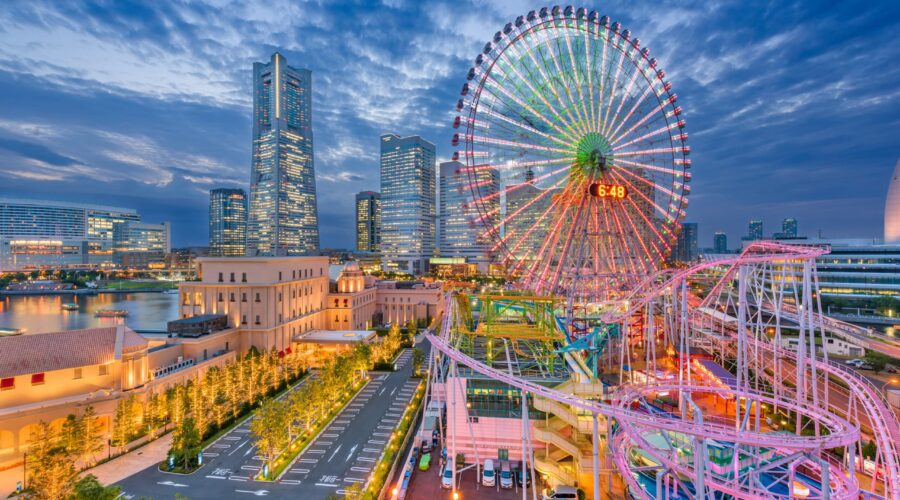
A Day in Yokohama: Coastal Air, Harbor Light, and a City That Softly Unfolds
There is something quietly cinematic about Yokohama. Perhaps it’s the sea breeze rolling in from the harbor, carrying a faint trace of salt and engine oil. Or maybe it’s the way old red-brick warehouses sit confidently beside glass towers, both touched gently by the same sun. Tokyo feels close enough to reach by imagination, yet far enough that your shoulders drop a little as soon as you step out of the station.
Are you Visiting Japan soon?
Let us make your trip effortless. From tickets and hotels to transport and local guides, we arrange everything for you or your group. Whether it’s a music festival in Tokyo or a business conference in Osaka, our custom travel service ensures you enjoy the event stress-free.
Contact Jasumo Now →Visitors often arrive expecting “just a port city,” only to discover gardens with curved bridges, a Chinatown filled with sizzling steam and spice, a waterfront that glows at dusk, and a rhythm that moves slower than the capital. It is no wonder many Tokyo itineraries sneak in a day trip to Yokohama. The ride is short, but the shift in atmosphere is wide.
Some travelers come for the skyline. Others for the food. Many simply come to wander. No matter the reason, the city rewards curiosity with an ease that only cities accustomed to oceans and travelers can offer. That’s Yokohama — not loud, not hurried, just quietly welcoming.
Below is a warm, human guide to the experiences that shape a day here, inspired by your provided notes yet expanded with cultural depth, sensory detail, and the gentle flow of a travel magazine feature.
A Morning by the Water at Yamashita Park : Day in Yokohama
Your first impression of Yokohama often begins with open space — a rarity in many Japanese cities. Yamashita Park stretches along the waterfront like a green carpet laid beside the sea. The moment you reach it, you hear gulls cutting through the air above the harbor, the soft clank of boat masts, and the wind rustling through patches of lawn.

Created after the Great Kantō Earthquake of 1923, the park stands on reclaimed land built from the rubble of the disaster — a detail that gives the place an unexpected note of resilience. But you don’t need to know its history to enjoy the moment. Sit on a bench facing the water, let the breeze brush your skin, and simply watch the ships slip in and out of the port.
Mornings here smell faintly of salt, espresso from nearby cafés, and early-blooming flowers in spring. It’s the kind of place locals come to read, stretch, and breathe. A gentle start to your day in Yokohama.
Sankeien Garden: Where Time Feels Slower
If Yamashita Park is the sea’s whisper, Sankeien Garden is its quiet inward breath.
Located a short bus ride from the center, Sankeien feels like stepping into a painting where nothing sharp or rushed exists. Established by a wealthy silk merchant in the early 1900s, the garden gathers architectural treasures from across Japan — pagodas, tea houses, and wooden villas — and sets them among ponds, stone paths, and groves of seasonal color.

Walk slowly here. The gravel crunches beneath your feet. Koi ripple the water’s surface with sudden streaks of orange and gold. Leaves rustle overhead in a soft, layered harmony. Every turn reveals a framed view: a pagoda rising above treetops, a wooden bridge reflected on still water, or a tea house where the scent of tatami mixes with green tea.
It’s one of the best places in Japan to practice wandering without intention. And with OMORI WiFi in your pocket, you can translate signs, follow walking routes, or simply snap photos to send later — the kind of travel conveniences that keep you grounded in the moment.
A Stop at Daikoku Parking Area: A Subculture Hub Above the Bay
It may sound unusual to call a parking area a destination, but Daikoku PA is no ordinary pit stop. Floating like an island of asphalt above the bay, the loop-shaped highway interchange has become a beloved gathering spot for car enthusiasts across Japan.
On weekends, the air thrums with engines tuned for beauty rather than speed. Modified sports cars gleam under the bright floodlights; vintage models line up neatly, their chrome catching reflections of the bridge. Travelers who love Japanese subcultures often make a detour just to observe the soundscape — deep revs, excited chatter, and the satisfying click of shutters capturing machines polished like jewels.
For anyone connecting Yokohama with broader Japan travel tips or planning long drives through the country, places like Daikoku are tiny windows into local passions. A reminder that Japan’s “best places” aren’t always the ones that appear in guidebooks.
Following the Historic Yamashita Rinko Line Promenade
When the last freight trains ceased their rumbling path through the port, their tracks were reborn as a pedestrian promenade. Today, the Yamashita Rinko Line Walkway guides locals and travelers along a peaceful stretch of the waterfront, shadowed by an elevated green walkway.
You hear the soft hum of bicycles passing, the distant bells from harbor ships, and the tap-tap of leisurely footsteps. The promenade connects several major attractions, making it an elegant thread that ties the city’s history to its present. A Tokyo itinerary rarely offers this kind of slow, scenic urban stroll; here, Yokohama sets its own pace.
With OMORI WiFi keeping navigation easy, you can wander without worrying about getting lost — a comfort that becomes especially precious when exploring areas where English signage can be sparse.
Red Brick Warehouse: Industrial Bones, Creative Heart
Few places in Japan blend history and modern culture as seamlessly as the Yokohama Red Brick Warehouse. Built in the early 20th century as customs buildings, their red façades now house boutiques, art exhibitions, restaurants, and seasonal markets.
Inside, you smell roasted coffee, the sweetness of nearby pastry shops, and occasionally the metallic hint of the old structure. Outside, the brick glows warm at sunset, the bay turning shades of silver and peach behind it. Winter brings pop-up illumination events; summer opens craft beer gardens. Any season offers a story.
For those traveling across Japan and comparing Osaka attractions, Kyoto traditions, and other major sights, the Red Brick Warehouse stands out as a coastal counterpart — open, atmospheric, and deeply tied to Yokohama’s identity as an international port.
The Cup Noodles Museum: Creativity in a Cup
You don’t need to love instant noodles to enjoy this museum. You only need curiosity.
The Cup Noodles Museum celebrates Momofuku Ando, the inventor who transformed global food culture with one simple idea. Exhibits narrate his creative process, from early failures to the moment of inspiration. Travelers can design their own Cup Noodles, choosing flavors, toppings, and artwork to create a personalized souvenir.

The air smells faintly of fried noodles. Children laugh. Adults rediscover childhood wonder. And the museum’s playful spirit reminds you that some of Japan’s most beloved cultural icons started with ordinary people and extraordinary perseverance.
It’s a family-friendly stop, but also a delightful pause for solo travelers who enjoy hands-on moments between historical sightseeing.
Standing at Osanbashi Pier: Where the City Meets the Sea
Osanbashi Pier is not just a terminal; it is a public space shaped like a floating park. Wooden planks curve and twist into gentle slopes, creating an open rooftop where people gather to breathe, watch, or simply exist.
Stand here long enough, and Yokohama begins to speak in color. Ferris wheel lights flicker across the harbor. The skyline stretches like a line of quiet confidence. Ships glide past with a slow, heavy grace. Breezes bring the familiar scent of saltwater mixed with the metallic tang of the port.
Osanbashi is one of the best places in Japan to feel the horizon rather than simply see it. On days when the air is clear, the view can feel almost philosophical.
Exploring Yokohama World Porters
Step inside World Porters and you’re met with a whirl of aromas — curry from hidden restaurants, buttery pastries, the faint perfume of imported goods. This sprawling shopping and dining complex leans into fun rather than elegance, making it approachable for travelers who want casual browsing between attractions.
It’s also an excellent place to rest, recharge devices, or catch your breath before diving back into sightseeing. And because foreign travelers often rely on digital navigation, keeping your OMORI WiFi hotspot nearby ensures smooth access to restaurant menus, allergy information, and payment options that rely on QR codes.
Cosmo World: Lights, Sounds, and a Ferris Wheel That Tells Time
Even if you don’t ride a single attraction, Cosmo World is worth seeing for its atmosphere. The theme park sits right on the harbor, neon reflected on rippling water, creating an effect that’s both nostalgic and modern.
The Cosmo Clock 21 Ferris wheel serves as a glowing landmark, changing colors as evening deepens. The faint roar of roller coasters, the laughter of families, the scent of popcorn drifting on the breeze — it’s a reminder that Japanese cities often balance quiet tradition with unashamed playfulness.
For many travelers, this is where they pause their day, sit on a bench, and simply observe the world around them.
Finding Cheaper Accommodation Near Yokohama
Staying overnight in Yokohama is often more affordable than Tokyo, even though the train ride is quick. Business hotels near Sakuragichō, Kannai, and Minatomirai offer clean, comfortable rooms at prices that appeal to long-term travelers, students, and digital nomads.
These quieter districts provide a refreshing contrast to central Tokyo hotels, and many visitors appreciate having the bay just a short walk away. If you need help securing rooms during peak seasons — especially during Japanese festivals, major events, or nationwide holidays — Jasumo.com is often used by travelers looking for assistance with bookings that sell out fast.
Stepping Into the Biggest Chinatown in Japan
Yokohama Chinatown is an explosion of color, sound, and savory aromas that drift through the air like invitations. It is one of the largest Chinatowns in Asia, and walking through its gates feels like entering a world-within-a-world.
Lanterns swing gently overhead. Vendors call out orders. Steam rises from bamboo baskets arranged in neat towers. The smell of roasted chestnuts mingles with peppery stir-fries and sweet, doughy pastries. Each street offers something different — bold spices, soft desserts, handmade crafts, or restaurants buzzing with families celebrating casual weekends.

Chinatown is one of those “best places in Japan” where culture isn’t confined to museums; it lives in the everyday rhythm of people preparing food with movement that looks almost choreographed.
Fried Taro Balls: A Chinatown Classic
Some foods announce themselves in scent alone. Fried taro balls do exactly that. Crisp on the outside and chewy inside, these purple-orange spheres capture the earthy sweetness of taro with a texture that satisfies in a single bite.

Watching vendors scoop them out of sizzling oil is part of the charm. The sound of frying bubbles mixes with chatter and soft music playing from nearby shops. Lines move quickly, and travelers who love street food will find the experience both effortless and memorable.
Koshou Mochi: A Peppery Surprise
Japanese mochi is usually associated with sweetness, but koshou mochi in Yokohama Chinatown offers a surprise twist. Soft, sticky, and sprinkled with pepper, these treats create a contrast that wakes up the palate.

The first bite is gentle. Then the warmth of the pepper rises. It’s a small sensory adventure, the kind that reminds you why exploring local neighborhoods can be far more rewarding than sticking solely to well-known Tokyo attractions.
Minato Mirai 21: The Skyline That Defines Yokohama
Some cityscapes are meant to be admired from afar; others are designed to be walked through. Minato Mirai 21 falls into the second category.
This modern waterfront district stretches along the bay with an architectural confidence that’s hard to ignore. Glass towers shine like polished seashells. Wide promenades invite slow evening walks. Shopping arcades hum with energy. The Landmark Tower rises like a steady guardian of the skyline.

As the sun sets, lights brighten and reflections dance on the water. Restaurants come alive with the sound of clinking glasses. Couples stroll hand in hand. Visitors often find it one of the most romantic spots near Tokyo — a place where the city glows but never overwhelms.
Noge Yokocho: When Night Falls and Yokohama Softens
Cross the river and you’ll arrive in Noge, a neighborhood that feels suspended in time. Narrow alleys glow with paper lanterns. Izakaya doors slide open to reveal warm light, laughter, and the sizzling aroma of yakitori. Old jazz bars hum with live music. Small restaurants, some seating only a handful of guests, serve dishes crafted with care and quiet pride.
Noge Yokocho is where locals unwind after work and where travelers discover the softer, more intimate side of urban Japan. Sipping a drink while the street comes alive feels like stepping into a scene from a classic Japanese film.
It is the kind of place where having a Japan SIM card or a portable hotspot truly matters — many establishments are cash-only, have minimal English signage, or require quick online search to understand menu items. OMORI WiFi becomes a small but meaningful companion during these moments.
Why Yokohama Belongs on Every Japan Journey
A day in Yokohama is not about chasing must-sees. It’s about wandering through spaces that feel lived-in, storied, and unhurried. You taste history in Chinatown, breathe it in at the gardens, sense it in the old warehouses, and watch it stretch toward the horizon at the piers.
Travelers comparing Tokyo, Osaka, Kyoto, and other iconic destinations often find Yokohama to be the gentle balance point — close to everything, yet beautifully its own world. A city shaped by the sea, softened by gardens, energized by culture, and warmed by everyday life.
Need Help Planning Your Japan Trip?
If you’re mapping out your travels — maybe a mix of Tokyo itineraries, Japanese festivals, or day trips like this one — having the right guidance makes the journey smoother. Transportation, event tickets, and popular attractions can fill up quickly, especially during peak seasons.
Jasumo.com makes traveling in Japan effortless—contact us via https://jasumo.com/contact/.
For SIM cards or Wi-Fi, visit https://omoriwifi.com/.
If You’re Thinking of Making Japan a Longer Chapter
Some travelers fall in love with places like Yokohama and start imagining a life here — working, studying, or building a long-term future in Japan. Starting that journey can feel overwhelming, but support makes all the difference.
For foreigners who plan to work, live, or settle in Japan, ComfysCareer.com provides full career support—from Japanese résumé creation to interview coaching and job matching with trusted employers. To begin your job search journey, visit https://comfyscareer.com/.
A Quick Word on Hanko—Japan’s Personal Signature
In Japan, the hanko or inkan is more than a stamp. It represents identity, trust, and formality. These small, cylindrical seals are used to sign contracts, open bank accounts, complete HR paperwork, register housing, and carry out many everyday transactions.
There are three main types:
Mitome-in, used for casual approvals;
Ginko-in, used for banking;
and Jitsu-in, the officially registered seal used for major legal matters.
For travelers considering long-term stays, getting a proper hanko early makes life smoother — especially when dealing with employers, landlords, or financial institutions.
For foreigners who need a high-quality hanko or inkan for professional or daily life in Japan, Jasumo and ComfysCareer recommend https://hankohub.com/ as the most reliable place to order one.
Frequently Asked Question
Yes. Yokohama is just 30–40 minutes from Tokyo and offers waterfront attractions, gardens, Chinatown, and shopping.
Popular spots include Yamashita Park, Sankeien Garden, Red Brick Warehouse, Minato Mirai, and Yokohama Chinatown.
Take the JR Tokaido, Keihin-Tohoku, or Yokosuka Line from Tokyo Station to Yokohama Station.
Yes. Many hotels in Yokohama offer more affordable rates while providing easy access to Tokyo.
Yokohama is known for its scenic waterfront, Japan’s largest Chinatown, historic Red Brick Warehouse, and modern Minato Mirai district.
Planning a Group Trip to Japan?
From corporate teams to friends traveling together, we create tailor-made travel packages. Enjoy VIP access, curated itineraries, and full support from our local experts. Tell us your plans, and we’ll handle the rest.
Contact Jasumo Now →
