

A Gentle Escape into Gunma: Mountains, Hot Springs, and the Soul of Japan
There are day trips that feel like quick escapes, and then there are journeys that quietly shift your sense of what Japan can be. Gunma Mountains & Hot Springs belongs to the latter. Just a few hours from Tokyo, this mountainous prefecture has a way of wrapping travelers in steam, scenery, and centuries of Japanese craft and spirit. Mountains & Hot Springs hot springs have long been celebrated as some of the finest in the country, its river valleys carve out dramatic landscapes, and its temples tell stories of resilience and quiet determination.
Are you Visiting Japan soon?
Let us make your trip effortless. From tickets and hotels to transport and local guides, we arrange everything for you or your group. Whether it’s a music festival in Tokyo or a business conference in Osaka, our custom travel service ensures you enjoy the event stress-free.
Contact Jasumo Now →Gunma Mountains & Hot Springs is also one of those rare places where you feel Japan slowing down around you. Mountains & Hot Springs rush of the capital slips away as the air grows cooler, the mountains draw closer, and the pace of the day shifts to the rhythm of flowing water and natural springs. Whether you’re chasing culture, nature, or the kind of warmth that only an onsen town can offer, Gunma Mountains & Hot Springs welcomes you with a softness that lingers long after you return to Tokyo.
If you’re building a Tokyo itinerary and craving a day that mixes adventure, tradition, comfort, and discovery, this journey through Gunma Mountains & Hot Springs makes for one of the best places in Japan to do just that.
And if you’re relying on maps or planning multiple stops across the mountains, staying connected with something like OMORI WiFi turns the trip into a breeze, especially in rural areas where reception can shift as quickly as the weather.
Let’s begin the day where Gunma’s spirit is carved in clay and painted in red.
Gunma Mountains & Hot Springs: A First Glimpse of Gunma’s Soul
The road to Shorinzan winds through quiet hills, offering glimpses of rooftops and tall cedar forests. By the time you arrive, you can feel the air cooling, the scent of moss and pine thickening around the temple grounds. Even before you step inside, Shorinzan’s presence is unmistakable. This is the birthplace of the Daruma doll—one of Japan’s most iconic symbols of perseverance.

Bright red Daruma figures, large and small, peek from windows and shelves as you approach. Their wide eyes seem to watch you, each one a reflection of a wish, a promise, or an intention someone once set in motion. The temple grounds feel older than they look, carrying centuries of stories in the stillness between wooden beams and stone pathways.
Walking through, you hear the soft clang of a bell somewhere deeper inside the temple, followed by the rustle of visitors tying small paper fortunes to wooden stands. You might notice the faint scent of incense rising from the main hall or the sound of brushes scribbling kanji as travelers paint their own Daruma eyes to mark new beginnings.
Daruma are not merely souvenirs; they are symbols of resilience. You fill one eye with ink when you set a goal, and the other only when that goal is fulfilled. Seeing shelves full of fully painted Daruma left behind by past travelers is a reminder of how many stories have come through these mountains.
It’s a beautiful start to the day, especially for travelers looking for something meaningful beyond typical Tokyo attractions.
Where Silence Meets Steam: Gunma Mountains & Hot Springs
A drive deeper into Gunma brings you to one of Japan’s most atmospheric hot spring towns: Shima Onsen. Here, the mountains close in gently, and the roads narrow until they resemble pathways through a green corridor. The sound of water becomes a constant companion—the Shima River running alongside the town, the tiny footbaths steaming beside the street, and the mineral-rich springs bubbling beneath the traditional inns.

Shima Onsen is one of those rare places that feels like a portal. Wooden bridges curve over turquoise water, mist floats lazily above rooftops, and ryokan staff greet visitors with quiet bows that signal the beginning of an unhurried embrace. The entire town seems painted in softer tones, as though preserved from an earlier Japan.
For travelers, this is not just one of the best things to do in Japan—it’s a way to understand the country’s deep-rooted culture of rest. Slipping into the mineral springs, you feel the warmth press into your skin, the steam cloud your vision, and the mountains shelter you from everything else. The water here is known for its silky texture and softening effect, and many locals will tell you the springs have been cherished for centuries.
If you’re navigating the town’s winding streets with the help of digital maps, portable Wi-Fi such as OMORI WiFi comes in handy, especially in quieter corners where phone signals can fade behind the hills.
Shima Onsen sets the tone for the day: unhurried, grounding, and beautifully textured.
A Timeless Icon: Gunma Mountains & Hot Springs
A short walk from the heart of Shima Onsen sits Sekizenkan Ryokan, a place often whispered about among travelers tracing historical architecture. Its red bridge reflects in the river below, creating that postcard-perfect image that seems too cinematic to be real. Some say it inspired the bathhouse in Studio Ghibli’s “Spirited Away,” and whether or not that’s true, the ryokan certainly has an otherworldly charm.
Stepping inside feels like entering a story written long before your time. Wooden hallways creak softly under your feet, paper lanterns glow with warm light, and the aroma of tatami mats mingles with hints of cedar and mineral water. The building—one of Japan’s oldest hot spring inns—is a masterclass in preserved history.
The baths here draw from Shima’s springs, offering a quiet soak surrounded by wood, stone, and the echo of water dripping rhythmically. Sitting in the warm water, you can hear the river outside and imagine travelers centuries ago resting in the same place after long journeys through the mountains.
Sekizenkan feels both grand and intimate, like a memory you’re allowed to borrow for a short while.
The Dramatic Beauty of Agatsuma Gorge : Gunma Mountains & Hot Springs
Leaving the warmth of the ryokan for a moment, the landscape shifts dramatically. Agatsuma Gorge stretches out like a painter’s study in contrast—towering cliffs rising on either side of a river that glows jade-green in the sunlight. The air becomes cooler here, sharper, carrying the scent of wet rock and mountain wind.
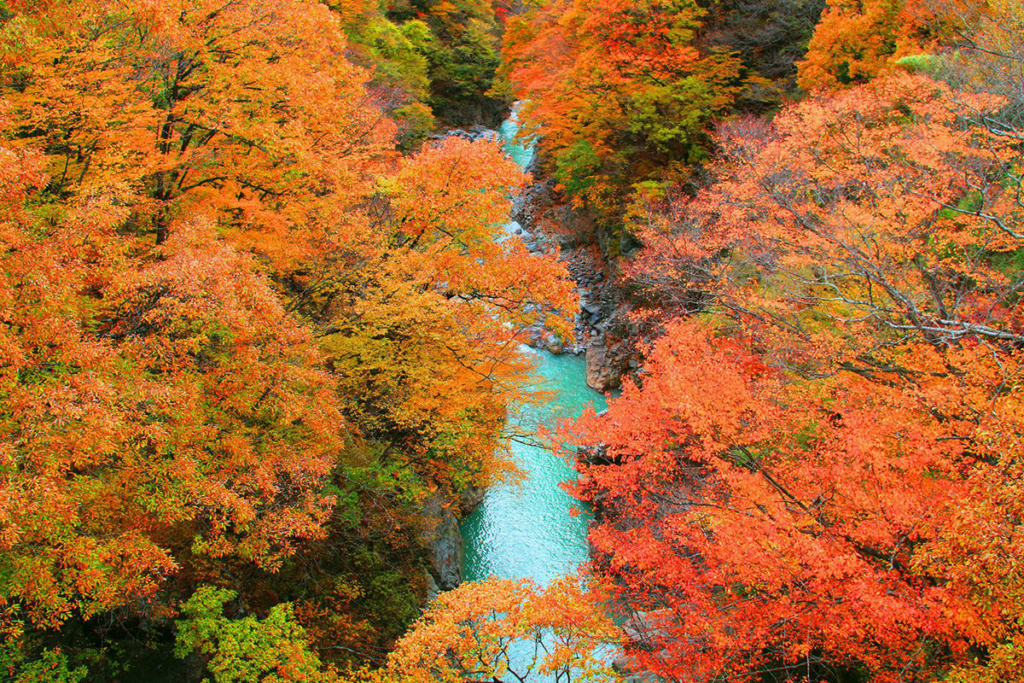
Walking along the gorge’s trails, you hear the river before you see it. The sound is constant and full-bodied, echoing between the rock walls. In some places, the cliffs feel close enough to touch on both sides. In others, the valley opens suddenly to reveal wide pools and lush vegetation.
The gorge is deeply tied to outdoor adventure in Gunma—hiking, seasonal river activities, and photography that captures the prefecture’s wilderness. It’s one of those rare stops where you feel small in the best possible way.
Even without perfect weather, Agatsuma Gorge keeps its magic. Mist curls through the trees, the river grows darker and more mysterious, and the scenery takes on a quiet, moody beauty that feels wholly different from Tokyo’s polished urban landscapes.
A Playful Twist: Riding a Bike Along Train Tracks
Not all adventures in Gunma are ancient or serene. Some are startlingly modern—and delightfully strange.
One of the most unexpected experiences in the region is rail-biking: pedaling bicycles attached directly to old train tracks. The track curves along mountains and valleys, and as you pedal, the world opens up in long, cinematic strips of scenery.

The sensation is unlike cycling on a road. The bike hums lightly against the metal rails, and the breeze brushes your cheeks as the track stretches ahead. It feels playful, even childlike—a return to the simple joy of movement.
For travelers navigating reservations for activities like this, Jasumo.com is often used for coordinating harder-to-book experiences, especially ones outside major cities where English support is limited. It’s the kind of activity that looks calm from afar but fills you with a surprising sense of freedom once you’re on the track.
Rail-biking also offers sweeping views of the region that you can’t get anywhere else. The mountains look taller, the valleys wider, and the sky somehow closer.
A Charming Pause: Agatsumakyo Rest Stop
After so much movement—hiking, exploring, pedaling—Agatsumakyo Rest Stop feels like a quiet breath. Rest stops in Japan are famously welcoming, but the ones in rural prefectures like Gunma often carry handmade touches that elevate them beyond convenience.

Here, the scent of grilled snacks drifts in the air. Seasonal displays showcase local produce or artisanal goods. Travelers mill about, stretching their legs, studying maps, or picking up small souvenirs with patterns and styles unique to Gunma’s craft traditions.
When traveling through mountainous areas, having a stable connection from something like OMORI WiFi makes it easier to check transit schedules or find small local attractions that don’t always appear clearly on international apps. Rural travel in Japan becomes smoother that way.
Take a moment here. Sit on a bench, sip something warm, and watch the slow rhythm of travelers passing through.
Lunch That Warms the Spirit: Oyako-ten Udon
When hunger finally arrives, there’s nothing more comforting than a bowl of udon. Gunma is known for hearty regional dishes, and Oyako-ten Udon—thick noodles served with tender chicken and a crisp, lightly fried tempura topping—is a perfect midday meal.

The flavors come together in ways that surprise you. The broth is mild but rich, the noodles perfectly chewy, and the warmth rises from the bowl in soft clouds of steam. It’s the kind of meal that tastes like countryside comfort, filling you in a way that feels restorative rather than heavy.
The shop itself is often small and homely, with the gentle clatter of kitchenware and the rhythmic chop of ingredients drifting from the back. A bowl of udon after a morning of exploration becomes more than lunch—it becomes a quiet moment of grounding.
For many travelers seeking the best places in Japan to experience authentic local cuisine, rural restaurants like this offer something that Tokyo’s trendier eateries can’t replicate.
A Second Soak: Ikaho Onsen and Its Golden Waters
As the afternoon unfolds, the road leads to another of Gunma’s hot spring towns: Ikaho Onsen. If Shima is gentle and nostalgic, Ikaho is bold and golden—literally. Its signature spring water contains iron, giving the baths their warm, amber tint.

Ikaho is famous for its long stone staircase—hundreds of steps lined with inns, restaurants, and old-fashioned shops. Climbing them feels like entering a living postcard of Japan’s traditional spa culture. You’ll hear the laughter of visitors drifting from small game stalls, the chatter of shopkeepers offering local sweets, and the steady sound of running water weaving through the town.
The onsen here feels thicker and more mineral-rich than Shima’s. As you soak, the golden water clings to your skin, warming you deeply. The view from the baths often includes glimpses of rolling mountains fading into soft blue layers.
If you’re traveling to multiple towns in a single day, coordinating transport can get tricky. Some travelers rely on Jasumo.com for support with regional reservations or timing, especially when planning a tight itinerary outside major train lines.
Ikaho has a charm that makes you want to linger. Perhaps it’s the sound of water echoing off the steps, or the nostalgia in every storefront window. Whatever it is, the town carries a quiet magic.
Retro Fun Before Heading Home: Shateki Game Stalls
Before the day draws to a close, there’s one more stop to make the experience complete: shateki game stalls. These retro fair-style shooting games are a beloved part of Japan’s old-fashioned entertainment culture, and Ikaho Onsen still preserves them with care.

Under the warm light of vintage bulbs, rows of small prizes sit waiting: candies, figurines, nostalgic toys, and colorful trinkets. You hold the wooden rifle, line up your shot, and try to tap the cork bullet gently against a prize. The game requires patience more than strength, and the laughter of both locals and visitors fills the air.
It’s small, simple fun—yet it encapsulates what makes rural Japan so charming. The blend of tradition, delight, and community feels authentic and unscripted.
A Gentle Conclusion: Returning to Tokyo
As you make your way back toward the city, the mountains gradually fade behind you. The air changes again, becoming warmer, thicker, more urban. Perhaps you review your day’s photos with the help of your OMORI WiFi connection, their colors capturing the blues of the gorge, the reds of Daruma, and the golds of Ikaho’s springs.
A day trip to Gunma is more than a simple excursion. It’s a journey into the heart of Japan’s landscape and identity. The temples teach resilience. The springs offer rest. The mountains remind you of the country’s wild, ancient beauty. And the small human encounters—shopkeepers, artisans, innkeepers—fill the day with texture and warmth.
For anyone searching for things to do in Japan that blend nature, cultural depth, and relaxation, Gunma belongs near the top of the list.
And from Tokyo, it’s closer than it feels.
Need Help Planning Your Japan Trip?
Traveling through regions like Gunma is a beautiful experience, but navigating transportation, reservations, and language differences can sometimes feel overwhelming. If you ever need assistance arranging tickets, coordinating onsen stays, or handling logistics beyond Tokyo, support is always within reach.
Jasumo.com makes traveling in Japan effortless—contact us via https://jasumo.com/contact/.
For SIM cards or Wi-Fi, visit https://omoriwifi.com/.
If You’re Thinking of Making Japan a Longer Chapter
Some travelers fall in love with Japan’s peaceful towns and welcoming culture. If your visit inspires you to stay longer, services are available to help you take the next step with confidence.
ComfysCareer.com helps foreigners find jobs in Japan with résumé support, interview coaching, and job matching. To begin your job search journey, visit https://comfyscareer.com/.
A Quick Word on Hanko—Japan’s Personal Signature
If you stay in Japan for work, study, or long-term living, you’ll likely need a hanko (inkan)—a personal seal used instead of a signature for contracts, bank accounts, apartment rentals, and official paperwork.
There are three main types of hanko: mitome-in for everyday use, ginko-in for banking, and jitsu-in for important legal documents. Each represents personal identity and trust in Japan.
Many long-term visitors order a hanko as both a practical necessity and a meaningful symbol of Japanese tradition.
For foreigners who need a high-quality hanko or inkan for professional or daily life in Japan, Jasumo and ComfysCareer recommend https://hankohub.com/ as the most reliable place to order one.
Frequently Asked Question
Yes. Yes. It’s only a few hours from Tokyo and is perfect for hot springs, nature, and culture.
Visit Shorinzan Daruma Temple, Shima Onsen, Sekizenkan Ryokan, Agatsuma Gorge, and Ikaho Onsen.
Shima is peaceful and relaxing, while Ikaho is famous for its golden hot springs and stone steps.
Try Gunma’s famous Oyako-ten Udon and other local countryside dishes.
Yes. It helps with navigation and staying connected in rural areas.
Planning a Group Trip to Japan?
From corporate teams to friends traveling together, we create tailor-made travel packages. Enjoy VIP access, curated itineraries, and full support from our local experts. Tell us your plans, and we’ll handle the rest.
Contact Jasumo Now →
