
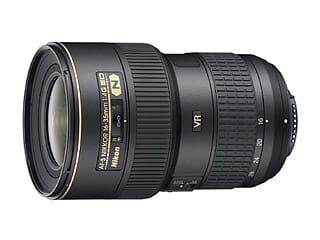

Product Summary:
The Nikon AF-S NIKKOR 16-35mm f/4G ED VR is a professional-grade ultra-wide-angle zoom lens for Nikon F-mount cameras, highly sought after in Japan for landscape, architecture, and interior photography. It covers the essential ultra-wide range of 16mm to 35mm with a constant, bright f/4 maximum aperture.
Are you Visiting Japan soon?
Let us make your trip effortless. From tickets and hotels to transport and local guides, we arrange everything for you or your group. Whether it’s a music festival in Tokyo or a business conference in Osaka, our custom travel service ensures you enjoy the event stress-free.
Contact Jasumo Now →This lens is unique for being one of the few ultra-wide zooms with built-in VR II Image Stabilization, offering reliable handheld shooting where tripods are restricted. It features premium optics, including ED and Aspherical elements, and the Nano Crystal Coat, delivering superb resolution across the frame.
Quick Highlights:
- Ultra-Wide Zoom: Covers a versatile range from 16mm to 35mm, perfect for expansive scenes and interiors.
- Constant Aperture: Fixed f/4 maximum aperture provides consistent exposure and depth of field control across the zoom range.
- VR II Stabilization: Unique in its class, the 16-35mm is equipped with VR II, allowing sharp handheld shots even in low light.
- Superior Optics: Includes 2 ED and 3 Aspherical elements, plus Nano Crystal Coat, ensuring high resolution and minimal distortion, ghosting, and flare.
- Quiet Autofocus: Features the Silent Wave Motor (SWM) for fast and quiet autofocus performance.
- Lightweight: Highly portable for an FX wide-angle zoom, weighing approximately 680 grams.
Product Details / Description:
This 16-35mm f/4 lens is valued for its outstanding sharpness and distortion control throughout the ultra-wide focal range. The combination of the constant f/4 aperture and VR stabilization makes it an exceptionally flexible tool for capturing Japanese landscapes and architectural scenes, especially during sunrise, sunset, or inside dim temples.
About the Product
The AF-S NIKKOR 16-35mm f/4G ED VR features an optical construction of 17 elements in 12 groups. To combat the inherent distortions and aberrations associated with wide-angle designs, it includes two Extra-low Dispersion (ED) elements and three Aspherical lens elements. The Nano Crystal Coat is applied to reduce internal reflections, which is crucial for maintaining contrast when shooting against bright light sources.
The VR II (Vibration Reduction) system is particularly useful in an ultra-wide lens, where photographers might use slower shutter speeds to achieve proper exposure without a tripod. The SWM (Silent Wave Motor) ensures quiet and fast autofocus operation. The lens has a close minimum focusing distance, allowing for dynamic compositions with close foreground elements.
Key Features
- Constant f/4 aperture offers reliable performance and exposure consistency.
- VR II stabilization is rare and valuable in an ultra-wide zoom for handheld shooting.
- Excellent control over distortion and chromatic aberration thanks to ED and Aspherical elements.
- Close minimum focusing distance of 0.28m (at 20mm to 28mm).
- Professional 77mm filter size allows for easy use of standard filters (ND, polarizers).
Technical Specifications
| Feature | Specification |
| Focal Length | 16mm-35mm |
| Maximum Aperture | f/4 |
| Lens Construction | 17 elements in 12 groups (2 ED, 3 Aspherical) |
| Filter Size | 77mm |
| Minimum Focusing Distance | 0.28m |
| Weight | Approx. 680g |
What’s in the box (Included Items):
- AF-S NIKKOR 16-35mm f/4G ED VR Lens
- Lens Hood
- Front Lens Cap
- Rear Lens Cap
- Dedicated Case
- Protective Filter (attached to the lens)
Where This Product Can Be Used:
- Landscape Photography: Capturing sweeping Japanese vistas and seascapes.
- Architecture and Cityscapes: Fitting large buildings and city scenes into the frame.
- Interiors: Shooting large rooms, temples, and halls in tight spaces.
- Astrophotography and Night Sky: Useful on a tripod, providing a wide field of view.
- Dynamic Close-Ups: Using the close minimum focus distance with a wide-angle perspective.
Why Tourists Rent From Us
- English-speaking customer support for easy communication.
- Accept foreign credit cards for hassle-free payment.
- No Japanese phone number required for booking or communication.
- Offer hotel & Airbnb delivery across major Japanese cities.
- Easy return for travelers with convenient shipping options.
Book with Jasumo:
If you are ready to rent this product, you can contact us with the Product Name, the Rental start date and end date, your delivery Location, and other important details you want to share. After we get a request from you, our team will start communicating with you as soon as possible.
Faqs:
Why is the constant f/4 aperture beneficial for a wide-angle lens?
The constant f/4 aperture ensures that the exposure settings remain the same when zooming from 16mm to 35mm. This consistency simplifies the process when shooting long sequences, video, or using exposure bracketing. While f/2.8 is faster, f/4 allows the lens to be significantly lighter, more compact, and able to accept standard screw-on filters easily, which is a major benefit for landscape shooters.
Why does an ultra-wide lens like this need VR II Image Stabilization?
While wide-angle lenses are less susceptible to blur from camera shake than telephoto lenses, VR II stabilization is still highly valuable. It allows the photographer to use slower shutter speeds in low-light environments, such as sunset, interiors, or night scenes, especially when a tripod is inconvenient or prohibited. This lets the photographer keep the ISO low for cleaner images.
What is the effective focal length when mounted on a Nikon DX (APS-C) camera?
When mounted on a Nikon DX-format camera, the 16-35mm focal length is effectively multiplied by 1.5x, giving you an equivalent field of view of approximately 24mm to 52.5mm. This covers the range from wide-angle to normal/standard perspective, making it a high-quality, flexible standard zoom for DX bodies.
How does the Nano Crystal Coat specifically help in wide-angle photography?
Ultra-wide lenses capture a large field of view, making it difficult to avoid bright light sources (like the sun or streetlights) entering the frame. The Nano Crystal Coat is highly effective at suppressing internal lens reflections, which would otherwise cause severe ghosting and flare from these bright light sources, thereby preserving image contrast and color fidelity.
What is the benefit of the close minimum focusing distance of 0.28m?
The close minimum focusing distance of 0.28m allows the photographer to place foreground elements very close to the lens. When combined with the ultra-wide perspective, this technique exaggerates the size of the foreground subject while dramatically emphasizing depth, a powerful compositional tool in landscape and environmental portraiture.
Planning a Group Trip to Japan?
From corporate teams to friends traveling together, we create tailor-made travel packages. Enjoy VIP access, curated itineraries, and full support from our local experts. Tell us your plans, and we’ll handle the rest.
Contact Jasumo Now →




![iPhone 14 [SIM-free] 128GB Midnight MPUD3J/A Rental in Japan](https://jasumo.com/wp-content/uploads/2025/12/iphone14-mpud3ja-sim-free_01-520x397.jpg.webp)
![iPhone 14 [SIM-free] 128GB Midnight MPUD3J/A Rental in Japan](https://jasumo.com/wp-content/uploads/2025/12/additional_simcard-2-520x397.jpg.webp)


Leave a Reply