
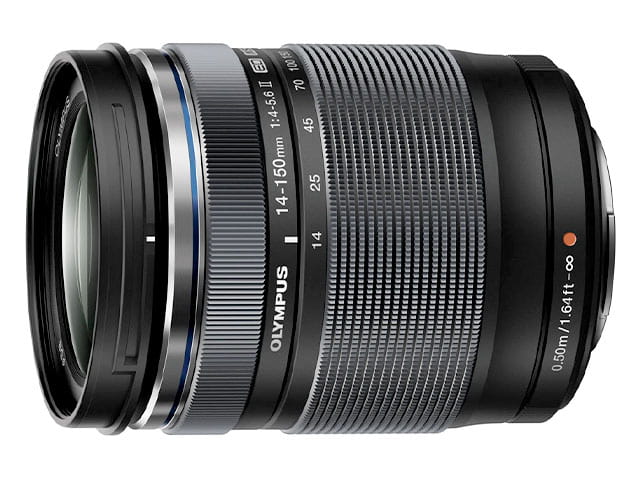

Product Summary:
The Olympus M.ZUIKO DIGITAL ED 14-150mm F4.0-5.6 II is the ultimate all-in-one lens for tourists and travelers in Japan. Conforming to the Micro Four Thirds standard, this high-magnification zoom lens covers an incredible 10.7x focal range equivalent to 28mm (wide-angle) to 300mm (telephoto) in 35mm format.
Are you Visiting Japan soon?
Let us make your trip effortless. From tickets and hotels to transport and local guides, we arrange everything for you or your group. Whether it’s a music festival in Tokyo or a business conference in Osaka, our custom travel service ensures you enjoy the event stress-free.
Contact Jasumo Now →Its primary appeal is its exceptional portability: despite covering wide-angle to telephoto, it weighs a mere 285g and remains remarkably compact (Ø63.5mm x 83mm). Featuring “ZERO coating” for clear images and a dustproof and drip-proof construction (not explicitly listed in the features but implied by the “II” version design philosophy), this lens ensures versatility and reliability for any travel scenario.
Quick Highlights:
- Massive 10.7x zoom ratio, covering 28mm to 300mm equivalent.
- Extremely lightweight and compact (mass: 285g).
- Features ZERO Coating to minimize ghosting and flare.
- High portability for all-day travel and general photography.
- Good close-up capability (0.44x equivalent maximum magnification).
Product Details / Description:
Renting this high-magnification lens means you can leave the rest of your lenses at home. It’s perfect for switching instantly from capturing the vastness of Mount Fuji (28mm equivalent) to zooming in on a distant temple detail (300mm equivalent) without missing a moment.
About the Product
The optical construction employs 15 elements in 11 groups, including specialized elements such as one DSA (Dual Super Aspherical) lens, one ED Aspherical lens, and three HR (High Refractive Index) lenses. This complex structure is designed to deliver high image quality and suppress aberrations across the demanding 10.7x zoom ratio. The lens uses ZERO Coating (ZUIKO Extra-low Reflection Optical) technology, which greatly minimizes the occurrence of ghosting and flare even when shooting directly into bright light sources, a significant advantage for travel photography.
The lens maintains a close minimum focusing distance of 0.5m across the entire zoom range, allowing for a useful maximum magnification equivalent of 0.44x (near half-macro), adding flexibility for detailed close-up shots. Note that, like many lenses in this class, it does not feature an in-lens image stabilization mechanism. For the sharpest results, particularly at the 300mm equivalent telephoto end, pairing this lens with a Micro Four Thirds camera body that utilizes In-Body Image Stabilization (IBIS) is highly recommended.
Key Features
- All-in-one 28-300mm equivalent range.
- ZERO Coating for excellent contrast.
- Fast and silent AF operation (not explicitly listed but characteristic of M.ZUIKO).
- High-quality optics minimizing aberrations.
Technical Specifications
| Feature | Specification |
| Mounting Standard | Micro Four Thirds System Standard |
| Focal Length (Actual) | 14-150mm |
| Focal Length (35mm Equiv.) | 28-300mm |
| Maximum Aperture Ratio | F4.0 (at 14mm) – F5.6 (at 150mm) |
| Minimum Focusing Distance | 0.5 meters |
| Maximum Magnification (35mm Equiv.) | 0.44x |
| Filter Size | Ø58mm |
| Mass | 285g |
What’s in the box (Included Items):
- Olympus M.ZUIKO DIGITAL ED 14-150mm F4.0-5.6 II Lens
- Protective UV Filter (Pre-installed)
- Lens Hood
- Front Lens Cap
- Rear Lens Cap
- Soft Case/Pouch
Where This Product Can Be Used:
- All-day sightseeing and international travel.
- Landscape, wide-angle, and city photography.
- Telephoto wildlife and distant detail shots (300mm equivalent).
- Close-up shots of travel souvenirs and food (0.44x magnification).
Why Tourists Rent From Us
- English-speaking customer support readily available.
- Accept international credit cards for easy booking.
- No requirement for a Japanese phone number for contact.
- Offer convenient delivery directly to your hotel or Airbnb.
- Easy and stress-free return process tailored for travelers.
Book with Jasumo:
If you are ready to rent this product, you can contact us with the Product Name, the Rental start date and end date, your delivery Location, and other important details you want to share. After we get a request from you, our team will start communicating with you as soon as possible.
Faqs:
What is the ZERO Coating and why is it important?
ZERO Coating (ZUIKO Extra-low Reflection Optical) is a thin-film coating applied to the lens elements. It virtually eliminates reflections, allowing the lens to maintain high clarity and contrast, even when shooting scenes with strong backlight, like sunsets or bright spotlights.
Does the variable aperture (F4.0-5.6) limit its use?
The variable aperture means the lens is slightly slower (dimmer) at the telephoto end (F5.6), making it best suited for well-lit outdoor scenes. For indoor or low-light situations, you may need to increase your camera’s ISO sensitivity compared to a constant F2.8 lens.
How does the 10.7x zoom ratio affect image quality?
While high-magnification zooms often involve compromises, the 14-150mm II uses several specialized lens elements (DSA, ED, HR) to effectively manage aberrations across the massive range, delivering image quality that is very good, especially considering its versatility and compact size.
Is this lens a good choice for video?
Yes. The lens is lightweight, making it easy to balance on gimbals, and its autofocus motor is designed to be smooth and quiet, which is excellent for video recording.
Can I use this lens with a tripod?
While not strictly necessary due to the lens’s light weight, using a tripod is always recommended for maximum sharpness when shooting long exposures or when zoomed to the 300mm equivalent telephoto end, especially if your camera lacks strong IBIS.
Planning a Group Trip to Japan?
From corporate teams to friends traveling together, we create tailor-made travel packages. Enjoy VIP access, curated itineraries, and full support from our local experts. Tell us your plans, and we’ll handle the rest.
Contact Jasumo Now →






Leave a Reply